
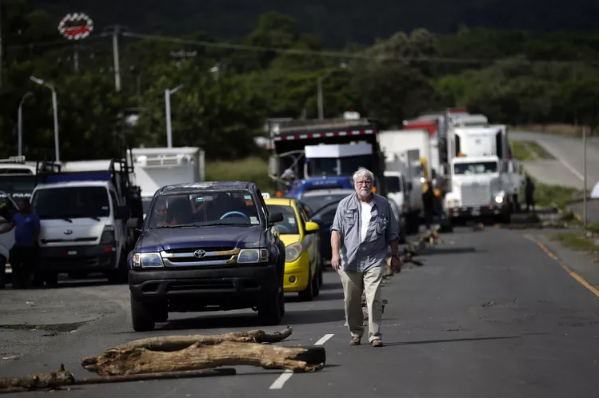
Kenneth Darlington . PHOTO: BIENVENIDO VELASCO/EPA-EFE/SHUTTERSTOCK
If you like my work, buy me a virtual cup of coffee at Ko-Fi.
By now, you’ve probably heard the news from Panama of the 77-year-old man who shot and killed two environmental activists apparently in cold blood. For perspective, I’m providing two other news sources, The Independent and People Magazine. I’m sure you can “Google” more.
The short synopsis from People says:
Kenneth Darlington, 77, is accused of approaching the group, who were blocking a highway in Chame, a district west of Panama City, before firing his gun on Tuesday afternoon, according to a report from Newsroom Panama. One protestor died at the scene, while the other died in the hospital, the outlet reported.
The question of whether or not Mr. Darlington’s actions were justified would seem fairly obvious, but it’s complicated.
I should say that this blog post is an extension of the the review I wrote yesterday discussing the Quantum Leap episode One Night in Koreatown. This is time traveler Ben Song’s (Raymond Lee) viewpoint of the 1992 Rodney King Riots.
The image below is not from the television show but rather a photo taken during the actual 1992 Los Angeles riots. Here’s some perspective.
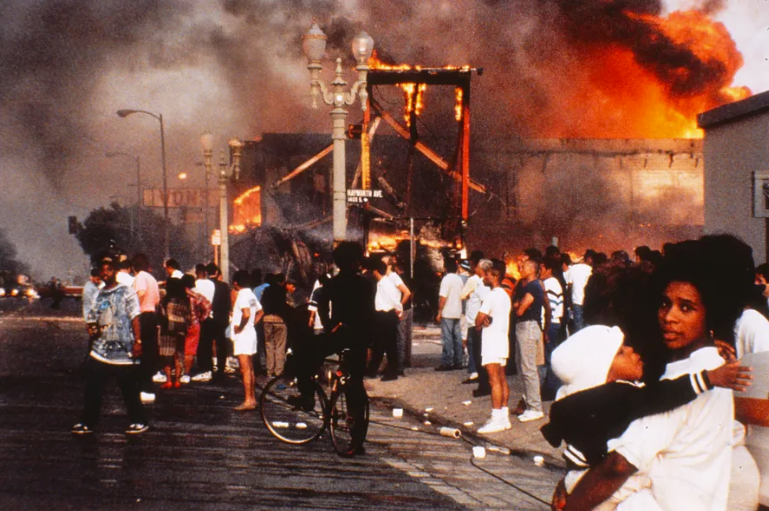
Source: Lindsay Brice / Getty
My question there is the same as the one I’m asking here. Is violence, including lethal violence, justified under these circumstances? In the case of the Rodney King riots in Los Angeles, was it all justified by the emotional outrage in the black community over the unjust acquittal of the four officers accused of brutalizing King?
When the riots ended, 63 people had been killed, 2,383 had been injured, more than 12,000 had been arrested, and estimates of property damage were over $1 billion, making it the most destructive period of local unrest in U.S. history. –Los Angeles Times
In the case of Mr. Darlington, was his, and by extension, our frustration worth it? Is the exasperation of people whose lives have been disrupted by environmentalists blocking roads and interfering with our lives worth shooting and killing two of these activists?
For people who understand and espouse the concept of systemic racism, the answer to the former might seem obvious.
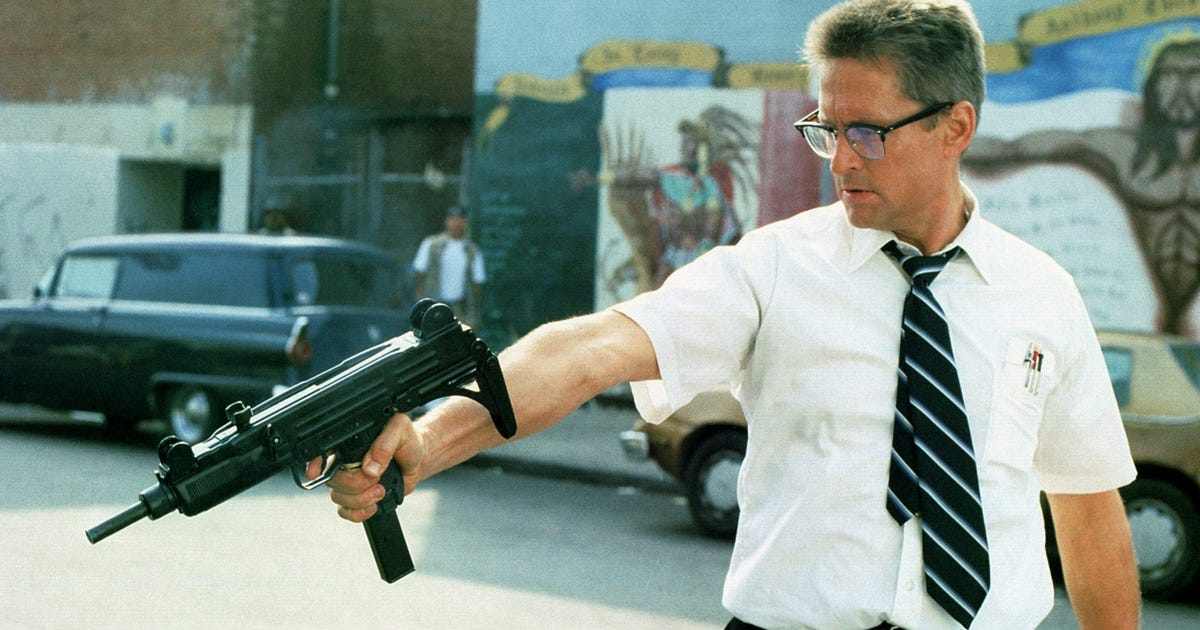
Scene from the 1993 film “Falling Down” featuring Michael Douglas as Bill Foster
The answer to the latter might seem obvious as well, but many people are making a comparison to the 1993 film Falling Down starring Michael Douglas as Bill Foster (click the link to find out about the movie).
In both Foster’s and Darlington’s cases, an educated man with a strong career behind him is getting older, feeling obsolete, and in spite of having lived his life as a model citizen, is becoming increasingly frustrated by the injustices and random inequities of modern existence.
Ultimately, both men decide to take matters into their own hands, meting out “justice” from the barrel of a gun.
In Foster’s case, he’s caught by the police.
Bill Foster (Douglas): I’m the bad guy?
Sergeant Prendergast (Robert Duvall): Yeah.
Bill Foster: How’d that happen? I did everything they told me to. Did you know I build missiles? I helped to protect America. You should be rewarded for that. Instead they give it to the plastic surgeons, y’know, they lied to me.
As far as Mr. Darlington is concerned:
The suspect, later identified as 77-year-old Kenneth Darlington, is a lawyer and professor who holds dual citizenship in the United States and Panama, reported Newsroom Panama and AFP.
The man was reportedly heard saying “this ends here” before he walked up to the roadblock and got into a heated argument with a group of men which included the two victims. Subsequently, the 77-year-old before a large crowd of photographers and reporters there to cover the protest, allegedly shot two men. -from “The Independent”
Darlington has been charged with murder and illegal possession of a gun.
But was Darlington just a loose cannon waiting for an excuse to kill?
Again from The Independent:
The effects of the protests, which started over three weeks ago, have had a ripple effect on the whole of Panama.
Construction worker unions and teacher unions have banded together to protest restarting a copper mine, that was agreed to by the Panama government and a Canadian firm on 20 October, which will be dug in the jungle west of Panama City.
The roadblocks set up by protesters have caused up to $80m in daily losses to businesses, according to Panama’s association of company executives and schools were forced to close for over a week, reported Reuters.
Thousands of medical appointments have also been reported to have been missed since the protests began.
Officials have urged the protesters to stand down, reiterating that the mine is expected to generate $375m annually in revenue.
You can say that destructive riots such as those in 1992 Los Angeles or more recently, nationwide unrest that was the result of the George Floyd killing were the consequence of collective frustration and anger. Perhaps you can also say something similar about the collective frustration of people who have not been able to conduct business or even just live their lives because of these activists. I know they have caused a lot of problems in the U.K. and Europe, so it’s not an issue confined to one country.
One conservative pundit on twitter/X had this to say about Darlington:

Screen capture from twitter/X
Regardless of your political, social, or personal feelings, the law says that in both cases, people committed crimes resulting in their arrest. Even if all these people were pushed beyond their emotional limits to endure, and even if they feel justified in their actions, you don’t have the right to burn down cars and buildings, take away people’s livelihoods, cause whole populations to live in fear, and you don’t have the right to gun down two environmental protesters in the street.
However, last night on twitter/X when I expressed that viewpoint, I was raked over the proverbial coals.
The following are screen captures of the dialog although some sequences may not be in exact order. Since twitter/X is publicly accessible, I decided not to redact the names of the parties involved.
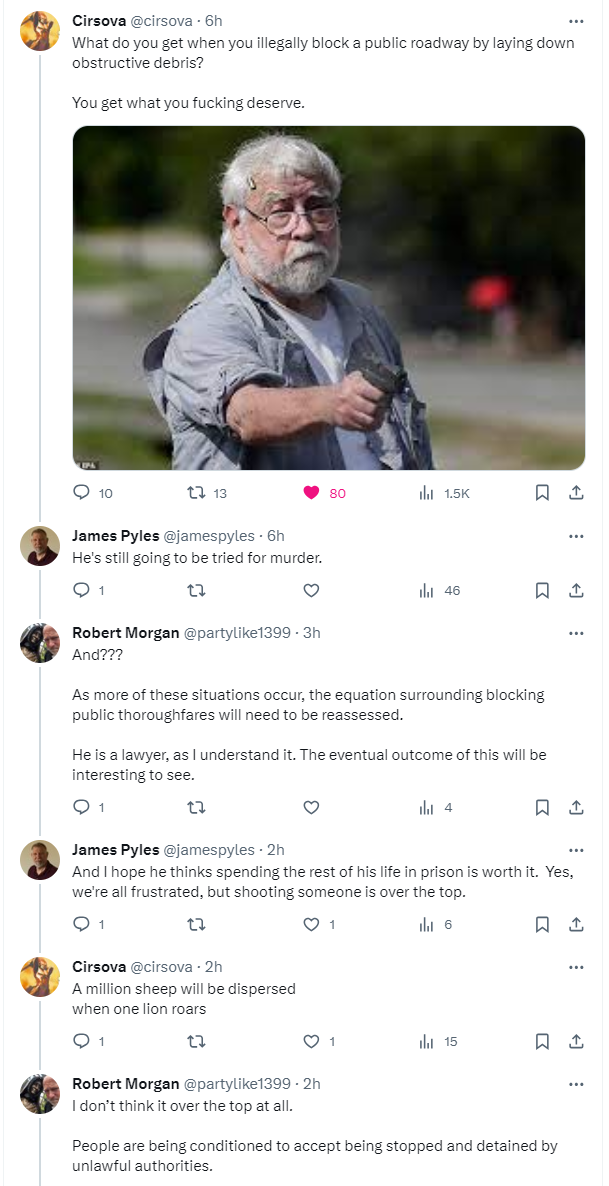
Screen capture from twitter/X

Screen capture from twitter/X

Screen capture from twitter/X.
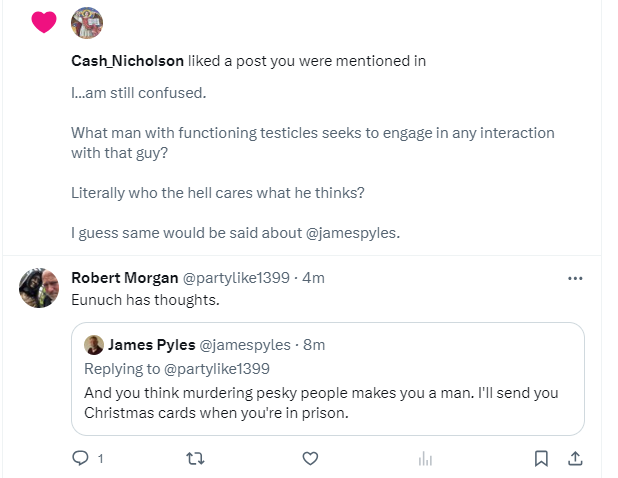
Screen capture from twitter/X.
As a right-leaning moderate/independent, I’m often cast as “far-right” by leftists and interestingly enough, I’m also too liberal, soft, and too much of a “eunuch” to those on the right.
I guess thinking critically makes you politically homeless.
Do the ends justify the means? It’s a complicated answer but in the final analysis, the answer must be “No.”
Emotionally, it’s satisfying to be able to express some sense of vengeance through violence. The perpetrators of violence in response to racial injustice are often sympathized with by news, social, and even political structures. While their criminal behavior must be condemned, it is also “understood” and thus ultimately tolerated. It happens again and again and it won’t stop until the cycle of injustice and violence is broken at some point in the chain.
The same can be said for Mr. Darlington and the fictional Mr. Foster. There are all kinds of injustices in the world and when the “system” fails to correct them, then people, regardless of race or social perception, will out of frustration take matters into their own hands and enact violent solutions.
Are they solutions?
To the degree that these same injustices are still with us, no.
What’s the answer?
I have no idea. I do know that one person’s criminal is another person’s avenger.
Except it doesn’t work.
Addendum: November 11, 2023.
There’s a massive difference between what Darlington did and what his “hero with a gun” did in New York City. Read the fully twitter commentary. The guy didn’t hurt anyone and scared off the mugger, yet he was arrested and the potential mugging victim says she’d rather that she was mugged than rescued with a gun. The world is a very sad place.
 poweredbyrobots.com
One thought on “Kenneth Darlington, Race Riots, and the Justification for Violence”