

PHOTO PROMPT © Rochelle Wisoff-Fields
“You want me to write about Hanukah on Christmas Eve.” Mike pressed send in the chat.
“It’s an optional extra credit writing assignment,” Charlotte replied in chat. “Anyway, I thought you didn’t celebrate Christmas.”
“Not in the traditional sense. I don’t believe Jesus was born anywhere near December. Besides, nothing in the Bible says to celebrate his birth,” he sent.
“The assignment is Hanukah,” she replied.
“Okay, how about this? The Hanukah candles held a double meaning for him, both indicating miracles, the burning of the oil to rededicate the Temple for eight days, and the Light of the World.”
Cover art for “Far Futures: Book Four”
It’s Wednesday and time again to participate in this week’s Rochelle Wisoff-Fields’ Friday Fictioneers. The idea is to use the image above as the prompt for crafting a poem or short story no more than 100 words long. My word count is exactly 100.
I felt a little stuck since Chanukah (however you spell the transliteration of the Hebrew) has just passed and, after all, this is Christmas Eve. So I decided to combine the two as often happens with “Messianic” individuals and groups. I threw in a writing class that communicates by chat just for giggles.
To read other stories based on the prompt or to add one of your own, go to inlinkz.
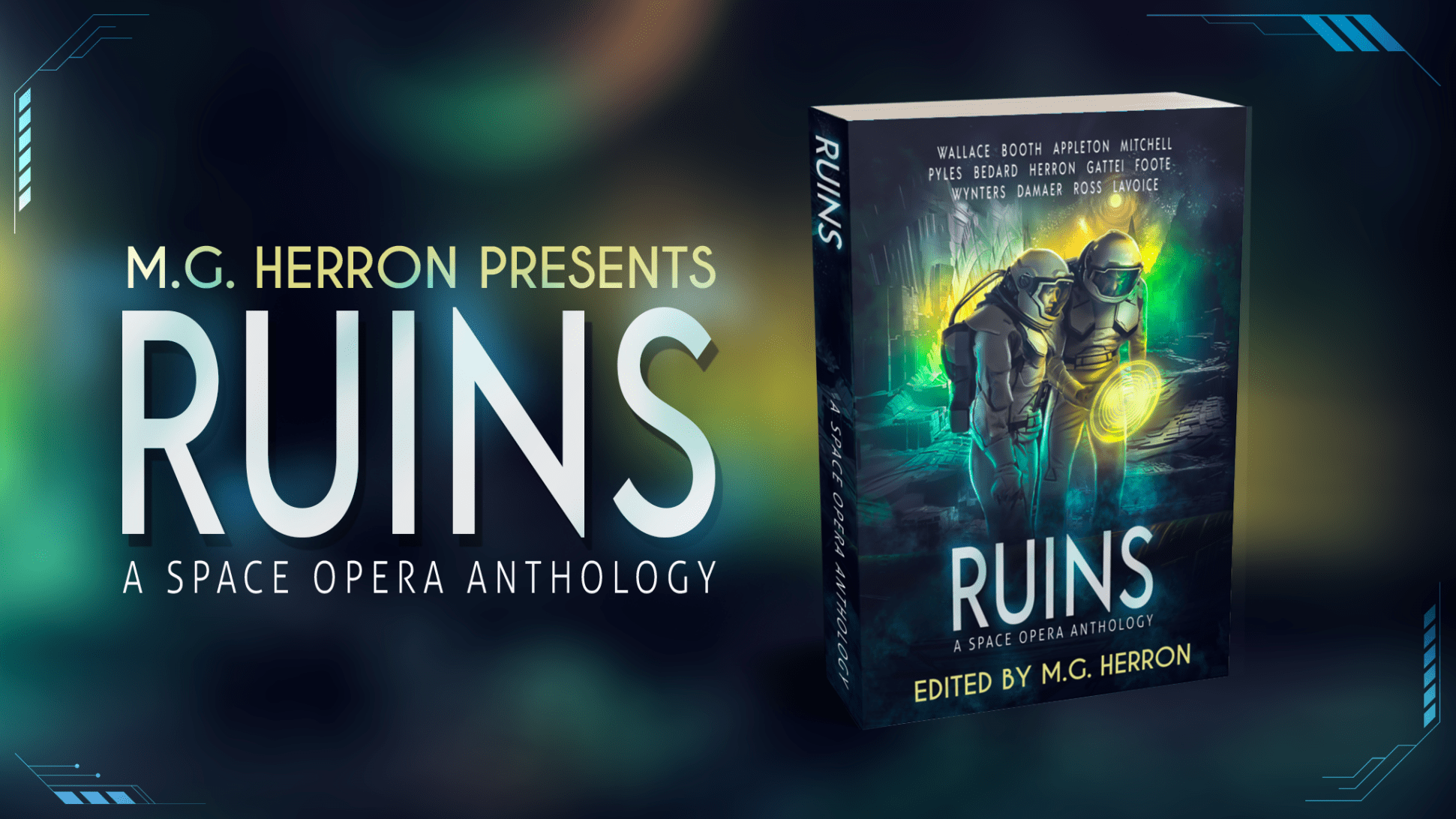
Promotional image for the anthology “Ruins.”
The science fiction anthology Far Futures Four is now available for purchase in Kindle or paperback formats. It features my military SciFi short story “Awash on Titan’s Shores.”
Next there’s:
Across the vast expanse of space and time lie the remnants of civilizations that reached for the stars—and vanished. Silent cities carved into asteroids. Derelict megastructures drifting between galaxies. Temples buried beneath the red sands of dead worlds.
This book contains 13 bold tales of humanity’s encounters with these cosmic ruins.
That’s how the narrative for the Kickstarter for “Ruins: A Space Opera Anthology” begins. The anthology contains my short story “Sunrise.” Please consider contributing to this effort or even passing the information along.

 poweredbyrobots.com
For those who recognize the scriptural clues that reveal the time of birth at Sukkot for the infant who would become haRav Yeshua ben-Yosef, rather than in December as in Christian tradition, they may still commemorate an event in December. Not only is that when Hanukah is celebrated, which is likely when he identified himself as the light of the world, probably in the sense of referring to the Torah with which he identified as its representative, but it is likely the time when his mother met the angel who announced to her that she would be overshadowed by the Spirit of HaShem and bear a very special child. The interval between Hanukah and Sukkot is just about right for human gestation, though I’ve never investigated whether 2 BCE was a leap year that would stretch the interval between them
LikeLike
I consider the December Christmas as a tradition which is when the birth of Messiah (Christ) is celebrated. Everybody has traditions.
LikeLike
A writing group communicating via chat! Haha fun idea
LikeLike
I think it would work. Thanks.
LikeLiked by 1 person
Love the premise of this, James. I participated in a writing group via FaceTme during covid.
LikeLike
Ah ha. So I didn’t just make it up. 🙂 Thanks.
LikeLiked by 1 person
It was a book club that morphed into a writing group. It was also a great escape.
LikeLiked by 1 person
Very plausible.
Happy Holidays!
LikeLike
Thanks, Dawn. Happy Holidays to you as well.
LikeLiked by 1 person
interesting…
LikeLike
Thanks.
LikeLike
A nice meld of the two holidays.
LikeLike
Thanks. My wife is Jewish but our son celebrates Christmas so it pretty much gets blended in our family.
LikeLiked by 1 person