
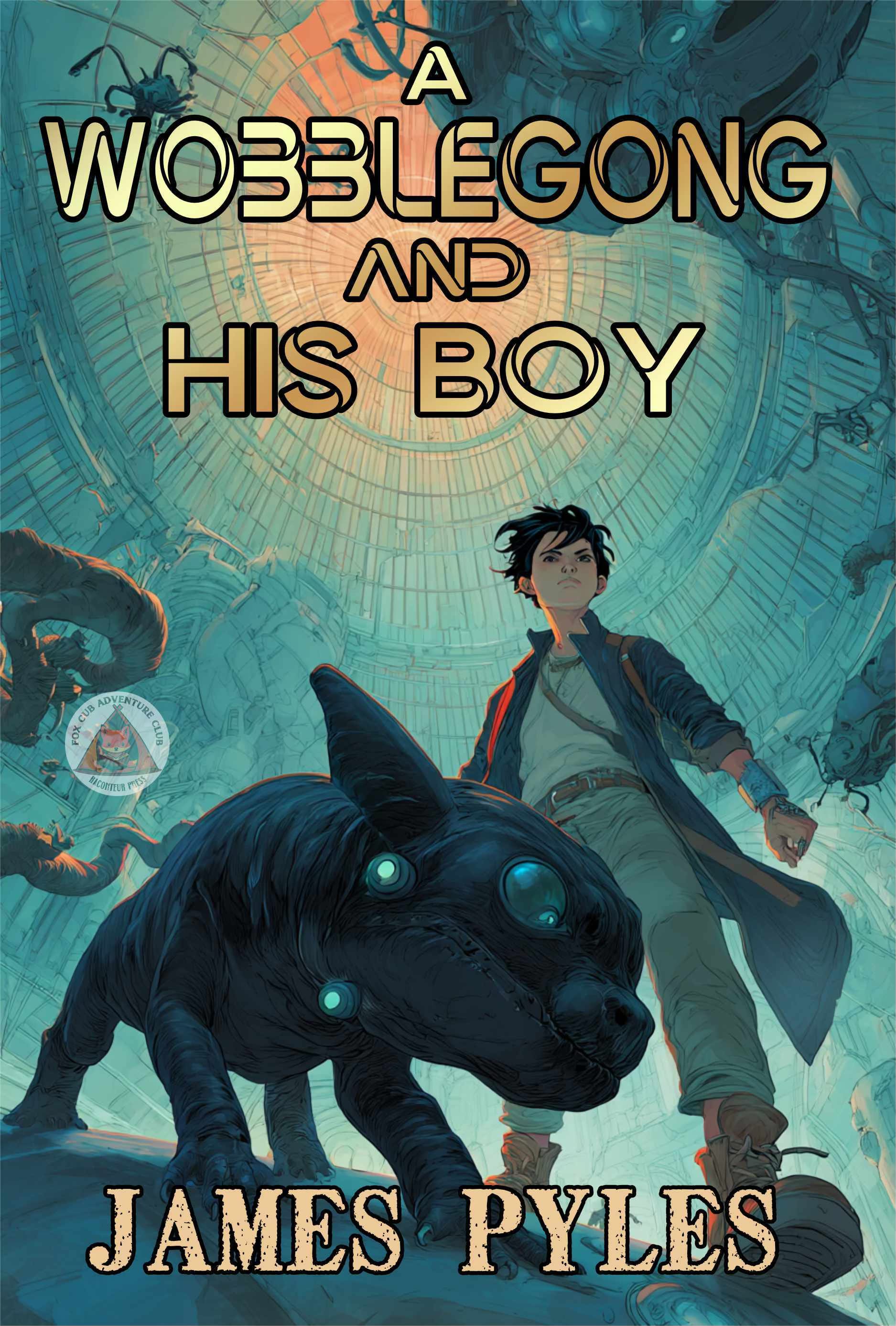
Cover image for my novel “A Wobblegong and His Boy”
There are already a ton of articles and essays out there commenting on the decline of boys and men reading. When I was a kid entering Junior High, my “gateway drugs” into science fiction and fantasy were Edgar Rice Burroughs’ Barsoom series starting with A Princess of Mars. Then came along E.E. “Doc” Smith’s Skylark Series as well as Andre Norton’s The Time Traders and Galactic Derelict.
My reading interests exploded from that flashpoint and I’ve never stopped. Seriously, I’m over seventy-years-old now and I’ve always got at least one book going (library cards are a wonderful thing).
I’ve been very actively promoting my latest science fiction novel A Wobblegong and His Boy on my blog, substack, and social media (you may have noticed). When I heard that Raconteur Press was soliciting novels for their Boy’s Adventure Books series, I was very excited to submit something of my own. I’m gratified and humbled that they accepted my manuscript and as of right now while still on pre-order, my book is number one on Amazon’s list of New Releases in Children’s Space Exploration books. That’s fantastic.
However, as much as I’m thrilled to have another science fiction novel (this will be my second) hitting the virtual book stands, there’s something more important going on.
According to a New York Times article published on January 30, 2026, boys are behind in reading at every age. Really? Wow.
The Times article says that while boys have scored lower than girls on standardized reading tests for the last half a century, it’s getting far worse and no one is making any effort to change that. Yes, girls are aggressively being encouraged to participate in STEM programs in order to promote “equity,” but as far as reading goes, boys are being left behind in the dust. Like no one cares.
The article goes on to say that the likely reasons are developmental with girls developing language skills earlier than boys. On top of that, some biological differences are cited, but then:
“A lot of things have a biological basis but are totally malleable,” said Dalton Conley, a sociologist at Princeton whose research has shown how a child’s genes and environment interact to affect reading outcomes. “It doesn’t mean we couldn’t, if we wanted to as a society, devote so many resources to improving boys’ reading and teaching it to them in a different way that we couldn’t close the gap.”
A range of research has shown how children’s environments influence their reading skills. The stereotypes held by parents, teachers and classmates all affect boys’ reading performance.
Mothers talk more to their baby daughters than to their sons.
Even when boys scored the same as girls in reading, teachers ranked the girls higher.
A review of nearly 100 studies found that by age 8, students believed that girls were better at verbal skills, and that this affected boys’ confidence and interest in reading later on.
A number of solutions are offered but I’m going to focus on this one:
Make it enjoyable. Let children choose their books, and discuss them with their peers.
There are other sources saying the same thing including this Reddit article and even this 2025 news article focused on Australia from The Guardian.
This has been called a crisis and rightfully so. If boys don’t start reading in childhood, the likelihood of them reading once the enter adulthood is not very good. This shows in men not applying for and entering university, being outnumbered by women in areas including law school, medical school, vet school, and other professional programs.
Are books being written for boys and men taking into account their interests at the same level as were being published when I was a boy in the 1960s and before?
This Facebook discussion goes back and forth on that topic and while men who want to read will find material that satisfies them, one person said:
I would also like to add that the genres I read are woefully under represented by major publishers. This just means we should collectively support the indie authors and publishers who continue to give us what we love.
However, this next comment was especially telling:
A couple years ago I got a rejection from one of the big two Publishers of fantasy. They said they liked my style but not that particular story. They then asked if I was gay or transgender or anything because they were willing to listen someone of that leading to write some stories like I was writing. I was very taken aback by that. It’s too late to change haha but yeah I really got told that.
This says a couple of things:
First, that “big box” publishers seem less interested in accepting traditional science fiction and fantasy than the large number of independent publishers available.
Second, said-big box publishers are more interested in accepting science fiction and fantasy stories IF they are written by “marginalized populations” and likely, if the stories highlight characters belonging to those same populations.
So if you’re straight, white, and male, the books put out by major industry publishers are unlikely to cater to you.
There’s an excellent essay on the substack for The Republic of Letters that talks about vanishing male readers.
Quoting Alex Perez‘s 2022 interview with Hobart Magazine:
I think every guy who writes from a heterosexual male point of view feels the pressure to apologize for his manhood. First, let’s define masculine writing, since we’ve mentioned it a handful of times. Masculine writing=writing about heterosexual male concerns from a non-feminist point of view. It doesn’t mean that the masculine writer can’t be a feminist or write about feminism or whatever, but he can’t care about not being seen as a feminist or an ally, which is the main concern of most male writers now…If a man is worried about what feminists will think of him, he’s not a masculine writer because he’ll never be able to write honestly about the male condition. He will be the worst of all creatures: the mushy male feminist.
I totally agree.
Traditionally, women have dominated public and private education and as the Times article suggests, the perception, even if the data didn’t back it up, is that girls are better verbally than boys. Thus in addition to pushing female interest in STEM, girls are also given more encouragement to read at basic levels of the education system. For boys, not so much.
Women have taken the lead in terms of careers based on university education and currently, according to the Republic of Letters article, are the majority of publishers (well, the CEOs are still mostly men), literary agents, and other gatekeepers into fiction writing in general and science fiction and fantasy in particular.
Combine that with what we know about more women reading regularly than men including fiction and I think we can make a case for the assertion that more books are being written for women as well as other “underrepresented populations” than for boys and men.
Men just don’t matter anymore for the most part for big box publishers (there are exceptions).
I encourage you to click the links I’ve provided and to thoroughly read my sources to see the full picture I’m trying to paint.
Basically, in the progressive effort to be inclusive, the solution in publishing (and in many other areas) is to exile or ostracize boys and men, particularly (sorry to beat a dead horse) if they’re white and straight. Yes, publishing previously catered to such, but not for at least the past several decades.
I’ve heard it said that equal rights is not a pie (the link takes you to where you can by t-shirts with that message). The more rights someone else has doesn’t mean any rights are taken away from you.
I respectfully disagree.
We see that books written by and for boys and men are no longer (or not as frequently) offered by large industry book publishers and sellers. We also see that straight white male authors are less likely to have their manuscripts accepted by those publishers in favor of authors who represent “underrepresented populations.”
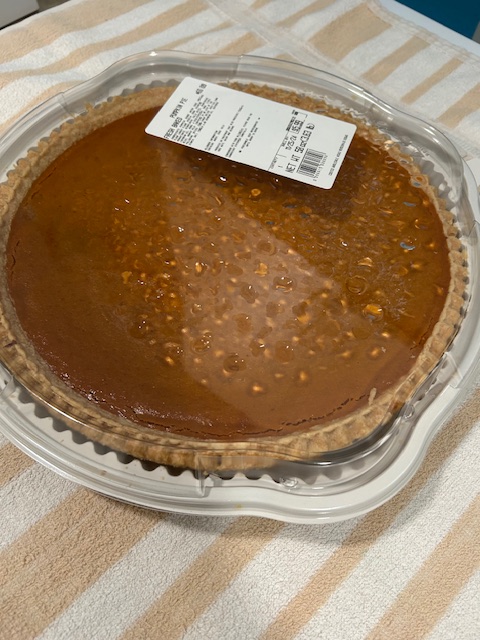 It’s a pie.
Having said all that, you may get the impression that I’m hostile towards the various organizations, industries, and groups I’ve mentioned above. That’s not true. I’m asserting that there’s enough room at the table for everyone. That’s what “inclusiveness” is supposed to mean. I’m sure there will be some who will criticize me and say “mean things” about me, imaging me to be some sort of Neanderthal.
Going back to solving the problem I started out with, why don’t we write and publish books that WILL appeal to the general boys and men audience. These are NOT books who are against people of color, the LGBTQ community, women, and other historically “disadvantaged populations.” It’s possible to still write a “good old fashioned adventure novel” without diving into the deep end of the social controversies swimming pool.
When I wrote A Wobblegong And His Boy, I meant it to be that flavor of adventure story, something I would have read and enjoyed as a kid and moreover, a book that features a young boy as the main protagonist.
But there are girls and women in my book too. I believe in depicting the populations of my fictional worlds organically, that is, in an open environment, you’ll find all kinds of people so they’re visible in my stories including Wobblegong. If you don’t believe that, you’ll have to buy and read my book (available starting March 20th but you can pre-order now) and see for yourself. Really, don’t take my word for it. If you don’t like it, leave a review saying so.
However, if you do like it, or if your kids or grandkids like it, then say so in a review too.
If the big box publishing industry really wants us to believe that they’re “a pie,” then they’ll have to behave like one.
In all likelihood though, as indie publishing matures and truly becomes competitive, we’ll just have to go that route in the effort to revive reading among boys and men.
It’s important. No boy left behind.
 poweredbyrobots.com
Fabulous!
Congratulations James
LikeLike
Thank you, Laurie.
LikeLiked by 1 person