Overcoming Conquerers

Earth

Earth as seen from Apollo 17 – Image: Wikipedia

The T’Quenq had conquered the population of the Earth a generation ago and with good reason. On the verge of humanity developing a working Interstellar drive, the T’Quenq, who had been observing our planet for centuries, were terrified that we would spread our propensity for strife, bloodshed, and harsh colonialism to the nearby inhabited star systems. There was only one way to make sure we never got the chance: subjugate us.

In science fiction stories, the aliens are always just humans who look different from us, four arms instead of two, green skin, pointy ears, that sort of thing. In real life, alien means alien. Concepts of cruelty or kindness were foreign to their thinking. They didn’t even have words in their language for “generosity,” “charity,” or “compassion.” They simply administered resources and populations. The people of the Earth were governed but not a great deal of thought was put into our comfort. Neither did the T’Quenq deliberately cause us to suffer. We simply existed under their rule.

We were conquered a generation ago and since that time, a few things have mellowed a bit. Segregation between T’Quenq and humans was no longer strictly enforced. Some of them thought it adventurous to walk our streets and shop in our stores, while a few human beings were allowed in T’Quenq compounds, only as servants, but a smattering of us got a first hand look at how they live.

Continue reading

Should We Be Searching for Extraterrestrial Intelligence and Are They Trying to Kill Us?

seti

Image: SETI.org

I just read an article called “SETI’s mega alien hunt shovels more data onto IBM’s cloud” at The Register, which is a UK-based tech site with a satirical twist. The article’s subtitle is “Citizen boffins: Help find the alien that ultimately kills us all.”

SETI, the Search for Extra Terrestrial Intelligence, uses radio telescope arrays to gather hundreds of terabytes of data each day. That’s a lot of data to process. So they’re releasing 16TB of radio transmissions from the Allan Telescope Array (ATA), located near San Francisco, to IBM’s cloud under SETI@IBMCloud. The idea is that citizen coders can build apps capable of querying the data and possibly detecting information SETI technicians might have missed.

Theoretical Physicist and Cosmologist Stephen Hawking has gone on record as stating he believes aliens will destroy us if they ever find us. It’s not like they’d even have to be all that hostile. They could destroy our culture the way Europeans destroyed Native American cultures when they first arrive hundreds of years ago, the ramifications of which are still being keenly felt today.

I suppose that’s possible, but is it likely?

Continue reading

The Alien

ellie

The first issue of Scaffolding Magazine

Not another infection. I can’t stand it.

I know I asked for this. I know I volunteered. But the doctors didn’t say it would be this bad. I knew I’d be giving up my life with the first injection, but they didn’t say anything about this kind of suffering.

Even when the symptoms seem to have subsided for a while, the slightest warning sign, such as a sneeze or a mild sore throat, drives my anxiety to dangerous levels.

The doctors say I need to stay calm, that emotional aggravation could make me feel even worse and endanger the success of my treatment. How can I stay calm when they’re doing this to me?

OK, I understand. Take deep breaths. What an odd sensation.

Let me go back to the beginning. Maybe it will help you, whoever you are reading this (they won’t let me post videos for obvious reasons), understand what I’m going through and why.

We are on the verge of exploring and investigating a new planet. The planet is dominated by a sentient species, which is the problem. So far, all of our monitoring has been passive and remote, listening to their communications broadcasts, observing video transmissions. Last year (their year based on a single, complete revolution of their planet around their star), we sent a shielded drone into orbit, undetectable through the specific bands of the EM spectrum they typically monitor.

But you can only learn so much that way.

This is the first part of my story published in the first issue of the new scifi and fantasy publication Scaffolding Magazine. To read the rest, click the link and purchase a copy. I promise, you won’t be sorry.

Searching for Life Outside the Anthill

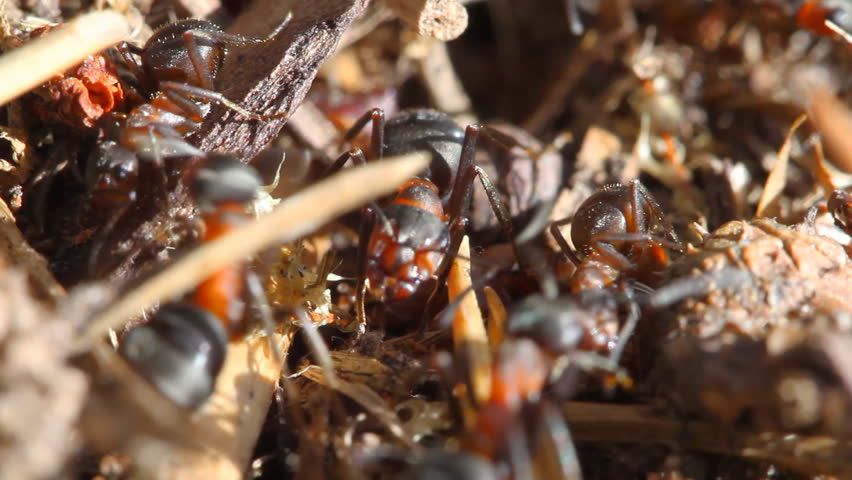
Let’s say we have an anthill in the middle of the forest. And right next to the anthill, they’re building a ten-lane super-highway. And the question is “Would the ants be able to understand what a ten-lane super-highway is? Would the ants be able to understand the technology and the intentions of the beings building the highway next to them?”

-Michio Kaku

ants

Ants building an anthill – Image: shutterstock

Commander Janice Nichols sat expectantly in front of the orbiter’s pilot console waiting for the initial report about Lyre’s Planet, the more “human-friendly” name for HD 85512 b. At 3.5 times the mass of Earth, it wouldn’t be ideal for human colonization, but it was smack dab in the middle of this star’s “Goldilocks’ zone,” and even casual observation told her that there were liquid oceans and land masses on this world, certainly indicating the potential for life, maybe even intelligent life.

Sixteen hours ago, the orbiter Elysium had detached from the FTL drive and main life support unit, together known as the Wayfarer. The drive was too valuable to risk close planet approach and she had left Clarence Ross in charge of their only hope for an eventual return home, along with Mitchell, and Smith. If something happened to the Elysium, Ross and Mitchell could either bring in the Excursion, Wayfarer’s back up orbiter, to attempt a rescue, or if deemed too risky, abandon them here and make the return trip home.

Eight hours ago, Elysium assumed a standard orbit around Lyre’s and after a thorough systems and orbital check, Nichols ordered planetary and environmental specialist Timmison Singh to deploy the sensor pod, extending it fifteen meters planet-side, below Elysium’s main hull, and then had him crawl down into the pod to perform the initial scan of the planet.

This was the sixteenth attempt, the sixteenth expedition to explore what they used to call “super earths” in the early part of the last century, the sixteenth effort to discover some form of extraterrestrial life, any form of life more advanced than a single cell organism.

The first fifteen had failed.

Continue reading