
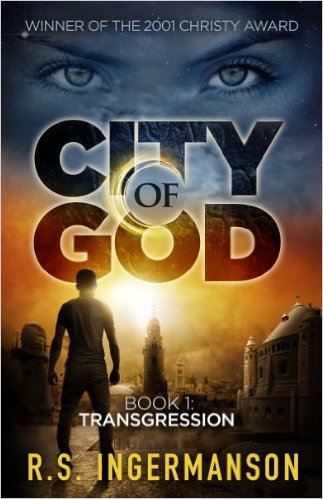
 Transgression: A Time-Travel Suspense Novel is probably something I’d never have heard of if I hadn’t been researching how to design my first novel. However, Randy Ingermanson used his one-sentence summary of “Transgression” to illustrate the first of his ten steps in “snowflaking” a novel.
“A rogue physicist travels back in time to kill the apostle Paul.”
Of all the ideas for a time travel story, I’d never heard of this one before. Fascinated, I downloaded it to my Kindle Fire.
Theologically, a thousand things could go wrong from here, but I’m going to set that aside for the moment.
According to his own bio. Ingermanson is a theoretical physicist, so he should be able to create realistic fake physics enough to convince us creating a “time machine” is plausible. That part works pretty well, at least enough to get the story rolling.
The tale takes place both in modern and ancient Jerusalem. Israeli theoretical physicist Ari Kazan, along with his American colleague Damien West create, at least in possibly, a method of generating a wormhole in their lab that, over a weekend, could create a stable point-to-point link between the present and the past.
In the meantime, Ari’s cousin Dov has introduced him to a young Jewish-American archeological student named Rivka Meyers as a blind date. The two don’t have much in common at first, but as they get to know each other, their religious differences nearly destroy their nascent relationship.
This is the first time I’ve seen Messianic Judaism, both modern and ancient, depicted in a realistic and theologically consistent manner in fiction. In fact, with very small differences, Rivka’s conceptualization of the Messiah, Hashem, and the Bible and mine are really the same. I find that refreshing.
Ari is an atheist but, as with most Jews, has a very strong bias against Christianity, and particularly the Apostle Paul who is often viewed as a traitor to the Torah, the Temple, and the Jewish people.
The wildcard in the deck is Dr. West, who has a powerful if unusual motivation for traveling back in time and murdering the Apostle Paul. West chooses a number of points where it would be possible for him to shoot and kill the Apostle as recorded in Acts 21, 22, and 23. To test the safety of traveling through the wormhole, West tricks Rivka into walking through, beginning her adventures into a world she has only experienced through ancient artifacts.


 poweredbyrobots.com