Urartu

Taşlıçay

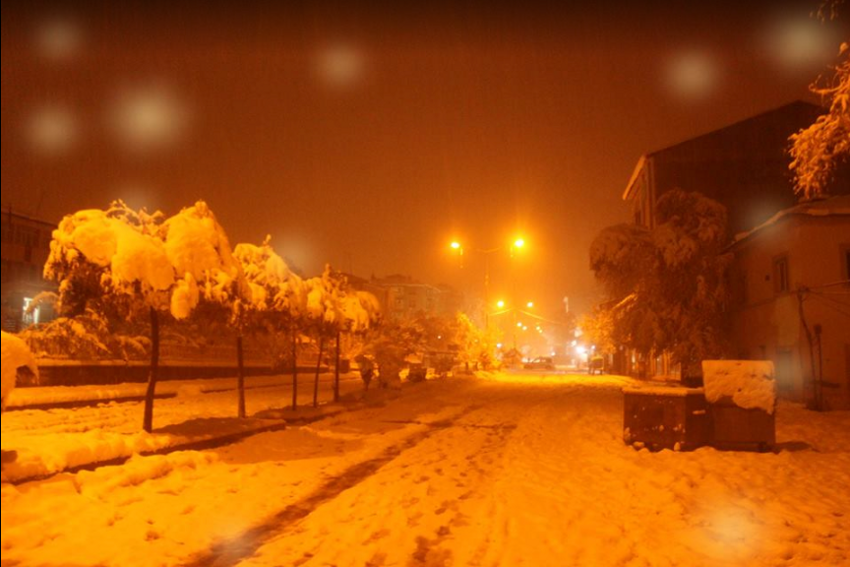
Taşlıçay, Ağrı, Turkey © Google Maps

He came to Taşlıçay after a snowstorm and entered Mehmet’s restaurant. The last customer had left and the proprietor had let his staff go early.

“We’re closing, Sir. I have nothing left to serve you.”

“I am not here to eat, Mehmet.” He spoke heavily-accented Turkish and appeared middle-eastern.

“What do you want?”

“To save your life. Great forces desire to take it.”

“You’re insane. Taşlıçay is a boring place. Nothing happens here.”

“After the great flood, elemental spirits, both good and evil claimed the area around Urartu and lay dormant. Tonight they rise from the temple on the hill and the höyük to the south. You are the last direct descendant of the ark, the last one who could prevent them from entering your world.”

“Who are you?”

The messenger of Hashem grew large and powerful, was armored in ethereal light, and drew a sword of silver. “They come.”

I wrote this for the What Pegman Saw writing challenge. The idea is to use a Google Maps location and/or image as the prompt for crafting a piece of flash fiction no more than 150 words long. My word count is 150.

Today, the Pegman takes us to Taşlıçay, Ağrı, Turkey. I looked it up and there’s not much going on in Taşlıçay either currently or historically, except for a few tiny details.

I leveraged the Facebook page for Things to do in Taslicay, which provided the restaurant setting. Going through the Google maps street images, I found the one posted above, which appealed to me since summer is approaching fast.

There’s a burial mound to the south of this rural town and both an Urartu temple and Armenian monastery on the hill above the village of Taşteker. Then I read:

Urartu, which corresponds to the biblical mountains of Ararat, is the name of a geographical region commonly used as the exonym for the Iron Age kingdom also known by the modern rendition of its endonym, the Kingdom of Van, centered around Lake Van in the Armenian Highlands.

Ararat is the legendary resting place for Noah’s Ark after the Great Flood of the Bible, so I thought I’d attempt to wrap all of that together into some sort of mystic tale of disaster and horror, all in 150 words. How did I do?

To read other stories based on the prompt, visit InLinkz.com.

Oh, and how are these locations chosen, anyway?

The Battle of Kings

masrur temples

Rock cut Hindu temples of Masrur – photo attributed to Akashdeep83 – found at Wikipedia

It is said that the enmity between the Katoch and Sikh Kings perished with them, but such fierceness does not die with flesh. The Kangra Valley holds wondrous beauty and great mystery, and future historians would never be sure why the Temples of Masrur so resembled Elephanta Caves near Mumbai, Angkor Wat in Cambodia, and Mahabalipuram in Tamil Nadu, nor do even the modern Hindus know, though they are its supposed builders.

After a long truce on the ethereal plane, Sansar Chand Katoch and Maharaja Ranjit Singh once again chose to contend with each other, their powers ever waxing. Thus on 4 April 1905 as the humans mark the passage of time, they entered into violent confrontation in the Kangra Valley, and though the visage of supernatural beings was never witnessed by mortals, the earthquake their combat caused killed more than 20,000. Would their conflict next endanger people in Cambodia or Mumbai?

I authored this for the What Pegman Saw writing challenge. The idea is to use a Google maps location and image as the prompt for creating a piece of flash fiction no more than 150 words long. My word count is 149.

Today, the Pegman takes us to the Kangra Valley in Northern India. This is a popular tourist attraction for a number of reasons including the Rock-cut Hindu Temples of Masrur, which also resemble in design those other locations I mentioned in my story.

There really was a devastating quake in the area in 1905, and I used some of the local history involving the Katoch and Sikh battles a century before, weaving in a supernatural element in an attempt to tie all that together.

Wouldn’t it be interesting if disasters and misfortune on the physical plane was caused by perpetual battle between long-dead Kings in the supernatural world?

To read other stories based on the prompt, visit InLinkz.com.

Living Memories

armenian genocide

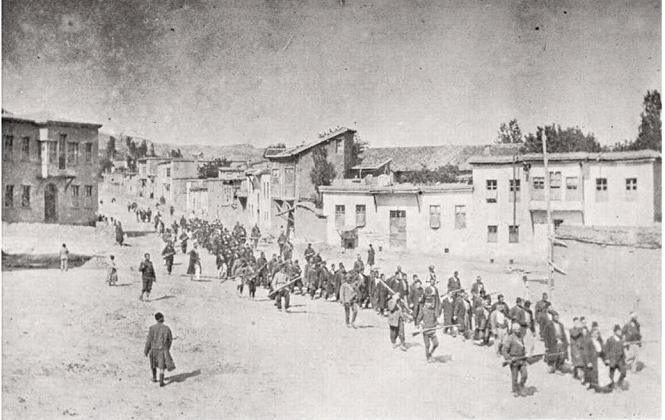
Armenian civilians are marched to a nearby prison in Mezireh by armed Ottoman soldiers. Kharpert, Ottoman Empire, April 1915 – Photo Credit: Anonymous German traveler – Published by the American red cross, it was first published in the United States prior to January 1, 1923.

Samvel and Samuel had a lot more in common than just their names. Sitting together at a table outside a small Parisian cafe, the former sipped his coffee, and the latter put another cube of sugar into his steaming beverage.

“I hear Israel is considering recognition of the Armenian deaths.”

“I certainly hope so. Ours is widely known, but already the world is forgetting.”

“I just wish the world would remember the 20th century’s first genocide. We both died at age five, but here we are as grown men.”

“Yes, you in your holocaust and I in mine. We have been resurrected, whether by God or some lesser but still mighty force, to be living reminders of the past.”

“We must never let the children of this century forget the children of ours, whether executed by the Ottomans or the Nazis. Now finish your coffee. We must join the others.”

I wrote this for the What Pegman Saw writing challenge. The idea is to use a Google maps image and location as the inspiration for crafting a piece of flash fiction no more than 150 words long. My word count is 150.

Today, the Pegman takes us to Armenia.

Although the nation has a rich history, it’s hard not to immediately think of the Armenian Genocide of 1915 and Armenian Genocide denial. I read one article that said Israel was about to recognize the Armenian Genocide and another stating that Turkey was not at all pleased by this turn of events.

Searching the web for Armenian names and finding “Samvel,” I thought having an Armenian genocide victim and a Jewish Holocaust victim together having coffee was an interesting idea. But who are they who have died so long ago and yet in our midst today? I left that rather vague, but the idea is that some “force” is causing people from the past to emerge in the present so modern people won’t forget the horrors that have occurred so many decades ago.

To read more stories based on the prompt, go to InLinkz.com.

The Sins of Our Fathers

San Ignacio de Velasco, Bolivia

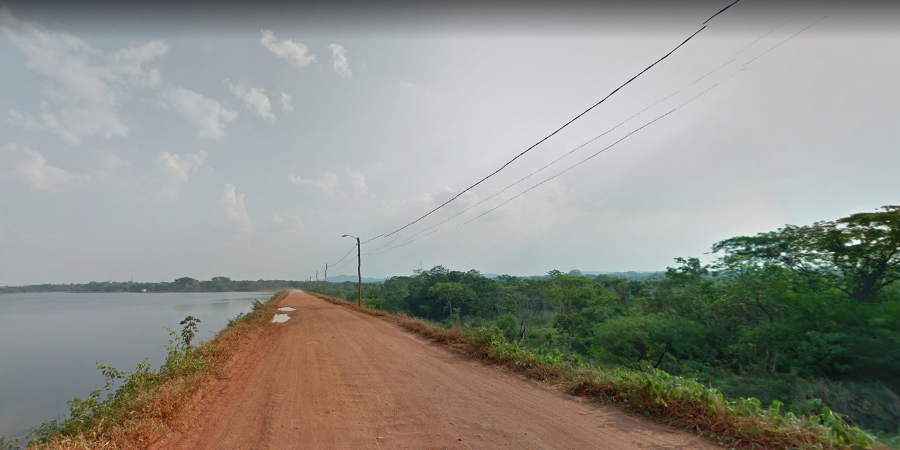
Near San Ignacio de Velasco, Bolivia – © Google 2018

The vintage Beechcraft AT-11 landed eight souls on a little dirt airstrip near San Ignacio de Velasco in Bolivia. Intelligence said he’d be making a stopover in this tiny hamlet to visit an old friend, another German expat.

He’d just founded Transmaritima, Bolivia’s first ocean shipping company and was anxious to brag about it, especially to other war criminals who were still cowering in fear.

The aircraft halted and the pilot killed the engines. “We’ll be returning to La Paz as soon as we refuel. We won’t be coming back unless we get your signal.”

Five of the passengers had already disembarked with their equipment. The sixth approached the cockpit. “If we don’t succeed, there will be no reason to come back.”

“You’ll succeed.”

“We plan to. The sons of Nazi butchers must wipe the blood from our hands. In less than twenty-four hours, Klaus Barbie will be dead.”

I wrote this for the What Pegman Saw writing challenge. The idea is to take the Google maps image and location presented and use it to inspire crafting a flash fiction piece no longer than 150 words. My word count is 149.

Today, the Pegman takes us to San Ignacio de Velasco, Bolivia. According to Wikipedia, there isn’t much information available about the town or José Miguel de Velasco Province. However, both articles mention the area possessing a small population of the descendants of post-World War II German immigrants.

That was the hook.

Looking at this morning’s email notification from Bookbub, I’d seen a title by Tania Crasnianski (translated by Molly Grogan) called Children of Nazis which includes interviews with the children of Himmler, Göring, Höss, Mengele and others.

I also found a 1982 New York Times article about Klaus Barbie, who was the SS commander in Lyons, France between 1942 and 1944. He had fled to Bolivia after the war and unfortunately, did quite well for himself.

In the 1960’s, Barbie really did found Transmaritima, Bolivia’s first ocean shipping company, in a joint venture with the navy. I decided to put all of that together and formed an elite team of assassins, the sons of Nazi war criminals, who had taken on the mission of wiping their bloody legacy from the face of the Earth.

To read other stories based on the prompt, go to InLinkz.com.

Oh, among other fun facts, San Ignacio de Velasco in the present day does have a dirt strip for an “airport.” Figured they could have one in the 1960s as well. Keep in mind this is fiction, and Barbie was not assassinated. He was eventually captured, tried, convicted, and died in prison in Lyon, France in 1991 at the age of 77.

The Missing Manuscript Affair

Gwynedd

Stream near Bethesda in Gwynedd county, Wales on 23 Dec 2013 after a storm – Photo credit: BBC.com

Only about a dozen or so people knew that Olivia Lewis, the woman discovered drowned in a fast-flowing stream near Bethesda after a storm, was a retired SIS operative. She never carried a gun, for her talents were in finding the right approach to a target and then getting them to tell her anything she wanted.

Aging MI6 agent Ian Dennis took part of his training under her decades ago, which was when she had confided with him. He knew why she was murdered. She had owned the first draft of one of World War Two veteran Leslie Bonnet’s short stories, which contained a seventy-year-old secret he had learned while training pilots in China.

Now the draft was missing, and it was a race to discover the true location of lost Sichuan Temple, which legend said contained an ancient device more powerful than all the world’s arsenal of nuclear weapons.

I wrote this for the What Pegman Saw writing challenge. The idea is to take a Google Maps image and location and use them to inspire crafting a piece of flash fiction no more than 150 words long. My word count is 150.

Today, the Pegman takes us to Gwynedd, Wales.

Of course I looked up the county of Gwynedd and discovered, among many other things, that World War Two veteran turned author made his home there after the war. Before that, he had spent some time in China in 1943 helping to create the Chinese Air Force as a service separate from their army.

I also found a 23 December 2013 BBC news story that reported a woman had drowned in a stream in Nant Ffrancon near Bethesda after a storm.

The lost temple is totally made up, though loosely based on this news article.

I created the beginning of yet another “Ian Dennis” mystery just for fun. Some of you may remember Ian from my short series The Mauritius Robbery Affair.

To read other stories based on the prompt, visit InLinkz.com.

The President’s Ill-Fated Proposal

tulum

Photo Credit: Popo le Chien – 13 Sept 2016 – Tulum’s Templo del Dios Viento (Temple of Wind God, left) and Castillo (castle, right)

President Lincoln’s Secretary of State William Henry Seward stood at what was called the Temple of the God of Wind at Tulum gazing northeast over the waters toward the island of Corzumel. Mexican President Benito Juarez summarily dismissed Lincoln’s proposal for American freed slaves to be relocated to that small bit of land off the Yucatan peninsula, but Seward had to see it for himself.

Lincoln was the President, and Seward did what he was told, but his conscience as a man and a Christian told him that if a man were truly free and a citizen of the United States, then his former status as slave should be wiped clean, rather than him becoming a societal pariah. If only he could convince the President of this.

The breeze in his face, Seward became a prophet. “Freedom is the right to tell people what they do not want to hear.”

I wrote this for the What Pegman Saw writing challenge. The idea is to use a Google maps image and/or location as the inspiration for crafting a piece of flash fiction no more than 150 words long. My word count is 150.

Of course, I looked up Tulum, but consulting Google maps, I found it was fairly close to the island of Cozumel. It was a small bit of history of that island from 1861 that caught my attention, since the proposal I write about above did actually occur.

I have no idea about how the real Seward felt about it, so I made something up. Also, it seems that Lincoln did succeed briefly, in 1862, in establishing a short-lived colony of ex-slaves on Île à Vache off the coast of Haiti.

The quote I put in Seward’s mouth is attributed to author George Orwell, which would indeed have made the Secretary of State a “prophet,” since Orwell wouldn’t be born until 1903.

To read other stories based on the prompt, visit InLinkz.com.

The Dragon’s Head

dragon's head

Photo credit: Jeff Chep – Found at the Amusing Planet blog

Their campaign against Peking was succeeding, but General Hiroki Sato had to land his troops at Shanhai Pass, then march to the city to relieve the siege.

“Is this bombardment necessary? There are likely few Chinese troops present.”

Admiral Ako Yamamoto could barely hear above the cannon fire.

“Better this than an ambush.” He returned to his binoculars and gasped.

“What?” Sato took the binoculars from the terrified Yamamoto and beheld a sight he thought only possible in myth.

This end of the Great Wall of China, regaled in fable as the “dragon’s head,” was proving that its name was not merely symbolic. Stone, brick, tamped earth, and wood was miraculously transforming into an enormous serpent, the legendary defender of China.

A thousand men met their fate in the sea that morning in July of 1900, and then the dragon rose to destroy the rest of the invaders investing her land.

I wrote this for the What Pegman Saw writing challenge. The idea is to use a Google maps street image and location as the inspiration for crafting a piece of flash fiction no more than 150 words long. My word count is 150.

Today, the Pegman takes us to The Great Wall of China. As you might imagine, the wall has a long and fascinating history, which makes crafting a wee tale about it difficult.

I decided to focus on its western edge, which is at Lop Nur or “Lop Lake.” I discovered that in July 1900 (or 1904 depending on the source), the Japanese landed troops at Shanhai Pass where the wall dips into the sea, to re-enforce a siege against Peking. You can click the link to Amusing Planet to learn more, but that part of the wall is called “the dragon’s head” because it looks like a dragon dipping down to have a drink from the ocean.

Now imagine that the wall isn’t really a wall, and you’ve got a fantastic tale on your hands.

To read more stories based on the prompt, visit InLinkz.com.

The Unknown Children

botswana

Hwy A3 – Botswana – Google maps – 2012

Six-year-old Otilia cried herself to sleep every night for the past two weeks, ever since mother sold her to the man. The man took her and four other children in a truck, hiding them in big boxes. Now she was at her new home, the mansion of a rich man in Gaborone.

The maid gave her a bath and new clothes so she could meet him. He was sitting behind a desk in a big library when the maid took her in. Otilia stood in front of the desk. The maid left and closed the door.

He was a big man, and his voice was booming. “You look like you’ll make a fine domestic.”

Otilia was supposed to call him “Mr. Mlalazi,” but she was too scared to talk as he stood and walked toward her.

“First, your initiation, though.” He unzipped his trousers and cold fear gripped the child.

I wrote this for the What Pegman Saw writing challenge. The idea is to take a Google maps location and image and use them as the inspiration for crafting a piece of flash fiction no more than 150 words long. My word count is 150.

Today, the Pegman takes us to Botswana in Africa. Botswana is a big country with a long history, so I had to find a way to narrow things down a bit. I finally looked up current news stories and found one on child trafficking. As it turns out, human trafficking in Botswana is an enormous problem. All I had to do was read a few sentences and I had my story.

I called this story “the unknown children” because we hardly ever hear about this astonishing tragedy from western news agencies. Someone has to tell their story.

To read other tales based on the prompt, visit InLinkz.com.

Encounter at Muxnar

mdina, malta

Street in Mdina, Malta – © Google 2014

Emily Becker followed the old Maltese man down a little-known side street into a shop. The walled city had existed since the Bronze Age, but the young archeology student was visiting because of her passion for the Apostle Paul. The Apostle’s history was tied to Malta, though not to this small city.

Inside, the man excitedly displayed what looked like a mirror, except the glass was black instead of reflective.

“So what’s this?” She was suddenly aware she was alone with a stranger and her tour guide didn’t know where she was.

“You see Shaul. Look deep.” He used the Apostle’s Hebrew name.

Emily drew closer to the mirror.

“Touch.”

She held up her hand, and it was as if the mirror reached out and grabbed her.

Emily turned and she was standing near Muxnar Reef in a rainstorm. Strangely dressed men were struggling to make shore including a middle-aged Jewish man.

I wrote this for the What Pegman Saw writing challenge. The idea is to use a Google street maps image and location as the inspiration for creating a piece of flash fiction no more than 150 words long. My word count is 147.

Today, the Pegman takes us to Mdina, Malta. Of course for perspective, I looked up the city’s history as well as the general background on Malta. If I had a bucket list of places I wanted to visit, Malta would be on it.

Someone commented on this story that the concept of a dark mirror leading to other places and times might make an interesting series. As I was pondering the Pegman challenge this morning, I thought that it would be interesting if the magic of the dark mirror randomly appeared in different places across the world.

In this case, an old shopkeeper in Malta happens, for a time, to acquire a mirror possessed by the dark magic and realizes its potential. Perhaps the mirror supplies a destination depending on the user’s desires. In her fantasies, Emily has always wanted to meet the Apostle Paul. According to this researcher, the most likely site of Paul’s shipwreck on Malta as recorded in the Book of Acts, chapters 27 and 28, is “just outside St Thomas’ Bay, near a dangerous sandbar called the Muxnar Reef.”

I had wanted to write a longer tale, but 150 words only goes so far. Now we’ll never know what happens to Emily next.

Oh, Malta has two official languages, one being Maltese, which is a semitic language, and the other being English, so Emily would be able to communicate with the shopkeeper. Talking to the Jewish apostle, his fellow captives, and ancient Roman soldiers might be another story, however.

To read other tales based on the prompt, go to InLinkz.com.

Return to Cowra

billinudgel hotel bar

Billinudgel Hotel, Billinudgel, NSW, Australia, © Cube Online Services Google Maps

Hands trembling slightly, the middle-aged Japanese man walked into the bar at the Billinudgel Hotel.

“What’ll it be, Sir?”

“A beer. Whatever you have on tap.”

She selected a glass and filled it with liquid amber topped with a healthy froth. “There you go. Name’s Marge. You’re not the usual guest we get around here.”

He shook her hand, suppressing the urge to bow, this being Australia. “Haruto Nakajima. Pleased to meet you.” He took a sip of his beverage.

“What brings you here?”

“I’m trying to put some demons to rest.”

“How’s that?”

“Ever heard of the breakout at the Cowra prisoner of war camp?”

“Toward the end of the war wasn’t it?”

“Twenty years ago tomorrow. I’m a survivor. Chose not to commit suicide. I need to go back to learn how to live with myself.”

Nearly 950 km to Cowra.”

“Well, I’m still working up my nerve.”

I wrote this for the What Pegman Saw challenge. The idea is to use a Google maps image and location as the inspiration for creating a piece of flash fiction no more than 150 words long. My word count is 149.

Today, the Pegman takes us to The Billinudgel Hotel, New South Wales (NSW), Australia. Naturally, I looked the place up. Not much about Billnudgel on Wikipedia, but the hotel has a Facebook page as well as a detailed history at posted at BrunswickValley.com.au.

However, none of that seemed terribly dramatic, so I looked up the history of New South Wales itself, and discovered the Cowra Breakout. During World War Two, the town of Cowra was the site of a prisoner of war camp interning over 1,100 Japanese prisoners. On 4 August 1944, the prisoners led a mass escape which ultimately cost the lives of four Australian soldiers and 231 Japanese POWs. Some were killed during the escape attempt, but many committed suicide rather than be recaptured. All living prisoners were recaptured within ten days of the escape.

I was dismayed to find that Cowra is approximately 947 km (almost 590 miles) from Billinudgel, but made the best of it. My story is set in the summer of 1964, twenty years after the escape.

In 1929, Margaret Alice Ring (Ma Ring) of New Zealand took over running the Billinudgel Hotel, and in 1946, her niece Marge came to Australia to work the bar. Marge remained at the hotel until her retirement in 1984, so I had her present to greet Haruto.

I wondered how the survivors of the escape, the last of whom were repatriated in 1947, dealt with the aftermath, so I decided to use this story to explore it a bit.

To read other stories based on the prompt, go to InLinkz.com.