

Poster for the 2019 film “John Wick Chapter 3: Parabellum”
If you like my work, buy me a virtual cup of coffee at Ko-Fi.
As I mentioned in yesterday’s review of John Wick: Chapter 2, today I’m reviewing John Wick Chapter 3: Parabellum (2019).
It picks right up where Chapter 2 left off with John and his no name dog on the run. At first, as the one hour grace period granted him by Winston (Ian McShane) is being counted down by the announcer at “the office,” John seems to be running aimlessly. Of course it’s raining again, because rain makes everything seem more tragic and desperate.
All of the assassins in New York (I swear, half the city is made up of assassins) are eyeing him, waiting for the hour to expire. He finally gets an idea and hops into a cab, telling the driver to go to the New York Public Library (I’m assuming the main branch based on the interiors). However traffic is a nightmare (it is Manhattan). He gives the driver his last special gold coin (so the driver is part of the criminal underworld, too?) and tells him to take the dog to the Continental, making sure the dog gets to Charon personally (he does this, so “dog” is handled).
Next, John runs into the library and requests a specific book on Russian fairy tales. Finding it, he unseals a hollowed out opening to find an ornate rosary, several more coins, a marker, and a photo of him and his wife (Bridget Moynahan). There, even though his time isn’t up, he’s attacked by a very large man named Ernest (Boban Marjanovic) who says no one will know he was early.
John is stabbed in the encounter but kills Ernest and leaves.
Running into Chinatown, he goes to an underworld doctor (Randall Duk Kim) who sutures him but stops when John’s hour is up. John has to finish the job himself, even though he has a “nicked artery” (the sutures shouldn’t have held up under all of the subsequent fighting and he should have bled out). The doctor then asks John to shoot him twice to make it look like he was forced to help.
John is again on the run, fighting off multiple assassins, some in an antique gun repository, as he makes his way to the Ruska Roma crime syndicate headquartered in a theater. As it turns out, John is Russian and is calling in a favor from family, which, depending on your point of view, is a higher responsibility than the High Table (the High Table doesn’t see it that way).
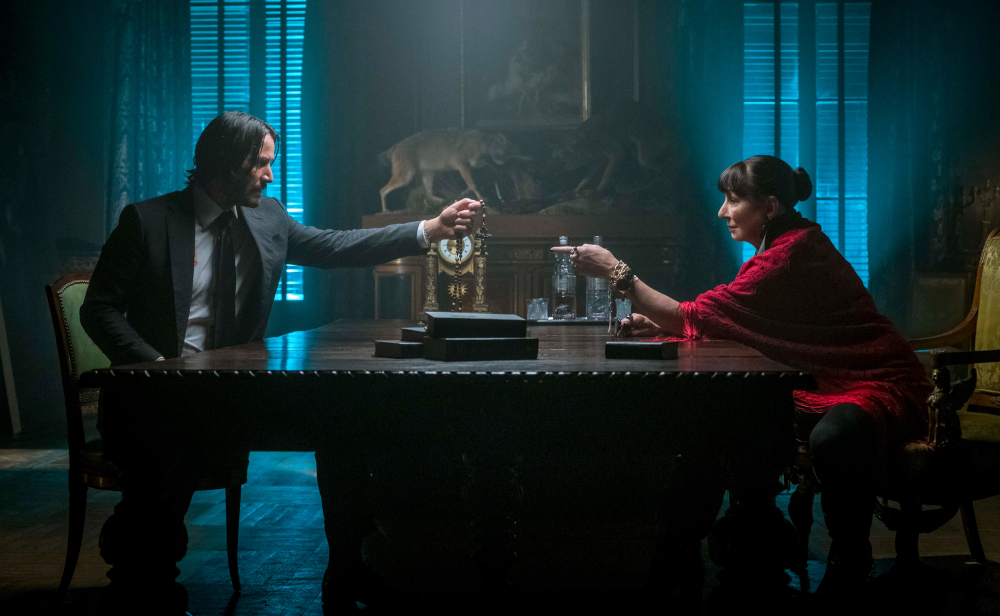
Scene from the 2019 film “John Wick Chapter 3: Parabellum” featuring Keanu Reeves (l) as “John Wick” and Anjelica Huston (r) as “The Director”
For some strange ritualistic reason, John’s back must be branded and the rosary broken. He wants safe passage to Casablanca which, in ancient times was a sanctuary for pirates. I guess that works for assassins now. The (ballet) Director (Anjelica Huston) is running the business but also training ballerinas (including actual ballet star Unity Phelan) and others to become assassins. We see some of the training John must have taken in his youth.
Meanwhile, a new character shows up at the Continental. They are simply called the Adjudicator (Asia Kate Dillon, and I’ll explain the pronoun use later). The Adjudicator is sort of an insurance investigator who establishes which High Table rules have been broken and what the penalty for it is.

Scene from the 2019 film “John Wick Chapter 3: Parabellum” featuring Asia Kate Dillon as “The Adjudicator”
In Winston’s case, the penalty is surrendering his position as manager of the Continental for allowing Wick to kill a man on their grounds and leave and also for giving him a head start. He’s got seven days to wrap up his affairs.
On a separate occasion, they visit The Bowery King (Laurence Fishburne) demanding that he step down in seven days. He refuses (there are always consequences for refusing). He sees himself truly as a king and the Bowery as his exclusive domain. Alas the Adjudicator disagrees.
Since they are encountering some resistance, the Adjudicator enlists the aid of the assassin Zero (Mark Dacascos) and his students including Shinobi #1 (Cecep Arif Rahman) and Shinobi #2 (Yayan Ruhian). These assassins wade through the warriors of both the Ruska Roma and the Bowery King as if they weren’t even there. The Director’s punishment was being pierced through both hands by a sword. The Bowery King is allowed to live but receives seven “cuts” from the sword, all for helping John Wick.
In Casablanca, John is again attacked on sight.
As an aside, why is John only attacked once he reaches a destination? I assume the Ruska Roma had special methods of getting John to JFK International or whatever airport he flew out of, but once there, why wasn’t he attacked long before he could get near a plane? Why weren’t TSA trying to stop all this if it occurred.
I know the High Table and all of its associates like to think of themselves as very principled and rule bound, but they kill for a living. What’s to stop one from putting a bomb on John’s plane or shooting it down with a missile?

Scene from the film “John Wick Chapter 3: Parabellum,” featuring Keanu Reeves as “John Wick”
But John makes it to Casablanca and is attacked before the assassins are stopped by Yassin (Aissam Bouali), the concierge at the Continental in that city. Yassin informs them that the manager of the hotel has granted John amnesty. As John and Yassin walk away, one of the assassins tries to shoot John anyway and Yassin kills him.
In the manager’s quarters, John is confronted by two vicious dogs, Malinois owned by Sofia (Halle Berry). She shoots John twice but he’s still wearing his bulletproof suit from the last movie and is only knocked down. They have some history together and the marker he’s carrying is hers. She owes him and he intends to collect. The price is a meeting with The Elder (Said Taghmaoui), the one who stands above the High Table.
To find him, Sofia takes John to see Berrada (Jerome Flynn), a local authority of some sort who seems fascinated with one of Sofia’s dogs. John asks how to find The Elder and is given a cryptic answer about following a certain constellation in the desert and walking until you’re practically dead. Then the Elder may find you.
As a price for his services, Berrada wants to keep one of Sofia’s dogs. She absolutely refuses (and remember there are always consequences for a refusal). So he shoots the dog.
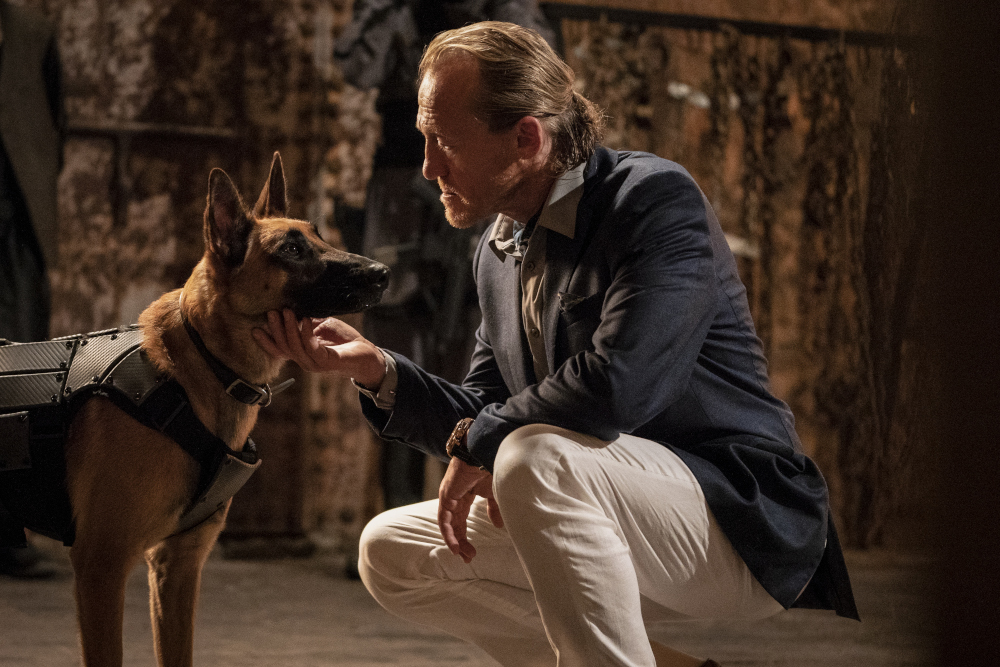
Scene from the 2019 film “John Wick Chapter 3: Parabellum” featuring Jerome Flynn as “Berrada”
Thankfully, both dogs are wearing harnesses similar to what service dogs wear, only these are made of Kevlar, so the dog, while knocked down, isn’t injured.
Sofia’s pissed and shoots Berrada, igniting yet another gun fight.
John Wick: Sofia, don’t.
Sofia: He shot my dog.
John Wick: I get it.
That was dumb. The dog wasn’t hurt. I could see her reaction if the dog had been injured or killed, but it was alright.
Anyway, one of the dogs attacks Berrada, ripping up his groin (they like to attack men there) and our “heroes” escape.
As another aside, the dogs in the film were trained to attack areas smeared with peanuts butter and fish oil, and the men wore a lot of protection under their clothing. Yikes.
More and more running fights and lots and lots of shooting. The dogs are good fighters like Sofia and John and take out or distract their fair share.
While this and the other John Wick films take care to show people frequently reloading, both John and Sofia fire way too many shots between reload to be practical, even for weapons with 30-round magazines.
They steal a vehicle and get away, driving into the desert. Sofia drops him off and John adds his blood to the marker, terminating her obligation. Sofia gives most of the water to her dogs in a bowl, drinks the rest from the bottle, then spits a little back in for John. Then she leaves him in the middle of the Sahara.
Since the High Table is really upset at anyone helping John, and since Sofia is a manager of the Continental in Casablanca, how does she manage to survive all this without consequences? We never see her again in the film, yet she drives back from whence she came as if nothing’s supposed to happen.

Scene from the 2019 film “John Wick Chapter 3: Parabellum: featuring Keanu Reeves as “John Wick”
John wanders a beautiful and stark desert panorama until he collapses and then is found by a man leading camel. He is taken to what looks like a Bedouin camp and there John meets the Elder. He’s actually quite a lot younger than John. Maybe he recently inherited the position from someone older.
Anyway, John explains he wants to live to preserve the memory of his wife. The Elder makes him a deal. He must return to his old life and serve the High Table, doing whatever he is asked to do. He must also give up a little flesh to prove his fealty.
John roughly amputates the ring finger on his left hand. He gives the ring to the Elder. In return, he is given a bath and a fresh set of clothing (I can imagine the old set was rather tattered and smelly at this point). He is also ordered to kill Winston, but here’s the kicker. He’s still excommunicated and the now $15 million bounty on his head remains in effect until he kills Winston.
Nothing like a challenge, eh?
Again, John makes it back to New York without incident and without medical treatment for a recently removed digit.
In the subway terminal, he meets various assassins and they fight. Trouble is, people are being shot and stabbed all over the place but the dense crowd surrounding them does not react at all. It’s as if people are brutally murdered in front of them everyday and it’s so ordinary. What were the filmmakers thinking?
He encounters Zero but they are separated by innocents. John manages to blend into the crowd (finally) before being attacked on the street by two motorcyclists. He kills them and steals one of the bikes. Zero takes the other and is coincidentally joined by more of his minions all on motorcycles.
Another fight ensues on a conveniently closed yet fully functional bridge. Everyone is killed by John except Zero and John barely makes it to the steps of the Continental in time for Charon to stop Zero from killing him.
They are both invited inside where John is reunited with nameless dog.
Why is this courtesy offered to John? Technically, he should be killed on sight, even by Charon and the immunity of the Continental should be null and void.
Nevertheless, John and Zero wait for Winston in the lounge. This is where Zero confesses a huge hero worship of John and what an honor it is to fight him. This isn’t the last time some of the assassins extend this to him. John is more annoyed than anything else.
John (not Zero) is invited to see Winston in some special all glass sanctuary where it is presumed John will be allowed to kill him. This is very much like the “hall of mirrors” scene from the previous movie. Look, I know that really stylish sets are part of the franchise, but it’s like they’re running out of ideas.
Winston gives John a gun so he can kill him if he chooses. The Adjudicator shows up for the killer moment. They always show up just at the last, once most of the action is over, to view “the kill”. Only Winston refuses to give up his manager position and John refuses to kill him.
Here we go again.
They make a phone call to “the office,” this time removing the Continental’s special sanctuary status. Now “business” can be done on its grounds. The guests are forcibly told to leave (for their own safety), and once they’re gone, two big buses of assassins arrive.

Scene from the 2019 film “John Wick Chapter 3: Parabellum” featuring Keanu Reeves as “John Wick”
Winston, Charon, and John go to a literal safe, a big one, which is very comfortable and has lots and lots of guns.
In fact, when Winston asks what John needs, he says “Guns. Lots of guns.” This mirrors the line Keanu Reeves delivered in “The Matrix” (1999) when he and Trinity (Carrie-Anne Moss) are going to rescue Morpheus (Laurence Fishburne).
More really long fight sequences. The lighting is changed to a dim green also copying “The Matrix.” All of the assassins are heavily armored forcing John and Charon (Winston is having a brandy in his safe) to resort to armor piercing shotguns (armor-piercing rifles are just as effective, easier to reload, and are fully automatic).
The Adjudicator is in their room. They call Winston who hangs up on them. Good for Winston.
Fight, fight, fight, fight. At this point, I experienced a violence overload. A lot of this felt like watching a first person shooter video game.
Eventually, everyone but Zero and his men are dead. Charon returns to Winston’s bunker (I should say, John’s dog is with Winston). John goes back to the palace of glass to face Zero’s assassins.
Just how many glass cases can John crash through without being sliced to pieces by broken glass? John manages to kill everyone while Zero is watching, that is everyone except Shinobi 1 and 2. They are also huge John Wick fans and are honored to fight him. They even make fun of him when John is knocked down (for the millionth time) and takes a few seconds to get back up.
Shinobi #1: [after the Shinobis knock John down] He’s getting slow.
Shinobi #2: He’s been retired for five years.
Shinobi #1: But he is still… John Wick.
Shinobi #2: We will see.
John eventually defeats them but doesn’t kill them. This was because Keanu Reeves really admired their fighting style and asked the director to change the outcome where John was supposed to kill them. We may see them again.

Scene from the 2019 film “John Wick Chapter 3: Parabellum” featuring Mark Dacascos as “Zero”
The duel between Zero and John includes some misdirection where each one pulls a ninja disappearing act before attacking from behind. Long, long story short, John impales Zero in the chest. He doesn’t die right away and even seems to expect he’ll be able to get up again. As John walks away, Zero dies.
In the meantime, the Adjudicator calls Winston again and suggests a parley.
Everyone left alive, John, Winston, Charon, and the Adjudicator (I didn’t see the dog) talk. The Adjudicator says she can always call in more assassins and eventually they’ll get the job done.
Winston says he wants his old job back, the Continental reinstated, and swears fealty to the High Table. In exchange he shoots John several times, knocking him off the roof. The fall would have killed just about anyone, but we’ll see. Charon whispered, “Well played” to Winston.
The Adjudicator buys it until they get down to street level and John’s body is gone. Winston plays dumb and the Adjudicator leaves, satisfied for the moment.
Meanwhile, what’s left of John is in homeless person Earl’s (Tobias Segal) shopping cart being delivered to a disfigured Bowery King’s underground lair (I guess Earl was one of the few members of the organization to survive Zero’s attack).
The Bowery King makes a joke about John’s missing finger which, in return, John “gives him the finger.” They’re both really angry at the High Table and plan revenge.
End of movie.
As I’ve already said, this was violence overload. The fight sequences are very frequent and excessively long. It got tiring, especially when the real “action” wouldn’t happen until the fighting stopped and the characters interacted in ways that didn’t involve death.
There were a few points.
Halle Berry
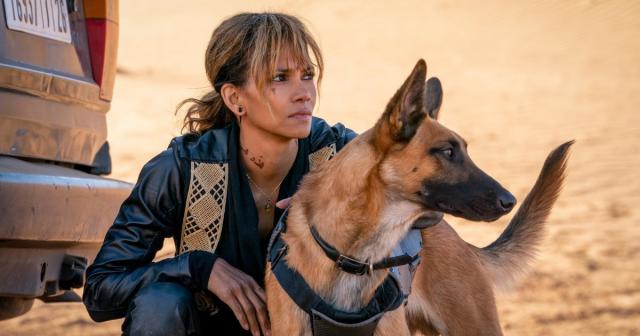
Scene from the 2019 film “John Wick Chapter 3: Parabellum” featuring Halle Berry as “Sofia”
As I was watching the film, I felt she was miscast. In Casablanca, I expected someone more appropriate to a mysterious, Arabic scene and Berry really comes off as totally American (the actress was born in Cleveland, Ohio). Don’t get me wrong. I love Berry as an actress. She delivers high quality to everything she’s in (we won’t mention the 2004 movie Catwoman). I just didn’t feel she was right for the part.
Then I read the trivia. Halle, who was 49 at the time this film debuted, wanted to prove that she could keep up in an action film with Keanu Reeves. She said it was quite a challenge and she worked hard on her physical, martial arts, and weapons training. In addition, she had to learn to become the trainer for the two Belgian Malinois. In the end, they responded to her as well or better than their regular trainer.
While stylistically, I didn’t feel Berry was right for the part, the fact that she put in so much effort into her role, makes me feel like a jerk for saying so. If anyone earned the right to play Sofia, with was Berry. I’m not going to argue.
Asia Kate Dillon

Asia Kate Dillon attends the 23rd Annual Critics’ Choice Awards on Jan. 11, 2018 – Taylor Hill/Getty Images
I loved Dillon in the role of the Adjudicator. They brought the right amount of coldness and menace to the personality. Given Dillon’s general appearance and knowing I’d be writing this review, I felt it necessary to determine Dillon’s pronouns. Glad I did.
According to Wikipedia (I know, I know…):
Dillon was born in Ithaca, New York. They identify as non-binary and were assigned female at birth. Dillon explained that around 2015, they began removing gendered pronouns from their biography, and auditioning for the part of Mason helped them understand their gender identity. Dillon is pansexual, stating they are attracted to multiple genders.
Okay, my takeaway is that Dillon’s preferred pronouns are “they” and “them.” If that were all there was to it, no big deal. But then again…
In September 2021, Dillon told The Hollywood Reporter’s “Hollywood Remixed” podcast that they use the word “non-binary” because their “gender identity falls outside the boxes of man or woman.” They stated that gender is a spectrum, without a binary that was “created by colonists and imposed on the indigenous peoples,” and that “sex is not a binary either.”
Let’s play that again:
They stated that gender is a spectrum, without a binary that was “created by colonists and imposed on the indigenous peoples…”
Funny how that “binary” has worked for the vast amount of human beings across the vast amount of this planet for probably 99.99999% of human history. Colonists and indigenous peoples had nothing to do with it.
Oh, sure. You can say that colonialism attempted to force a lot of European practices and customs on indigenous peoples including sex (see the “Missionary Position”). You could even take a stab at the concept of “two-spirited people” among a few indigenous groups (I doubt it was a global phenomenon across all time) that no doubt Europeans of by gone eras may have tried to eliminate.
However, Dillon makes it seem as if “spectrum-range gender” is the norm and binary gender and sexuality is the aberration, one specifically created to oppress indigenous groups once Europeans took it upon themselves to colonize the rest of the world.
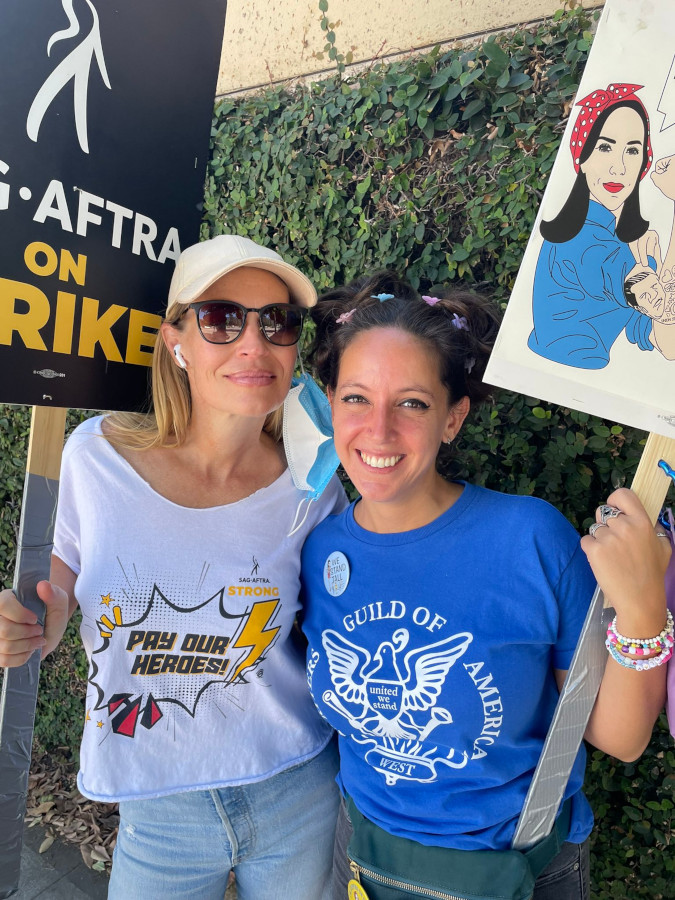
Actress Jeri Ryan (l) wears a “Pay Our Heroes” shirt while standing next to Dana Braziel-Solovy (r).
Good bloody grief. This is why I firmly separate the art from the artist. This is why you never, ever make celebrities your idols or heroes. There’s even a t-shirt worn by SAG-AFTRA strikers that says, “Pay Our Heroes.” It implies that the actors who play heroic TV and film roles need to receive more equitable pay. I have no objection to people receiving fair pay, but I do object to actors themselves being depicted as heroes.
A few, such as Reeves himself, have done many good and kind things for people, so arguably he could be thought of as a “hero.” But most actors, no. Heroes are police, soldiers, EMTs, other first responders, even school teachers and other helping professionals. To call an actor who just plays a heroic role a “hero” is an insult to real heroes.
So I separate the art from the artist. If I didn’t, I’d have almost nothing to watch, listen to, or read, at least of entertainment created in the past twenty to thirty years.
I should say that none of this affected my estimation of Dillon’s performance, which as I said before, was terrific. If I didn’t know the rest of the stuff, it wouldn’t matter. I only wanted to find out about some pronouns because I had a hunch. The rest just came tumbling out.
Leftovers

Scene from the 2019 film “John Wick Chapter 3: Parabellum” featuring Ian McShane as “Winston” and Lance Riddick as “Charon”
I noticed especially in “the office” that most of the staff featured many tattoos and body piercings. I know for a few of the characters including Wick, the tattoos had specific meaning. I don’t know if for the rest, those features were added for the film or were simply not edited out digitally for the background actors. It was sort of distracting, but that’s just me.
I know there’s a fourth film where (Spoiler Alert) John Wick (supposedly) dies. There’s also another movie coming out in 2024, a spinoff called Ballerina that takes place between the third and fourth Wick movies (although I don’t see how).
Is John Wick truly going to die and be replaced by the spinoff character? I guess only time will tell.
I hope in the fourth movie the violence is dialed back some. It’s not just exhausting to watch, it actually starts to get boring.
 poweredbyrobots.com