The President’s Ill-Fated Proposal

tulum

Photo Credit: Popo le Chien – 13 Sept 2016 – Tulum’s Templo del Dios Viento (Temple of Wind God, left) and Castillo (castle, right)

President Lincoln’s Secretary of State William Henry Seward stood at what was called the Temple of the God of Wind at Tulum gazing northeast over the waters toward the island of Corzumel. Mexican President Benito Juarez summarily dismissed Lincoln’s proposal for American freed slaves to be relocated to that small bit of land off the Yucatan peninsula, but Seward had to see it for himself.

Lincoln was the President, and Seward did what he was told, but his conscience as a man and a Christian told him that if a man were truly free and a citizen of the United States, then his former status as slave should be wiped clean, rather than him becoming a societal pariah. If only he could convince the President of this.

The breeze in his face, Seward became a prophet. “Freedom is the right to tell people what they do not want to hear.”

I wrote this for the What Pegman Saw writing challenge. The idea is to use a Google maps image and/or location as the inspiration for crafting a piece of flash fiction no more than 150 words long. My word count is 150.

Of course, I looked up Tulum, but consulting Google maps, I found it was fairly close to the island of Cozumel. It was a small bit of history of that island from 1861 that caught my attention, since the proposal I write about above did actually occur.

I have no idea about how the real Seward felt about it, so I made something up. Also, it seems that Lincoln did succeed briefly, in 1862, in establishing a short-lived colony of ex-slaves on Île à Vache off the coast of Haiti.

The quote I put in Seward’s mouth is attributed to author George Orwell, which would indeed have made the Secretary of State a “prophet,” since Orwell wouldn’t be born until 1903.

To read other stories based on the prompt, visit InLinkz.com.

The Dragon’s Head

dragon's head

Photo credit: Jeff Chep – Found at the Amusing Planet blog

Their campaign against Peking was succeeding, but General Hiroki Sato had to land his troops at Shanhai Pass, then march to the city to relieve the siege.

“Is this bombardment necessary? There are likely few Chinese troops present.”

Admiral Ako Yamamoto could barely hear above the cannon fire.

“Better this than an ambush.” He returned to his binoculars and gasped.

“What?” Sato took the binoculars from the terrified Yamamoto and beheld a sight he thought only possible in myth.

This end of the Great Wall of China, regaled in fable as the “dragon’s head,” was proving that its name was not merely symbolic. Stone, brick, tamped earth, and wood was miraculously transforming into an enormous serpent, the legendary defender of China.

A thousand men met their fate in the sea that morning in July of 1900, and then the dragon rose to destroy the rest of the invaders investing her land.

I wrote this for the What Pegman Saw writing challenge. The idea is to use a Google maps street image and location as the inspiration for crafting a piece of flash fiction no more than 150 words long. My word count is 150.

Today, the Pegman takes us to The Great Wall of China. As you might imagine, the wall has a long and fascinating history, which makes crafting a wee tale about it difficult.

I decided to focus on its western edge, which is at Lop Nur or “Lop Lake.” I discovered that in July 1900 (or 1904 depending on the source), the Japanese landed troops at Shanhai Pass where the wall dips into the sea, to re-enforce a siege against Peking. You can click the link to Amusing Planet to learn more, but that part of the wall is called “the dragon’s head” because it looks like a dragon dipping down to have a drink from the ocean.

Now imagine that the wall isn’t really a wall, and you’ve got a fantastic tale on your hands.

To read more stories based on the prompt, visit InLinkz.com.

The Unknown Children

botswana

Hwy A3 – Botswana – Google maps – 2012

Six-year-old Otilia cried herself to sleep every night for the past two weeks, ever since mother sold her to the man. The man took her and four other children in a truck, hiding them in big boxes. Now she was at her new home, the mansion of a rich man in Gaborone.

The maid gave her a bath and new clothes so she could meet him. He was sitting behind a desk in a big library when the maid took her in. Otilia stood in front of the desk. The maid left and closed the door.

He was a big man, and his voice was booming. “You look like you’ll make a fine domestic.”

Otilia was supposed to call him “Mr. Mlalazi,” but she was too scared to talk as he stood and walked toward her.

“First, your initiation, though.” He unzipped his trousers and cold fear gripped the child.

I wrote this for the What Pegman Saw writing challenge. The idea is to take a Google maps location and image and use them as the inspiration for crafting a piece of flash fiction no more than 150 words long. My word count is 150.

Today, the Pegman takes us to Botswana in Africa. Botswana is a big country with a long history, so I had to find a way to narrow things down a bit. I finally looked up current news stories and found one on child trafficking. As it turns out, human trafficking in Botswana is an enormous problem. All I had to do was read a few sentences and I had my story.

I called this story “the unknown children” because we hardly ever hear about this astonishing tragedy from western news agencies. Someone has to tell their story.

To read other tales based on the prompt, visit InLinkz.com.

Encounter at Muxnar

mdina, malta

Street in Mdina, Malta – © Google 2014

Emily Becker followed the old Maltese man down a little-known side street into a shop. The walled city had existed since the Bronze Age, but the young archeology student was visiting because of her passion for the Apostle Paul. The Apostle’s history was tied to Malta, though not to this small city.

Inside, the man excitedly displayed what looked like a mirror, except the glass was black instead of reflective.

“So what’s this?” She was suddenly aware she was alone with a stranger and her tour guide didn’t know where she was.

“You see Shaul. Look deep.” He used the Apostle’s Hebrew name.

Emily drew closer to the mirror.

“Touch.”

She held up her hand, and it was as if the mirror reached out and grabbed her.

Emily turned and she was standing near Muxnar Reef in a rainstorm. Strangely dressed men were struggling to make shore including a middle-aged Jewish man.

I wrote this for the What Pegman Saw writing challenge. The idea is to use a Google street maps image and location as the inspiration for creating a piece of flash fiction no more than 150 words long. My word count is 147.

Today, the Pegman takes us to Mdina, Malta. Of course for perspective, I looked up the city’s history as well as the general background on Malta. If I had a bucket list of places I wanted to visit, Malta would be on it.

Someone commented on this story that the concept of a dark mirror leading to other places and times might make an interesting series. As I was pondering the Pegman challenge this morning, I thought that it would be interesting if the magic of the dark mirror randomly appeared in different places across the world.

In this case, an old shopkeeper in Malta happens, for a time, to acquire a mirror possessed by the dark magic and realizes its potential. Perhaps the mirror supplies a destination depending on the user’s desires. In her fantasies, Emily has always wanted to meet the Apostle Paul. According to this researcher, the most likely site of Paul’s shipwreck on Malta as recorded in the Book of Acts, chapters 27 and 28, is “just outside St Thomas’ Bay, near a dangerous sandbar called the Muxnar Reef.”

I had wanted to write a longer tale, but 150 words only goes so far. Now we’ll never know what happens to Emily next.

Oh, Malta has two official languages, one being Maltese, which is a semitic language, and the other being English, so Emily would be able to communicate with the shopkeeper. Talking to the Jewish apostle, his fellow captives, and ancient Roman soldiers might be another story, however.

To read other tales based on the prompt, go to InLinkz.com.

Return to Cowra

billinudgel hotel bar

Billinudgel Hotel, Billinudgel, NSW, Australia, © Cube Online Services Google Maps

Hands trembling slightly, the middle-aged Japanese man walked into the bar at the Billinudgel Hotel.

“What’ll it be, Sir?”

“A beer. Whatever you have on tap.”

She selected a glass and filled it with liquid amber topped with a healthy froth. “There you go. Name’s Marge. You’re not the usual guest we get around here.”

He shook her hand, suppressing the urge to bow, this being Australia. “Haruto Nakajima. Pleased to meet you.” He took a sip of his beverage.

“What brings you here?”

“I’m trying to put some demons to rest.”

“How’s that?”

“Ever heard of the breakout at the Cowra prisoner of war camp?”

“Toward the end of the war wasn’t it?”

“Twenty years ago tomorrow. I’m a survivor. Chose not to commit suicide. I need to go back to learn how to live with myself.”

Nearly 950 km to Cowra.”

“Well, I’m still working up my nerve.”

I wrote this for the What Pegman Saw challenge. The idea is to use a Google maps image and location as the inspiration for creating a piece of flash fiction no more than 150 words long. My word count is 149.

Today, the Pegman takes us to The Billinudgel Hotel, New South Wales (NSW), Australia. Naturally, I looked the place up. Not much about Billnudgel on Wikipedia, but the hotel has a Facebook page as well as a detailed history at posted at BrunswickValley.com.au.

However, none of that seemed terribly dramatic, so I looked up the history of New South Wales itself, and discovered the Cowra Breakout. During World War Two, the town of Cowra was the site of a prisoner of war camp interning over 1,100 Japanese prisoners. On 4 August 1944, the prisoners led a mass escape which ultimately cost the lives of four Australian soldiers and 231 Japanese POWs. Some were killed during the escape attempt, but many committed suicide rather than be recaptured. All living prisoners were recaptured within ten days of the escape.

I was dismayed to find that Cowra is approximately 947 km (almost 590 miles) from Billinudgel, but made the best of it. My story is set in the summer of 1964, twenty years after the escape.

In 1929, Margaret Alice Ring (Ma Ring) of New Zealand took over running the Billinudgel Hotel, and in 1946, her niece Marge came to Australia to work the bar. Marge remained at the hotel until her retirement in 1984, so I had her present to greet Haruto.

I wondered how the survivors of the escape, the last of whom were repatriated in 1947, dealt with the aftermath, so I decided to use this story to explore it a bit.

To read other stories based on the prompt, go to InLinkz.com.

The Praying Man

Gurara Waterfalls

Gurara Waterfalls © Samson Rohan Google Maps – 2017

“Daddy, who’s that man by the river? He looks strange.”

“Just some of the local color, Janet. Don’t pay attention to him. They all beg.”

“George, stop being racist. We’re here at Gurara Falls for a vacation. Nigeria is his country, not yours.”

George Dukes rolled his eyes. Thousands of miles from home and she was still nagging. He looked back and saw a couple walking toward the native. Probably felt sorry for him, the saps.

Buba the Hunter continued praying to his gods in this strange place as the two outsiders approached, a man and woman. The woman was speaking to him, but used the language so oddly.

“Please, you must come with us. You don’t belong here. We can take you home.”

He looked up. For two days, he had prayed to Gura and Rara for a way back to his village. Were these people their emissaries?

I wrote this for the What Pegman Saw writing challenge. The idea is to use a Google maps image and location as the prompt for creating a piece of flash fiction no more than 150 words long. My word count is 149.

Today, the Pegman takes us to Gurara Waterfalls in Nigeria. I looked it up on Wikipedia and discovered the falls were thought to have been discovered in 1745 by a Gwari hunter named Buba. The falls and river are believed to have been named after the two deities Gura and Rara.

In keeping with my recent science fiction stories The Devil from the Fire and Blood Libel, I decided to dislocate Buba in time, though not in space.

Today, the falls are a tourist attraction complete with a resort boasting a recreation center and seven-star hotel. I populated that hotel with modern “ugly American” tourists, but also with physicist Everett Carson and his companion, historian and linguist Aiyana Zheutlin (originally a character from my “Time Traders” books, written as a homage to the works of Andre Norton [the late Alice Norton]). They’ve come to take Buba to the phenomenon (out of public view in this wee tale) and back home.

To read other stories based on the prompt, go to InLinkz.com.

Disaster

mary bay

Mary Bay on Yellowstone Lake, Yellowstone National Park – Photo Credit: Yellowstone Vacation Blog

“It’s so serene here. I’m having a hard time believing you’e right, Craig.” Geologist Joanne Palmer looked out over Yellowstone Lake from Mary Bay, which was thought to have been created sometime in the last 14,000 years by a Hydrothermal explosion. It was a favorite spot for Park tourists and reminded her of family vacations with Mom and Dad.

“Most people worry about the next volcanic eruption but hydrothermals occur independently. Data from our experimental geosensor device says just about all of southern Idaho and eastern Wyoming will have to be evacuated within the next 12 to 18 months.”

“Are you sure? I mean, displacing millions of people…what if we’re wrong?”

“What if we’re right and don’t say anything about it, Joanne? We work for the U.S. Geological Survey. We have a responsibility…”

“I know. We have to tell America that the next Armageddon will be happening right in their own backyard.”

yellowstone hot spot

Location of the Yellowstone Hotspot. Numbers indicate the time of the eruption, in millions of years ago – Found at Wikipedia.

I wrote this for the What Pegman Saw writing challenge. The idea is to use a Google maps image and/or location as the inspiration for creating a piece of flash fiction no more than 150 words long. My word count is 150.

Today, the Pegman takes us to Yellowstone National Park. I live in southwestern Idaho which isn’t all that far from Yellowstone, but I remember it mainly from all the vacations my family took there when I was young. It’s fabulous place with lots of interesting features.

Of course, the idea of having a supervolcano in your own backyard is a fun idea, but I discovered that hydrothermal explosions are also a thing, so I decided to create a mini-disaster story based on them. I also found a map tracking the Yellowstone “hot spot” over the last 16 million years and saw that it “traveled” all across southern Idaho. What if it all went up along that track at once?

To read other stories based on the prompt, go to InLinkz.com.

Flight 19

flight 19

Flight 19 Avengers, FT-28, FT-36, FT-81, FT-3, FT-117 and at the top PBM-5 Bu. Nu. 59225 (squadron number 49) – Found at Wikipedia

“We should be landing at Treasure Cay Airport in about ten minutes.”

Lori couldn’t relax knowing they were flying into weather that was nothing like the forecast.

“I’m sure the pilot is competent.” Zach chided his wife on her former career as a Navy combat pilot. She never could relax when flying commercial. “It’s just a little fog.”

“The weather was supposed to be partly cloudy. Does that look like partly cloudy to you?”

He bent over her to look, giving her a quick kiss which made her smile.

“Fog’s clearing. What are those?”

She looked again. “Flight 19.” The pilot of their chartered plane wouldn’t know what the five aircraft were holding a parallel course, but she did. ATC Marsh Harbor must be going nuts.

“An antique air show?”

“Nope. Those five Grumman TBM Avenger torpedo bombers disappeared over seventy years ago. I’ve got to talk to our pilot.”

I wrote this for the What Pegman Saw writing challenge. The idea is to use a Google Maps image and location to inspire the creation of a piece of flash fiction no more than 150 words long. My word count is 149.

Today, the Pegman takes us to Treasure Cay, Bahamas. Wikipedia wasn’t particularly revealing about the location, and while the larger environment of the Abaco Islands has an interesting history, I felt a bit lazy this morning and decided not to do all that much research.

The Bahamas are on the northern edge of the Bermuda Triangle, and while I don’t believe the triangle really is some sort of mystical or otherwise mysterious portal to other times or dimensions, I thought I’d give Flight 19, five Grumman TBM Avenger torpedo bombers that disappeared in the triangle on 5 December 1945, a way to finally get home, albeit almost 73 years late.

To read other stories based on the prompt, visit InLinkz.com.

The Last Ride

christine

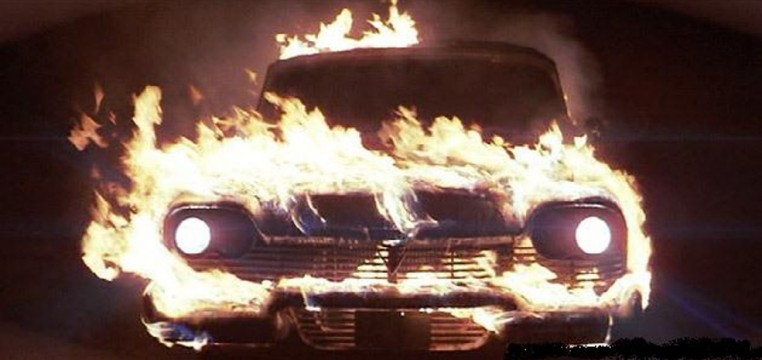
Scene from the 1983 film “Christine.”

Lance and Karl Ellis and their girlfriends Brandi and Jennie had been disappointed after visiting Cross Castle near Clinton Road. No Satan worshipers, goat’s heads, or dead cats. Now they were racing north as the Jiles black pickup roared after them.

Jennie screamed hearing another shotgun blast but Lance turned the curve just in time and it missed.

“We never should have come out here, Karl.” In the backseat, Brandi hit his shoulder.

“Wait. Can’t see his headlights in the mirror. He’s gone.”

They’d sought one terror and a different one nearly killed them. Now they were safe. Then the restored 1958 Plymouth Fury lunged forward.

“Slow down. We’re okay.” Jennie put her hand on Lance’s shoulder.

“It’s not me. The car’s doing it by itself.”

“Knock if off.” Karl was laughing nervously.

Then the radio came on and the analog tuner cycled across the dial picking out different stations, “Hello…kidz…I…am…Christine.”

I wrote this for the What Pegman Saw writing challenge. The idea is to take a Google Maps image and location and use them as the inspiration for crafting a piece of flash fiction no more than 150 words long. My word count is 150.

Today, the Pegman takes us to Clinton Road, West Milford, New Jersey which according to the description, has a “strange reputation.” I started with Wikipedia but decided not to use it since there is so much else on the web about this stretch of highway.

There’s a ton of info at Weird NJ about the Ghost Boy and Cross Castle, but I also found an interesting article about the Jiles Jones Phantom pick-up truck. I used the latter two legends in my wee tale.

Then, just for fun, I added a small element from Stephen King’s 1983 novel Christine.

Rather than me writing lengthy descriptions of all of this, click the links I’ve provided to learn more.

To read other stories based on the prompt, go to InLinkz.com.

The Alien Cure

karovy vary

A panorama showing most of the spa/historic section of Karlovy Vary – Photo taken and panorama created by Bobak Ha’Eri – Found at Wikipedia.

“The healing powers of the thermal springs here at Karlovy Vary have been known since the Bronze Age, Vasnev.”

“Oh please don’t mention the Bronze Age, Ross. I have very unpleasant memories from that era.”

“I was there too, you know. However we’re not here for our health.”

“I thought we were supposed to be preparing for a manned excursion to the stars. Why are we in the Czech Republic with a Forerunner scanning device.”

“You should be able to figure that out.”

“Of course, you suspect the health effects of the spa are artificial.”

“Right, just like the red goo used in Forerunner spaceship acceleration couches.”

“Shall we partake then and covertly scan the waters?”

“Let’s. Ashe thinks a Forerunner outpost could be buried underneath the city.”

“Who knows what wonders or terrors are there?”

“But can their technology be accessed in the present or only in the past?”

I wrote this for the What Pegman Saw writing challenge. The idea is to use a Google Maps image and location as the prompt to create a piece of flash fiction no more than 150 words long. My word count is 150.

Today, the Pegman takes us to Karlovy Vary in the Czech Republic. The healing powers of the spa there have been known since the bronze age and the bronze age always reminds me of my “Time Traders” series which I began last July with The Recruit and is based on a series of novels written by Andre Norton (pseudonym, née Alice Mary Norton).

We last saw Ross Murdock and Vasnev Romanovich in my epilogue to “Key Out of Time” way back at the end of October. I haven’t done anything with this series since then, though it’s still posed for the next “novel,” and I thought I’d dust off Ross and Vasnev and have them investigate the spa in the present. I wonder how many miracles in our world could be attributed to the alien influences of the Forerunners?

To read other stories based on the prompt, go to InLinkz.com.