

Scene from the 1951 film “The Thing From Another World.”
If you like my work, buy me a virtual cup of coffee at Ko-Fi.
There seems to be an ongoing war debate on social media about whether or not science fiction is inherently liberal/progressive or conservative.
I should say that “woke” is the more common word used for “liberal” or “progressive” although the two terms are not exactly synonyms. Since, in certain circles, “woke” is used as a pejorative, I’ll be using “progressive” in the body of this wee article.
It is (mostly) conceded that across the history of science fiction (and the length of that history is also under dispute) that SciFi has tended to be progressive relative to the era in which it was created.
I bolded that statement because depending on when the piece of science fiction was created, the definition of “progressive” might not fit what it is considered to be in 2023.
Side Note: I took the image above from the movie The Thing from Another World (1951). The military people tend to be conservative and the scientists liberals. The Air Force people end up destroying the monster while one scientist almost gets them killed trying to communicate with the superior, intelligent (and extremely violent) alien.

Scene from the second Star Trek pilot “Where No Man Has Gone Before.”
For example, original Star Trek showed a black woman as the head communications officer and an Asian man as the helmsman on the bridge of a starship. That sounds like nothing now, but in 1966, it was a big deal. Some people felt that especially in the Bible belt, people wouldn’t accept a mixed race crew working together.

Sulu (George Takei) and Uhura (Nichelle Nichols) in the Star Trek episode “The Naked Time.”
In that particular case, no one complained. People just assumed by the 23rd century, none of that would be an issue anymore.
Of course, there was no such thing as social media, let alone the internet, so opinions were expressed to the public with much less speed and frequency.
That same 1960s Star Trek addressed issues as ageism, war, overpopulation, class division, sexism, female servitude, and so on. It really was a pioneer for its time.
On the other hand, Captain Kirk was a sexist, womanizer, military force was used as a problem solver far more often than diplomacy or cooperation, and all the women on the Enterprise were attractive and wore miniskirts.
“Relative to the era in which it was created.”
But I’m not here to talk about that. An analysis, even a fairly shallow one, on the nature of science fiction across the decades and how it cannot and does not automatically conform to the perception of 2023 “woke” is lengthy. I didn’t get much sleep last night and I don’t have a lot of time.
So I’m going to come at this from another angle.
Next year, I’ll turn seventy years old. Yes, I’m a geezer. I was twelve on September 8, 1966 when Star Trek first came to television. I’ve been a life long science fiction fan (although some “modern” fans may disagree based on their political/social viewpoints on what makes a SciFi fan).
That doesn’t mean I’ve read every science fiction short story and novel ever written, or seen every SciFi movie and television show ever manufactured. But I’ve consumed my fair share.
This sounds like a change of subject but it’s not. Whenever I drive somewhere and turn on the car radio, my music selections tend toward popular rock from the 1960s through 1990s, although they center on the 60s through 80s.
I’m sure plenty of pop and rock music has been produced since nineteen-ninety something, but my interest wanes as it crosses the threshold into the 21st century.
I’ve become “stuck” in my music preferences, partially due to nostalgia and partly just in terms of what I happen to like.
I’ve watched TV and movies made in the 21st century and read more recent books. What I’ve chosen to consume I’ve generally but not universally enjoyed. I still tend to like entertainment more founded in the past than the present. Even the comic books I’ve enjoyed and read to my children when they were young seem to stop being fun sometime around the turn of the century.
In other words, I’ve become habituated, for lack of a better word, to a certain style and nature of entertainment founded in a particular time frame. After that time frame, even when I try to watch, listen to, or read the “stuff,” it doesn’t do it for me, at least mostly.
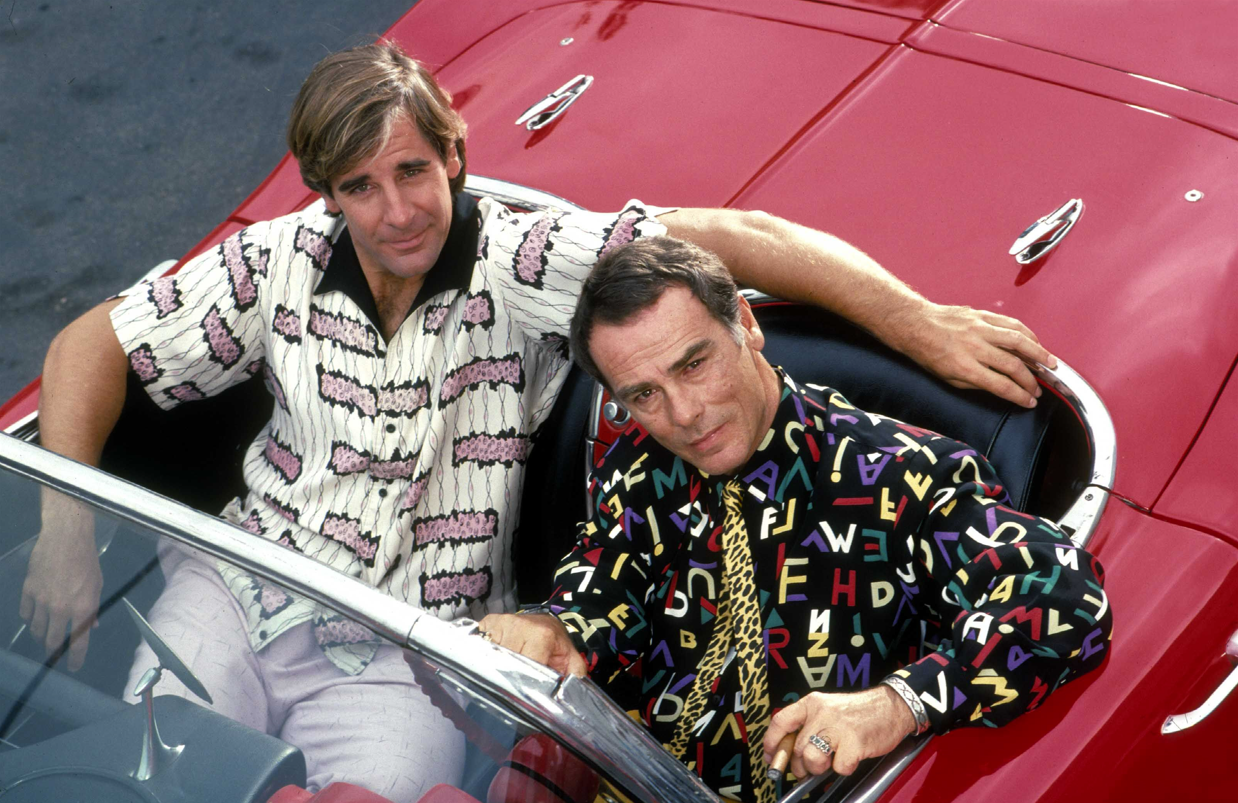
Promotional image for “Quantum Leap”
My viewing and reviews of 1990s Quantum Leap vs. the 2020s version of the show is a good example.
I wasn’t a fan of the original when it was on the air, but I’d heard of it. I rented the DVDs of the series from my local public library and watched enough of the episodes to tell me I really enjoyed it. Not every episode was a gem, but in general, the program was fun and entertaining. Yes, it addressed many, many social issues, but it also had fun with itself. The chemistry between Sam (Scott Bakula) and Al (Dean Stockwell) was to die for.
I also watched the entire first season and the first five episode of the second season of the “continuation” show. I tried, and I tried, and I tried to like it, and some of the elements worked for me.
But overall, it had a very different tone. It also addresses social issues, but in a more “hitting the viewers over the head with a blunt instrument” method. It doesn’t have a lot of fun. I gave my final analysis and farewell to the program a few days ago.
I’ve also sampled “Star Trek: Discovery,” “Star Trek: Picard,” and “Star Trek: Strange New Worlds.” It’s not like I haven’t given the 21st century a chance.
Is it the shows or me?
Probably both, but let’s center on me for a moment (yes, that sounds terribly arrogant). Like my tastes for a lot of things, they’ve become routinized. I’ve become “set in my ways.” Certain things I will enjoy and certain other things I won’t.
It’s like saying I’ve tried Brussel sprouts a few different ways but I still don’t like them. On the other hand, I’ll always have my “comfort foods.”
The science fiction I like, let’s say from the 1950s to the end of the century, reflects the values and societal trends of those times. I was born in the mid-1950s and hit young adulthood in the early 1970s. I’m sure you see where this is going.
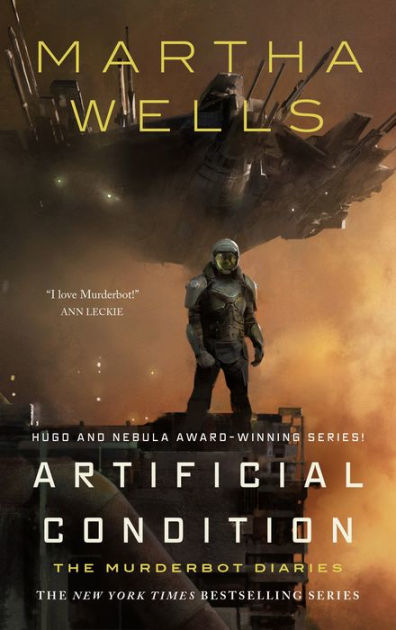
Cover art for “Artificial Condition,” part 2 in the Murderbot Diaries
It’s not that older people can’t learn to like newer things. I love the Sherlock (2010-2017) television series starring Benedict Cumberbatch. I liked most of the movies in the Marvel Cinematic Universe (MCU) from “Iron Man” (2008) through “Avengers: Endgame” (2019). I absolutely adore Martha Wells Murderbot Diaries (except for the initial pricing model) which began in 2017 and is still coming.
But my “go to” entertainment will always be at least two decades in the past. I think that’s just how life is for some of us.
That’s how some people might say that “science fiction is conservative.” It’s not, because SciFi is not one thing. However, the slice of science fiction these folks like may come from an era that reflects their social and political preferences.
For other people “science fiction has always been woke,” not because that’s true either, but because the SciFi they enjoy was (and is) produced in an era that reflects their social and political perspectives.
If you’re interested in what I have partaken in SciFi and what my thoughts are about it, I do keep an extensive list of reviews.
That’s as far as I’ll go for now. Later, when I’m up to it, I’ll address not just bad writing (because every era has bad writing), but substituting good writing for representation in the name of “revenge” activism. The little snippet below I took from twitter/X illustrates some of that. I’m not a Doctor Who fan, but there’s no avoiding it entirely.
And what the hell is “male presenting?” I’m not “male presenting,” I’m a man. It’s not anymore complicated than that.


Quote, “And what the hell is “male presenting?” I’m not “male presenting,” I’m a man. It’s not anymore complicated than that.”
Ah! Okay, let’s unpack that. Your statement illustrates your assumptions, which define the boundaries within your thinking takes place. This is fine on a conversational level between friends and colleagues, but falls short when measure against contemporary understanding.
If you want to understand the current state of knowledge then I can recommend Professor Robert Sapolsky’s lectures from Stamford on YouTube (https://www.youtube.com/playlist?list=PL848F2368C90DDC3D), which gives an in-depth introduction on Human behavioural psychology.
One of the problems we have with beliefs is that very few people have what it takes to keep abreast of scientific knowledge.
LikeLike
Yikes. That’s a lot of viewing. I don’t suppose there’s an abridged version of the material.
LikeLike
And your comment illustrates the problem.
Not getting at you, just trying to unpack the complexities that any argument requires to be effective.
I learnt this back in the day when I read Some Trust in Chariots! Edited by Castle and Thiering, which presented 16 essays to address all the issues around Von Däniken claims.
LikeLike
I would suggest that three attributes (at least) are required to “keep abreast of scientific knowledge”. One is patience, another is interest or “appetite”, and a third is discernment. This last is critical to the determination of what constitutes knowledge as distinct from faddish hypothesis or pseudo-science. A modern case in point is the treatment of anthropogenic climate change, which may be deemed a modern religious idolatry complete with dogma and intransigent dismissal of contrary data and alternative hypotheses. One alternative is tracing the historical, including paleontological, records of solar activity and temperature. These alternative suggest very different approaches for human expectations and accomodation of impending cyclical changes. There are other cases of assertion of one or another claim about scientific knowledge in which a prevailing model could and should be challenged by alternative data, models, and experimentation. The literature of science fiction, of course, thrives on the vagueries and variations of notions that purported scientists play with. It asks “what if?”, without the requirement of proving anything. It offers thought experiments that may examine possible consequences of human behavior far in advance of actually having to deal with any of them practically. In doing so, it allows consideration of human values and what one or another aspect of them may produce. Maybe it can enable us to choose those with the most desirable outcomes.
LikeLike
All that considered, much of modern science fiction and the larger world of entertainment expects the audience to accept what you call “vagueries (vagaries?) and variations of notions” as if they are established facts. If we don’t and are vocal about it (expressing opinions and observations on social media) then we receive social criticism up to and including ostracism. I don’t mind entertainment created for the sake of a particular audience, even one that’s represented by only a tiny percentage of the worldwide human population (of course I’m not the intended audience and will not partake). I do mind when someone else’s “subjective reality” is presented as fact AND I am required to unequivocally accept it as such. It adds further insult if, as in the video example from the recent “Doctor Who” show, I am told that my entire gender is ignorant and uninformed due to my difference in lived perception of what it is to be a human male.
LikeLike
I agree, which is why Professor Sapolsky’s lectures are they number and length they are. He also unpacks all the assumptions and caveats, the current experiments and ongoing science.
They are, surprisingly entertaining, or perhaps I should say I found them most entertaining. He has a refreshing approach to explaining complex subjects.
LikeLike
The reason I balked was because in general, I tend to avoid videos for print material. Videos take a long time to watch, and the average reading speed of most people is a lot faster than a person can speak. I don’t have the time in a day to devote myself to so much video content.
LikeLike
He’s written a bunch of books too.
The videos are recordings of his lectures. They are high signal to noise ratio content.
LikeLike
“Make presenting” and “female presenting” are terms used by transgender people. The character calling the Doctor a “male presenting Time Lord” is transgender. It’s a joke. Doctor Who has often derived humour from the Doctor being out-of-touch with his younger companions, going back to William Hartnell grumbling about Dodonysing Americanisms in the 1960s.
LikeLike
Er, “Dodo using Americanisms”, even.
LikeLike