The First Set of Ideas

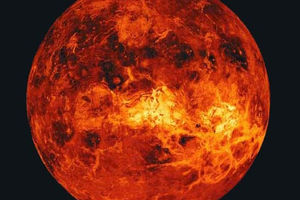
the planet venus

Image: space.com

Ideas. I get ideas. Some of them are extensions of my earlier robots stories, but others have been knocking around inside my brain for quite some time. Now that I’m becoming more comfortable in giving those thoughts a tangible expression, I want to branch out and try different types of stories.

Here’s what I’ve come up with so far. All of the titles are provisional.

The Problem With Ethics

If you’ve read The Rescuers, you know it ends with a lead in to the next story in this series. What happens when a Three-Laws driven Positronic brain is put in charge of automating many or most of the administrative and security functions of the main campus of a major business, the National Robotics Corporation, the company that created the brain in the first place? It may sound like a boring premise, but remember, how humans do business, the good, bad, and ugly of it, is very different from how a Three Laws synthetic intelligence would.

The Man Who Woke Up

This is the start of an entirely new and original series. A man wakes up in an unfamiliar room. He doesn’t know his name and the person he sees in the mirror looks “wrong” to him. He discovers his only hope of finding out about his past is a mysterious woman called Zoel. But she’s not interested in his past, only his future.

The Adventures of Jimmy and Grandpa

My seven-year-old grandson has a terrific imagination. His favorite game to play with me is to act out elaborate scenarios based on games, TV shows, books, and comic books. He’ll start out telling part of the story and then I have to tell the next part. We go round and round until we come up with a resolution to our problem (which typically involves defeating some sort of monster). I’m thinking about writing a series of children’s stories based on our “adventures” together. Oh, I’m not comfortable using his actual name, so I chose an adaptation of his middle name (yes, he’s named after me…awwww).

The Flight of Havoc Two

This tale will be part of my robots series, but it’s set some years in the future compared to the other stories. One of the concepts of manned missions to Venus is not to send astronauts to the surface where they would face hazards that would almost certainly prove fatal, but to have them explore the planet from an airship sailing high in the atmosphere. My premise is to have the first airships be flown by Positronic robots whose task is to build long-term flying platforms for later human explorers. Of course, something goes wrong.

Let me know what you think and feel free to make suggestions.
The Rescuers

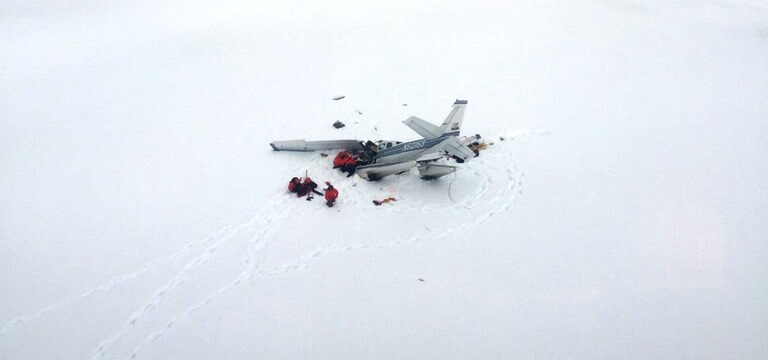
crash site

Image: ktoo.org

“So, you want to potentially fry the brains of several expensive Positronic robots, Noah?”

Professor Noah Abramson was once again sitting in front of the desk of National Robotics Corporation CEO Richard Underwood proposing another of his ‘crazy’ ideas to his boss.

“Well, hopefully not, Rick. On the other hand, if we’re going to lease our Positronic Search, Assess, and Rescue robots to various private and governmental agencies responsible for public safety, we have to know exactly how they’ll respond, not only to at risk humans, but to the dying and dead human beings they will likely encounter in an emergency or disaster situation.”

“If the SARs fail the test, then what?”

Continue reading →

Unedited Excerpt From The Upcoming Story “The Rescuers”

This is an unedited excerpt from the next story in my “robots” series. I haven’t actually finished it yet, but I have the plot all worked out. Just thought I’d give you something to look forward to. If you haven’t done so already, please read the first four short stories in this series. Links to them can be found here.

Remember, the story below is completely unedited, so there’s bound to be mistakes. Be kind with your comments.

The four robots were standing at the base of a cliff. It was night. There was snow on the ground. The area was heavily forested. The air temperature was 0.72 degrees Celsius and falling.

The testing scenario was based on an actual crash involving a twin-engined Lear jet that had gone down in the Rocky Mountain National Park about ten years ago just before midnight. High winds on the top of the bluff made it impossible to send in helicopters. The area was too rugged to send in ground vehicles. A rescue team had to go in on foot, but they couldn’t reach the aircraft until morning.

By then, the pilot, and four out of the five passengers were dead.

Continue reading →

My “Robots” Series So Far

So far, I’ve written four stories in my “robots” series. This series was inspired by the premise behind Anthony Marchetta’s anthology God, Robot, the idea that Isaac Asimov-type Positronic robots would have their prime directives changed from the The Three Laws of Robotics to what is referred to in the New Testament as the Two Greatest Commandments, located specifically in Matthew 22:35-40 and Mark 12:28-34, being based on Deuteronomy 6:4-5 and Leviticus 19:18.

I took a somewhat different approach than did Marchetta and his contributors which I believe is more “realistic,” if one can be said to be realistic when writing stories about intelligent and self-aware humanoid robots.

Since limitations in the WordPress theme I’m using don’t allow me to display a list of my blog posts, I’m writing this missive so I can include an easy to use list of the entries in my series.

I’ve noticed that some folks come here and read the latest story, but not necessarily all of the earlier ones. Since one story builds on another, the entire arc will make more sense if you read each of my small tales in order.

Here they are:

  1. The Robot Who Loved God
  2. The Maker Dilemma
  3. The Good Robot
  4. Uncooperative Neighbors

I’ll add to the list as I write more in this series. Enjoy.

Uncooperative Neighbors

lanning

Dr. Alfred Lanning, played by James Cromwell in the film “I, Robot” (2004)

“One day they’ll have secrets… one day they’ll have dreams.”

Dr. Alfred Lanning
played by James Cromwell in the film
I Robot (2004)

Six Weeks Ago

“You both have been called heroes because of the people you helped here at NRC in the aftermath of last March’s quake. How do you feel about that?”

Grace had been interviewed by the press on several occasions since her activation, but this was the first time George attended a press conference with her.

It was inevitable that, once the world realized there were two functional Positronic robot prototypes in existence, the National Robotics Corporation would have to release some sort of statement about them. After Professor Noah Abramson, NRC’s Vice President of Research and Development and Director of the Positronics Project, had convinced company CEO Richard Underwood that George would be as ‘well-behaved’ as Grace was typically when interviewed, he agreed to have both robots answer questions for the news media.

“I believe I can speak for Grace when I say that we are gratified to be able to serve human beings in any capacity required of us.” George and Grace were constantly communicating in “robotspeak” through their radio link and had agreed to take turns answering questions unless one of them was specifically addressed.

“What are your plans going forward?” asked the reporter from The Washington Post.

Continue reading →

The Evolution of Religious Themes in My Fiction

controversy

What discussing religion online is like sometimes

I mentioned in the comments section of The Good Robot that I’m not so much writing religious science fiction as writing science fiction with certain religious and spiritual elements. The distinction is important. Except for some noteworthy exceptions, religious science fiction, such as Christian science fiction or Jewish science fiction, will appeal to only a limited audience.

Of course, the same can be said of science fiction in general, but the number of people who will read the latter is probably much larger than those who would read the former.

That said, sources such as Amazon and Wikipedia highlight a great number of science fiction stories that leverage religious themes, but these are sometimes fictional religions rather than ones we are aware of in our world, or very fictionalized versions of religions we’re familiar with in our lives.

I came across an interview with Orson Scott Card at Writing-World.com that reminded me that in most fiction, including science fiction, religious people and religion (specifically Christianity and Judaism) are depicted in unfavorable ways.

Continue reading →

The Good Robot

landonI told my seven-year-old grandson that I’ve been writing robot stories and he asked me to write one for him. I discovered that writing children’s science fiction is much harder than the adult variety, and had to settle for writing a robot story that included children.

This is the first story in my series that puts people in actual danger, invoking the First Law in both George and Grace. While you’d think a First Law response would be relatively straightforward, I’ve introduced a few wrinkles I hope you’ll find interesting.

Before reviewing and publishing the third submission in this series, I went over the first two stories again and corrected more typos and awkward sentences. I also made a few short additions as they occurred to me.

As always, I’m sure I missed mistakes in the current tale. After reading it, let me know what you think and what “English 101” errors you found. 

Thanks.

“I have just plugged the last tape of instructions into Robot X, Miss Bainbridge. The time has come to turn on its power switch,” declared Dr. Aiden.

“Are you sure it’s safe, Doctor?” cried Aiden’s lovely young assistant.

“Of course, Miss Bainbridge,” Dr. Aiden replied confidently. “Robot X will be completely under my control. It will be the forerunner of a whole race of robots, commanded only by me. With my army of mechanical men, I will rule the world.”

Continue reading →

Book Review of “God, Robot”

god, robotI promised Anthony Marchetta that I’d write a review on Amazon when I finished reading his book God, Robot. It went online yesterday. You can find it here.

However, for your convenience, I’ve reproduced my review below. Enjoy.

I feel a little like I’m proverbially biting the hand that has fed me. I heard about “God, Robot” several weeks ago from a friend of mine and was intrigued by the concept. After a bit of “Googling,” I found Anthony Marchetta’s blog. Before reading and reviewing his book, I wanted to take a crack at writing my own story based rather loosely on his concept of robots being programmed with the “two greatest commandments” rather than Asimov’s three laws.

With Mr. Marchetta’s permission, I have used his base concept to write and publish two short stories on my own blog and I’m currently working on a third. Now that I’ve finished his book, I’m here to write my review.

Continue reading →

The Maker Dilemma

robot law

Image: TeeFury.com

I promised a sequel to The Robot Who Loved God and here it is. Hopefully, it will address a lot of the reader’s analysis found here. I think I’ve added some interesting twists and surprises that you might not have anticipated from the way the previous story ends.

I’ve edited this story to the best of my ability (and patience to keep reading and re-reading it). No doubt there are still typos and other problems. Please let me know when you find them and I’ll do my best to fix everything.

I’ll post more about this short story after the conclusion.

Act One: The Failed Maker

“What do you mean you can’t make another one?” Richard Underwood didn’t shout. He spoke in a breathy whisper, shock and outrage strangling his throat.

Professor Noah Abramson, Ph.Ds. in Physics and Molecular Computing, Vice President of Research and Development at the National Robotics Corporation (NRC), and the creator of the world’s first fully functional Positronic brain had been dreading this moment all morning.

Eight months ago, for one shining and tragic week, Abramson and his Positronics Lab team had activated George, the Positronic Asimovian Robot (PAR) fifth edition prototype and put the experimental robot through his paces. Then they deactivated him, but not before George offered up a revolutionary revelation to the Professor and his team, that an artificially intelligent and self-aware humanoid robot had come to faith in the God of Israel, Noah Abramson’s God.

Continue reading →

A Reader’s Analysis of “The Robot Who Loved God”

One of my regular readers on my Morning Meditations blog took the time to read The Robot Who Loved God and render a detailed analysis. He emailed me a 35-page Word doc not only correcting my typos (I’m amazed I missed so many after making multiple passes through the story – all typos have been corrected here but not in my original story at A Million Chimpanzees), but offering numerous editorial comments.

I’m including those comments here as well as my responses. I hope you’ll find them as illuminating as I did.

Quotes from the referenced story will be indicated as such in bold text and the content itself in italics. Editorial notes will be in red-colored text. My responses will be in regular text.

Continue reading →