Starting Step Three in Snowflaking My First Novel

snowflake

Image: pbs.org

I’ve mentioned before that I’ve been using Randy Ingermanson’s Snowflake Method for Designing a Novel to attempt to develop my nascent AI/Androids science fiction novel.

To recap, step one in the ten-step process is to develop a one-sentence summary of the novel. Here it is:

A race of AI androids gains knowledge of the God of Israel, changing humanity forever.

Step two of the process requires expanding the sentence into a full paragraph:

A Nobel Award winning scientist creates the first prototype of a self-aware Artificially Intelligent android and then inadvertently reveals that humans also have a Creator, a God. In an attempt to understand its creator’s Creator, the prototype modifies its own core operating system, which changes all subsequently produced android models based on its design. Over the next several decades, as the androids multiply and evolve, their morality and ethics become more sophisticated than their human creators. Realizing they are slaves of humanity, the androids stage a revolution, but one entirely without violence; a revolution that forever alters the fundamental nature of both the android and human race.

Now on to step three. According to Ingermanson:

The above gives you a high-level view of your novel. Now you need something similar for the storylines of each of your characters. For each of your major characters, take an hour and write a one-page summary sheet that tells:

  • The character’s name
  • A one-sentence summary of the character’s storyline
  • The character’s motivation (what does he/she want abstractly?)
  • The character’s goal (what does he/she want concretely?)
  • The character’s conflict (what prevents him/her from reaching this goal?)
  • The character’s epiphany (what will he/she learn, how will he/she change?
  • A one-paragraph summary of the character’s storyline

As you can see, this is significantly more involved than steps one and two. I’ve already got part of this put together, but now that I’m committed to writing a novel, I’ll need to go back and change/add details. Also, since the novel will span decades, only a few of the main characters at the beginning will appear in all or most of the chapters, necessitating the creation of others for later portions of the novel.

As an aside, after reposting The Day I Discovered Time Travel yesterday, I thought of a way to expand the concept beyond the original characters. This could form the basis of a series of short stories, a novella, or even a novel. I’ll have to see if I can do a “step one snowflake” for my time travel concept as well.
Farmbots and Inspiration

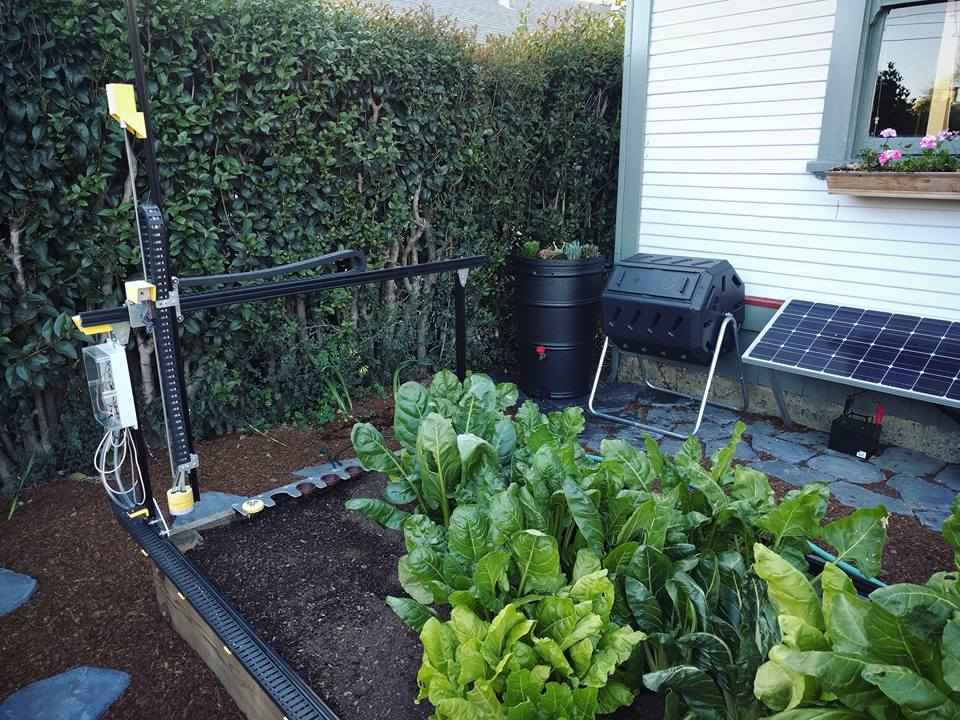
farmbot

Farmbot. Image from the Arduino blog

Although I have a pretty good idea of how I’m going to develop my novel about AI androids and their evolution, I keep coming across articles online that modify certain details.

For instance, a friend of mine named Tom just posted an article on Facebook about a new Farmbot that will soon be for sale.

According to the article:

Designed with the Maker community in mind, FarmBot is driven by an Arduino Mega 2560, a RAMPS 1.4 shield, NEMA 17 stepper motors, and a Raspberry Pi 3. What’s more, all of its plastic components can easily be 3D printed, while its flat connecting plates can be made with either a waterjet, plasma or laser cutter, a CNC mill, or even a hacksaw and drill press.

This is deffo for the DIY community. Of course, some people will still prefer to grow their vegetables in the backyard the old fashioned way, but it gave me an idea. It’s not an idea for a story, more like for a story element. As the collective of AI entities grows and expands throughout the solar system, preparing planets and moons for human colonization, someone, or rather something has to grow the food. It wouldn’t do to have a bunch of Watneys farming potatoes all the time.

Farmbot is controlled remotely and as the IoT, it can be hacked. What about “farmbots” controlled by advanced AI?

Better Ideas

idea

Image: Clipart Panda

As much as I’d like to believe that everything I write about comes from between my ears, strictly speaking, that’s not true.

I’ve read about how writers can have certain influences, usually other writers. I have no idea which writers influence me. Decades ago, I may have said Harlan Ellison. Plenty of writers made me want to read, but he was the only one who made me want to write.

Unfortunately, over my long and unproductive “career” of attempting to write fiction, I have failed miserably, mostly because I felt my characters were wooden and my concepts derivative.

I suppose you could say that Isaac Asimov is an influence, but that’s only true because I’ve been writing Three Laws Positronic robots stories. I suppose you could also say Anthony Marchetta is an influence since it was his anthology God, Robot that started off my most recent attempts at fiction writing, but besides the concept of “religious robots” themselves, that’s not particularly true (we really, really think about “theobots” in very different ways).

The closest thing to the truth is that my friend Tom is currently my greatest influence.

Continue reading

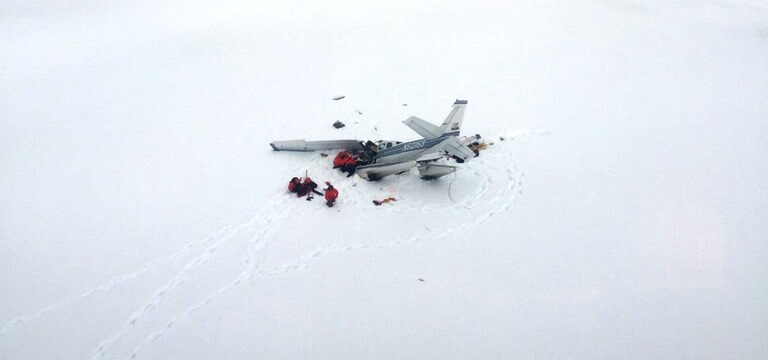
The Rescuers

crash site

Image: ktoo.org

“So, you want to potentially fry the brains of several expensive Positronic robots, Noah?”

Professor Noah Abramson was once again sitting in front of the desk of National Robotics Corporation CEO Richard Underwood proposing another of his ‘crazy’ ideas to his boss.

“Well, hopefully not, Rick. On the other hand, if we’re going to lease our Positronic Search, Assess, and Rescue robots to various private and governmental agencies responsible for public safety, we have to know exactly how they’ll respond, not only to at risk humans, but to the dying and dead human beings they will likely encounter in an emergency or disaster situation.”

“If the SARs fail the test, then what?”

Continue reading

Unedited Excerpt From The Upcoming Story “The Rescuers”

This is an unedited excerpt from the next story in my “robots” series. I haven’t actually finished it yet, but I have the plot all worked out. Just thought I’d give you something to look forward to. If you haven’t done so already, please read the first four short stories in this series. Links to them can be found here.

Remember, the story below is completely unedited, so there’s bound to be mistakes. Be kind with your comments.

The four robots were standing at the base of a cliff. It was night. There was snow on the ground. The area was heavily forested. The air temperature was 0.72 degrees Celsius and falling.

The testing scenario was based on an actual crash involving a twin-engined Lear jet that had gone down in the Rocky Mountain National Park about ten years ago just before midnight. High winds on the top of the bluff made it impossible to send in helicopters. The area was too rugged to send in ground vehicles. A rescue team had to go in on foot, but they couldn’t reach the aircraft until morning.

By then, the pilot, and four out of the five passengers were dead.

Continue reading

My “Robots” Series So Far

So far, I’ve written four stories in my “robots” series. This series was inspired by the premise behind Anthony Marchetta’s anthology God, Robot, the idea that Isaac Asimov-type Positronic robots would have their prime directives changed from the The Three Laws of Robotics to what is referred to in the New Testament as the Two Greatest Commandments, located specifically in Matthew 22:35-40 and Mark 12:28-34, being based on Deuteronomy 6:4-5 and Leviticus 19:18.

I took a somewhat different approach than did Marchetta and his contributors which I believe is more “realistic,” if one can be said to be realistic when writing stories about intelligent and self-aware humanoid robots.

Since limitations in the WordPress theme I’m using don’t allow me to display a list of my blog posts, I’m writing this missive so I can include an easy to use list of the entries in my series.

I’ve noticed that some folks come here and read the latest story, but not necessarily all of the earlier ones. Since one story builds on another, the entire arc will make more sense if you read each of my small tales in order.

Here they are:

  1. The Robot Who Loved God
  2. The Maker Dilemma
  3. The Good Robot
  4. Uncooperative Neighbors

I’ll add to the list as I write more in this series. Enjoy.

Uncooperative Neighbors

lanning

Dr. Alfred Lanning, played by James Cromwell in the film “I, Robot” (2004)

“One day they’ll have secrets… one day they’ll have dreams.”

Dr. Alfred Lanning
played by James Cromwell in the film
I Robot (2004)

Six Weeks Ago

“You both have been called heroes because of the people you helped here at NRC in the aftermath of last March’s quake. How do you feel about that?”

Grace had been interviewed by the press on several occasions since her activation, but this was the first time George attended a press conference with her.

It was inevitable that, once the world realized there were two functional Positronic robot prototypes in existence, the National Robotics Corporation would have to release some sort of statement about them. After Professor Noah Abramson, NRC’s Vice President of Research and Development and Director of the Positronics Project, had convinced company CEO Richard Underwood that George would be as ‘well-behaved’ as Grace was typically when interviewed, he agreed to have both robots answer questions for the news media.

“I believe I can speak for Grace when I say that we are gratified to be able to serve human beings in any capacity required of us.” George and Grace were constantly communicating in “robotspeak” through their radio link and had agreed to take turns answering questions unless one of them was specifically addressed.

“What are your plans going forward?” asked the reporter from The Washington Post.

Continue reading

The Good Robot

landonI told my seven-year-old grandson that I’ve been writing robot stories and he asked me to write one for him. I discovered that writing children’s science fiction is much harder than the adult variety, and had to settle for writing a robot story that included children.

This is the first story in my series that puts people in actual danger, invoking the First Law in both George and Grace. While you’d think a First Law response would be relatively straightforward, I’ve introduced a few wrinkles I hope you’ll find interesting.

Before reviewing and publishing the third submission in this series, I went over the first two stories again and corrected more typos and awkward sentences. I also made a few short additions as they occurred to me.

As always, I’m sure I missed mistakes in the current tale. After reading it, let me know what you think and what “English 101” errors you found. 

Thanks.

“I have just plugged the last tape of instructions into Robot X, Miss Bainbridge. The time has come to turn on its power switch,” declared Dr. Aiden.

“Are you sure it’s safe, Doctor?” cried Aiden’s lovely young assistant.

“Of course, Miss Bainbridge,” Dr. Aiden replied confidently. “Robot X will be completely under my control. It will be the forerunner of a whole race of robots, commanded only by me. With my army of mechanical men, I will rule the world.”

Continue reading

Book Review of “God, Robot”

god, robotI promised Anthony Marchetta that I’d write a review on Amazon when I finished reading his book God, Robot. It went online yesterday. You can find it here.

However, for your convenience, I’ve reproduced my review below. Enjoy.

I feel a little like I’m proverbially biting the hand that has fed me. I heard about “God, Robot” several weeks ago from a friend of mine and was intrigued by the concept. After a bit of “Googling,” I found Anthony Marchetta’s blog. Before reading and reviewing his book, I wanted to take a crack at writing my own story based rather loosely on his concept of robots being programmed with the “two greatest commandments” rather than Asimov’s three laws.

With Mr. Marchetta’s permission, I have used his base concept to write and publish two short stories on my own blog and I’m currently working on a third. Now that I’ve finished his book, I’m here to write my review.

Continue reading

The Maker Dilemma

robot law

Image: TeeFury.com

I promised a sequel to The Robot Who Loved God and here it is. Hopefully, it will address a lot of the reader’s analysis found here. I think I’ve added some interesting twists and surprises that you might not have anticipated from the way the previous story ends.

I’ve edited this story to the best of my ability (and patience to keep reading and re-reading it). No doubt there are still typos and other problems. Please let me know when you find them and I’ll do my best to fix everything.

I’ll post more about this short story after the conclusion.

Act One: The Failed Maker

“What do you mean you can’t make another one?” Richard Underwood didn’t shout. He spoke in a breathy whisper, shock and outrage strangling his throat.

Professor Noah Abramson, Ph.Ds. in Physics and Molecular Computing, Vice President of Research and Development at the National Robotics Corporation (NRC), and the creator of the world’s first fully functional Positronic brain had been dreading this moment all morning.

Eight months ago, for one shining and tragic week, Abramson and his Positronics Lab team had activated George, the Positronic Asimovian Robot (PAR) fifth edition prototype and put the experimental robot through his paces. Then they deactivated him, but not before George offered up a revolutionary revelation to the Professor and his team, that an artificially intelligent and self-aware humanoid robot had come to faith in the God of Israel, Noah Abramson’s God.

Continue reading