57 Pink Flamingos

pink flamingos

© Susan Spaulding

“$2500! You spent $2500 on that?” Jeanette watched in horror as she watched her husband Terry insert the last of the 57 pink flamingos he’s purchased on Amazon into their front lawn. The driveway was littered with the debris of cardboard shipping boxes.

“Come on. We can afford it. You know how much dough we stashed away from the Corleone caper.”

“That’s not the point. But we’re supposed to keep a low profile, you moron. Why don’t you just get a couple of spotlights and set off some fireworks while you’re at it? Maybe you could send an email to Vito and Sonny telling them our address so they could come over and blow our brains out.”

Terry walked to where his wife was standing on the front porch and put his arm around her. “They look swell, don’t they?” The Cheshire Cat never had a grin as wide as his.

“You’re nuts. They’re tacky as hell.”

“Exactly. We embezzled millions from the mob working as their accountants and we’re on the lam from them and the Feds. What better cover to hide behind than the queen of all tacky lawn ornaments?

I wrote this for the Sunday Photo Fiction Challenge for June 10, 2018. The idea is to use the image above as the inspiration for crafting a piece of flash fiction of no more than 200 words. My word count is 189.

Lacking an immediate story idea when I first saw the photo, I Googled “Pink Flamingo” only to come up with the tacky but classic 1972 film Pink Flamingos created by John Waters. Except for the idea of criminals hiding out, I found nothing I could use in that movie (and I’ve never seen it), so I moved on.

Then I found The Tacky History of the Pink Flamingo at Smithsonian.com and I had the rest of my “hook.”

These plastic monstrosities were created in 1957 in an effort to allow people to accessorize the “sameness” of their tract homes that reproduced like lemmings in the post-war era. You can read the full history for yourself, but apparently:

In their yard near Leominster, Nancy and Don Featherstone (the sculptor who was commissioned to create pink flamingos) typically tend a flock of 57 (a nod to the creation year) that neighborhood college students feel compelled to thin.

To read other stories based on the prompt, visit InLinkz.com.

A Glitch in Time

concert

Jack Gittoes pexels-photo-761543 Concert

This was fantastic. He never thought he’d see Lennon, McCartney, and Starr perform together again. They certainly showed their age, their voices not quite as vibrant as he remembered from childhood, but they were legends.

Oswaldo Gantz watched his grandchildren holding up their smartphones to take photos just like all of the other kids around them. People Oswaldo’s age tended just to watch and listen and experience both the current performance and all of those played through the halls of time.

It was all thanks to him that Lennon was still alive. There was nothing he could do about Harrison’s brain cancer, but it was a virtual piece of cake to arrange for Mark David Chapman to be stabbed to death in a mugging a day before he was supposed to murder Lennon in 1980.

Now that his trial run turned out to be such a success, he’d have to figure out how else he could improve history. Hopefully, he’d be able to fix the little glitch in the system. He never imagined that saving Lennon’s life somehow resulted in the laws being changed so Arnold Schwarzenegger could now be President instead of Donald Trump.

I wrote this for Flash Fiction for the Purposeful Practitioner – 2018: Week #23. The idea is to use the image above to inspire the creation of a piece of flash fiction no more than 200 words long. My word count is 195.

I already wrote one time travel story this morning, so I decided to try another. The image is obviously of a modern concert since you can see people taking photos with their cell phones. That stopped me from sending my character back in time to watch Lennon’s last live concert in 1975, but what if he’d never died? He’d be around 78 years old today.

Just having a bit of fun.

To read other stories based on the prompt, visit InLinkz.com.
Roger’s linkup still needs a lot of love, so please contribute a small story of your own. Thanks.

The State of Dying

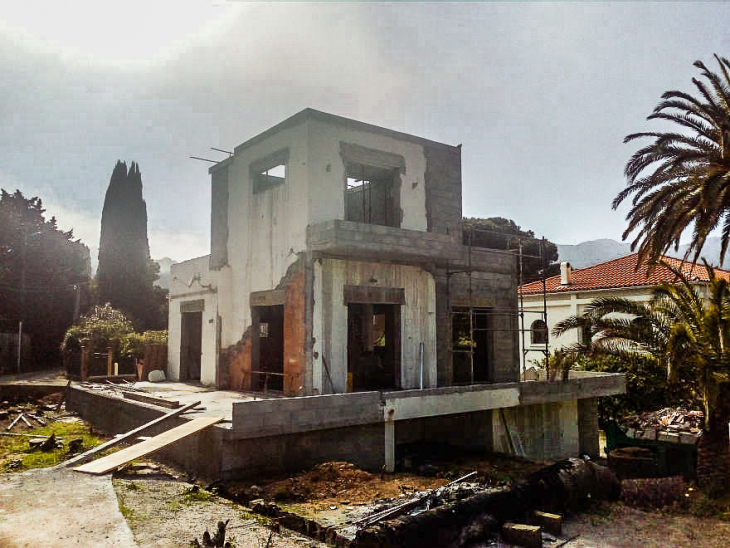
burned house

© C.E. Ayr

“This is the perfect place.”

“But it’s just a burned up building, Grandpa.”

“Exactly, Amy. Bring your brothers and sisters. Tell them to have their squirt guns fully loaded. We’re going to have a supersoaker blast playing “spy” in here.”

The eight-year-old grinned as she ran back next door to his house. His neighbor’s wrecked home reminded him that he needed to move out soon too. He’d turn seventy next year, and the state’s ridiculous “right-to-die” law for the terminally ill now allowed legalized murder of anyone over that age, whether they wanted to go or not.

Their bloated environmental laws worked about as well as their population laws. The government had killed 75% of the native plants and animals, and now they were working on the people.

He turned as he heard five pairs of running feet approaching. “You better get going, Grandpa.” At ten, Chad wasn’t the oldest, but he was the ringleader.

“Unless you want to get soaked.” Five-year-old Emily had that “killer” gleam in her eye.

“I’m running.” Mitch dashed into the ruined structure. He had to move the family to one of the free states before the jackboots came after them all.

I wrote this for the Sunday Photo Fiction Challenge of June 3, 2018. The idea is to use the image above as the inspiration for crafting a piece of flash fiction no more than 200 words long. My word count is 196.

For some reason, the image reminded me of both Florida and California. I chose the latter since I used to live there, and “Googling” the search string “California dying,” I came up with plenty of information on that state’s “right to die” law at both The Los Angeles Times and Death with Dignity. I also found an article about the demise of California’s Sierra forests, which are perishing in spite of all the tax money California’s state senate can throw at the environment.

I know “dying with dignity” is a controversial issue. People of faith tend to believe that giving and taking life should be left to God alone, but it’s hard to watch someone slowly dying and in great pain when you could ease their suffering.

Also, I actually do have a great concern for the environment. One of the reasons I like living in Idaho is because of the vast areas of wilderness, the mountains, rivers, and lakes. But something obviously went wrong in California’s case, because people from that state are moving here in droves.

Anyway, putting that all together, I authored today’s wee dystopian tale.

To read other stories based on the prompt, visit InLinkz.com.

One Last Hill

uphill

MorgueFile April b5afa0fad12c0fc6b1d0bf8cc983d6e4

The hill seemed to get steeper everyday, but then, it really wasn’t the hill, it was him. He was getting older, always older, each and every day. He couldn’t remember the last time he could actually ride his bicycle up the hill on his way home. Was it last year? No, maybe it was five years ago? How old was he? It didn’t matter.

“Half way up.” He huffed and puffed. He got out of breath more easily these days, and he was just pushing a bike up a hill. “Have to make it home.” Home was at the top of the hill. If he could get there again, he’d be safe.

“Wait. Need rest.” He leaned against the wall. The old man couldn’t breathe and there was a terrible weight on his chest.

Then he was six years old again and racing his bike up the hill with his mates Jerry, Tommy, and Little Sam. They were all laughing and zipping between the parked cars. He made it. He was home. He was free.

I wrote this for the Flash Fiction for the Purposeful Practitioner challenge for 2018, Week #22. Once again, the idea is to use the image above as a prompt to create a piece of flash fiction no more than 200 words long. My word count is 175.

I couldn’t read the sign in the photo, even magnifying the image, so I couldn’t use that to influence my writing. Instead, I concentrated on the (presumably) old man pushing his bicycle up the hill. I let my mind drift and this tale is the result.

To read more stories based on the prompt, visit InLinkz.com.
As always, you are invited to contribute a wee tale to this linkup.

Fallen Hero

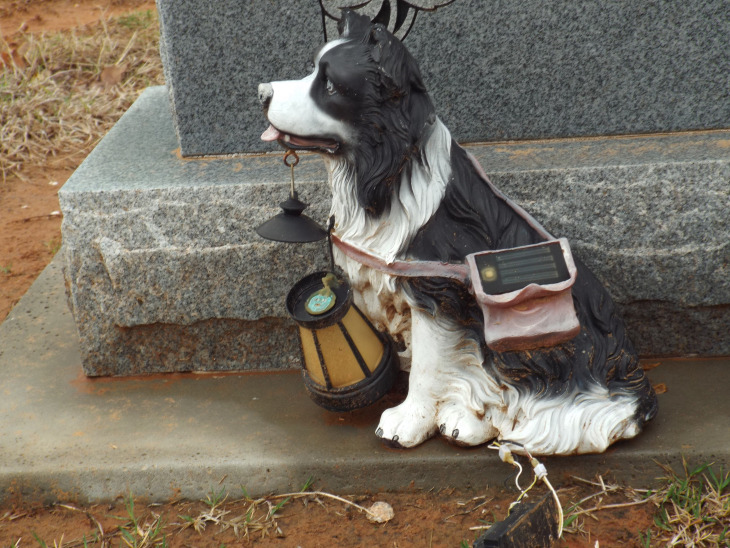
headstone dog

Photo Credit: Susan Spaulding

Marine Corporeal Jeffrey DeYoung could barely hold back his tears as he accepted the folded American flag in honor of Cena. Five-hundred people were attending his funeral, all Marines in their dress blues. Cena had been raised to be a Marine since he was very young, and during his tours in Afghanistan, he’d saved thousands of lives.

“There’ll never be another like you.” DeYoung listened to the taps performance as the coffin was lowered into the grave escorted by eight German shepherds. Then, on command, they issued their own salute to their fallen comrade, howling for thirty seconds.

Cena fell, not in the service of his country, but to bone cancer. The Michigan war dog was interned with seventeen other military canines. This weekend, we mourn our honored dead in the United States Armed Forces, but never forget the most dedicated and loyal members of the service are not always human.

cena

Cena with his handler Marine Cpl Jeffery DeYoung – Photo Credit: Fox 2 News.

I wrote this for the Sunday Photo Fiction – May 27, 2018 writing challenge. The idea is to use the image above to inspire the creation of a piece of flash fiction no more than 200 words long. My word count is 151.

Given that this is the Memorial Day weekend in the U.S., and seeing the prompt was a photo of a dog and a headstone, I thought it fitting to pay homage to the dogs who have served our country. My tale is a fictionalized version of the events in the news story Michigan bomb-sniffing war dog gets military funeral. On August 24, 2017, Cena was buried with full military honors at a cemetery in South Lyon, Michigan. You can click the link to get all the details, but it’s very touching.

In doing my research, I also found a book on the history of military dogs, as well as this commentary.

To read other stories based on the prompt, go to InLinkz.com.

What the Gull Saw

bird

Photo Credit: MorgueFile April 62433e902

The news from Florence said, “After a three-year-long restoration, Renaissance master Piero della Francesca’s Resurrection can once again be admired in its original glory.”

Yes, it had taken that long for the painting to be restored, but at the same time, it was also being copied. What was being admired at the civic museum in Sansepolcro, the little Tuscan down where the artist was born in the early 15th century, was a fake.

A private collector had paid a fortune, though not what the actual painting would be worth on the open market, to have the restorer make the switch. For him, it was worth every penny.

Now, the actual painting of the resurrection of Christ was on its way to the collector’s hidden vault on his island in the Caribbean. The only witness to the crime was a lone gull who had watched the true article being loaded into a moving van. Of course, the little bird brain would never talk.

I wrote this for Flash Fiction for the Purposeful Practitioner – 2018: Week #21. The idea is to use the image above as the inspiration for crafting a piece of flash fiction no more than 200 words long. My word count is 162.

The town reminded me of Florence, Italy, so I looked up some local English language news articles and came across Piero della Francesca’s Resurrection restored published last March in the Florence Daily News. It seemed like a good setting for an art theft.

To read other stories based on the prompt, visit InLinkz. This link up still needs a lot of love, so please consider writing your own response to the prompt.

Thanks.

The Tunnel Dwellers

tunnel tour

Photo Credit: Susan Spaulding

Thousands of people had taken the tour of Seattle’s underground, what was left of the original city after the devastating 1889 fire. The city was rebuilt on its ruins one to two stories above, leaving these tunnels as a monument to history. However, only a few realized that just a portion of the original underground was restored in 1965. People had been taking this tour for over fifty years now, and had never guessed the truth.

An old 1907 newspaper story gave him the clues necessary to find his way into the real world under the streets of Seattle. Over a hundred years ago, the tunnels harbored flophouses for the homeless, gambling halls, speakeasies, and opium dens. They’d been cleared out by police anticipating the 1909 World Fair in Seattle, and left to rot. The tunnels were forgotten by most, but once rediscovered, found a new use. Now they sheltered the city’s covert den of vampires who had been preying on its citizens for decades.

Jeff had seen all he needed to see. He would notify the local branch of the Van Helsings, the international and secret Catholic order of vampire hunters. There would be another fire just after dawn tomorrow.

I wrote this for the Sunday Photo Fiction Challenge of May 20, 2018. The idea is to use the image above as the inspiration for crafting a piece of flash fiction no more than 200 words long. My word count is 197.

The image seemed more benign than sinister, just a bunch of tourists walking around, so I looked up famous tunnel tours. That lead me to Bill Speidel’s Underground Tour of old Seattle, which I’d heard of. I found the original history of the Seattle Underground, including the fire, and then the other facts I cited in my small story.

It was perfect for horror, which I knew because I’d watched the 1973 television movie “The Night Strangler” starring Darren McGavin, back in the day.

I decided to leverage the world I created in my Sean Becker vampire stories. Now a centuries old banned Catholic order of vampire hunters has found where Seattle’s population of the undead has been hiding. Collateral damage is assured, but in their eyes, it’s a small price to pay for ridding the Northwest of these feared, supernatural predators.

To read other stories based on the prompt, visit InLinkz.com.

The Elephants of Yesterday

elephant

© C.E. Ayr

“Which end is the face?”

The class started giggling at Dao’s remark, and Gima laughed so loud that their teacher Mr. Ji scowled at her.

“That’s her tail, but you’re right, it could be her trunk.”

“What are they called again?” Merilyn looked down at the small sign next to the reconstructions. “Elephant. That’s a funny name.”

The twenty six-year-olds were milling about the “mother and child” exhibit. It was their class’s annual field trip, and this year, Mr. Ji had chosen the Mother Planet Museum in the capital city of Colima.

“All of their names will sound strange because we aren’t familiar with them, just like the appearance of these animals seems so odd.”

The excitable redheaded Merilyn circled the “elephants” again and again, trying to imagine what they’d be like if they were alive.

“Do they still exist?”

“It’s difficult to say. They were an endangered species when our colony ship was launched three-hundred years ago, but we can’t communicate with Earth over so many light years.”

Their teacher started guiding the class toward another exhibit, but Merilyn stayed behind, looking into the eyes of the smaller representation. “I hope you made it, elephant.”

I wrote this for the Sunday Photo Fiction Challenge for May 13, 2018. The idea is to use the image above to inspire crafting a piece of flash fiction no more than 200 words long. My word count is 200.

I just finished submitting a nearly 10,000 word science fiction short story for potential publication in an anthology, and part of it included Mr. Ji’s first grade class (in a flashback). Since I have Merilyn and her classmates on my mind, I thought I’d include them in a museum tour on their colony world, trying to learn more about their “mother planet” Earth.

To read other stories based on the prompt, visit InLinkz.com.

Return to Dieselworld

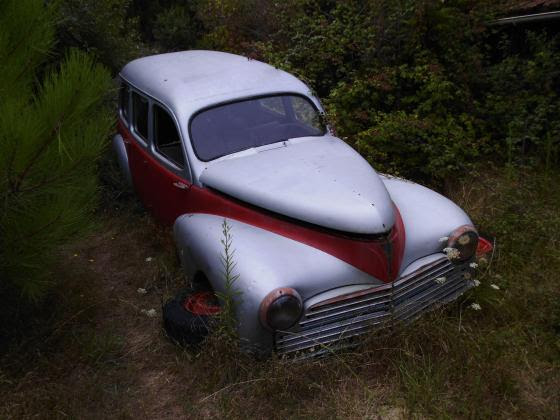
ford sedan

MorgueFile April 1408991814e81x2

It looked like a 1938 Ford Sedan, but the lavender paint on the body shone in its own light, and the headlights were black.

The radio message from Josiah Covington said her ticket back to his world would be in the poppy field south of town. He’d been definite that she shouldn’t use the dirigible this time.

Keisha Davis expected the car to be rusty and full of holes, but the door swung open easily, and everything looked brand new. She’d gotten her license just after her sixteenth birthday, but she didn’t think it covered this dieselpunk contraption.

She turned on the radio. It emitted an eerie glow as she adjusted the tuning dial. Seconds later, she heard him calling. “Josiah Covington to Keisha Davis. Transmitting at 1450 hours as arranged. Come in, Miss Davis.”

Keying the mic, she grinned at hearing her old friend’s now adult voice. “After all we’ve been through, you can call me Keisha.”

“What are you waiting for? Hurry!”

He was right. Her friends were in desperate trouble, and she was the only person in two worlds who could help. Turning the keys in the ignition, Keisha mashed down on the starter and then vanished!

I wrote this for the Flash Fiction for the Purposeful Practitioner challenge for May 9th. The idea is to use the image above as the inspiration for crafting a piece of flash fiction no more than 200 words long. My word count is 200 words.

Hopefully, you all have been following the steampunk adventures of fifteen-year-old Keisha Davis in this series. Seeing the prompt, I decided to tip my hand a bit, since I’m actually envisioning the character appearing in a trilogy. While the current storyline occurs in a steampunk universe, I want the sequel to feature to be somewhat in the alternate reality’s future, depicting a dieselpunk environment.

This would be the beginning of that second saga.

To read other stories based on the prompt, visit InLinkz.com.

Oh, Roger’s linkup still needs lots of love, so it would be great if you jumped in and contributed a story. Thanks.

From Wind to Steam

hot air balloon

© Susan Spaulding

Lee Guzman had been operating his small, hot air balloon business for five years, but he always got the same question.

“You sure this thing is safe?”

“You bet, Craig. As easy as riding a bicycle.”

The latest pair to grace his gondola were Craig and Shawn Tucker, brothers who ran a parcel delivery service in nearby Macon.

They’d been steadily climbing under partly cloudy skies, but now the balloon was ascending into a gray mist that hadn’t been there a minute ago.

“What the hell?” They all grabbed the rigging as the five-mile-an-hour breeze from the northwest suddenly turned into a hurricane.

“Beats me, but hang on!” It was all Lee could say. This wasn’t just unpredictable weather, it was crazy impossible. Amazingly, the balloon held together, that is, until they all heard the rip.

“We’re going down!”

The wind quit abruptly, and they descended below the mist.

“Hey, ain’t that the Golden Gate Bridge?

It was, but nowhere near their San Francisco. Steamships were crossing from the City to Marin County, and the air was full of dirigibles and biplanes. It wasn’t the past, it was something else, like another world, and a new adventure had just begun.

I wrote this for the Sunday Photo Fiction for May 6, 2018 writing challenge. The idea is to use the image above as the inspiration for crafting a piece of flash fiction no more than 200 words long. My word count is 200.

Since I’ve had steampunk on my mind lately, and since the prompt is an image of a hot air balloon, I decided to send these three guys on a little trip.

In the 1961 film adaptation to Jules Verne’s novel “Mysterious Island,” escapees from a Confederate prisoner of war camp in 1865 steal an observation balloon in a storm, and are taken over the Pacific Ocean, eventually to be deposited on a “mysterious island.”

I used that basic premise, setting the initial scene near the former Andersonville Prison (later known as Camp Sumter) near modern day Andersonville, Georgia, and then had the “strange gray cloud” be a gateway, not to a mysterious island or the past, but an alternate “steampunk” universe, like the one I’ve been crafting in this series.

To read other stories based on the prompt, visit InLinkz.com.