The Exiles

faroe islands

The Faroe Islands – Found at the Hand Luggage Only website – no photo credits available

“Have you ever wondered if we left anyone behind, husband?”

The man and woman stood at the edge of a magnificent rock formation, their backs to the lake behind them, and facing the open ocean a thousand feet below.

“Like us you mean, Tori? If we have, then we’ve visited a terrible curse upon the Earth. It is why we’ve retreated to these remote islands so long ago.”

“Look Bran. A ship.”

“It will not approach. Their leader will be known as Saint Brendan.”

“The mid-sixth century? Then our ending is mere decades away.”

“Yes, beloved. The alien virus which infected our wee village in Scotland centuries ago made us long-lived but not immortal. Our consciousness is aware of all human history, but we dare not share our infection with humanity.”

“I am content to be with you here in our exile, my love.”

I wrote this for the What Pegman Saw writing challenge. The idea is to take a Google maps image/location and use it as a prompt for crafting a piece of flash fiction no more than 150 words long. My word count is 145.

Today, the Pegman takes us to the Faroe Islands, Kingdom of Denmark. Of course I did some research, and found that historians believe this remote group of islands located halfway between Norway and Iceland may have been inhabited in two periods before the arrival of the Norse, the first between 300 and 600 CE, and the second between 600 and 800 CE.

I also learned that Saint Brendan of Clonfert (484-577 CE) includes a description of insulae (islands) resembling the Faroe Islands in the chronicles of his journeys.

Since we know almost nothing of the pre-nordic inhabitants of the Faroe Islands, I decided to make up something fantastic. What if people in a remote northern village in Scotland were infected with a strange virus by alien visitors, giving them lifespans of centuries and the ability to know all of human history? Further, what if they’re infectious? Maybe they’d isolate themselves to prevent the rest of humanity from contracting their blessing and curse.

The distance between Scotland and the Faroe’s is roughly 620.73 km or 385.70 miles.

To read other (probably more grounded) tales based on the prompt, visit InLinkz.com.

Urartu

Taşlıçay

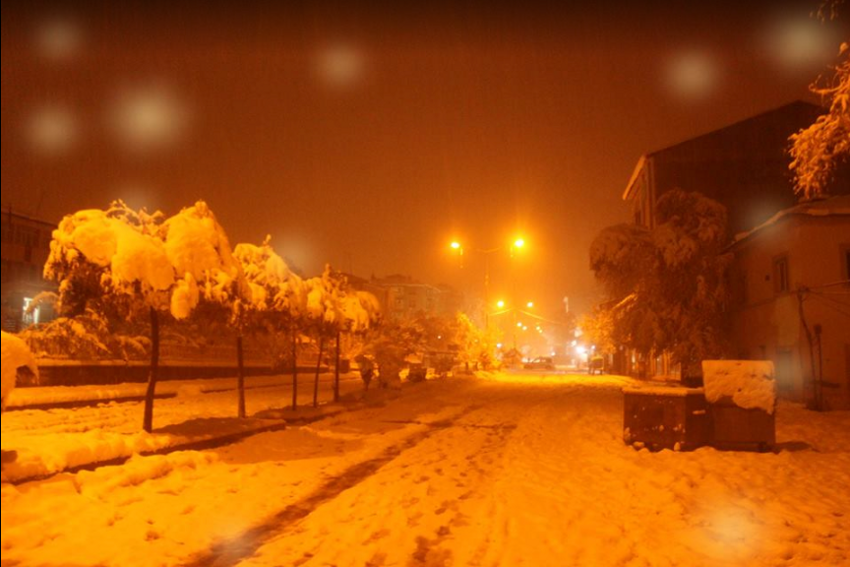
Taşlıçay, Ağrı, Turkey © Google Maps

He came to Taşlıçay after a snowstorm and entered Mehmet’s restaurant. The last customer had left and the proprietor had let his staff go early.

“We’re closing, Sir. I have nothing left to serve you.”

“I am not here to eat, Mehmet.” He spoke heavily-accented Turkish and appeared middle-eastern.

“What do you want?”

“To save your life. Great forces desire to take it.”

“You’re insane. Taşlıçay is a boring place. Nothing happens here.”

“After the great flood, elemental spirits, both good and evil claimed the area around Urartu and lay dormant. Tonight they rise from the temple on the hill and the höyük to the south. You are the last direct descendant of the ark, the last one who could prevent them from entering your world.”

“Who are you?”

The messenger of Hashem grew large and powerful, was armored in ethereal light, and drew a sword of silver. “They come.”

I wrote this for the What Pegman Saw writing challenge. The idea is to use a Google Maps location and/or image as the prompt for crafting a piece of flash fiction no more than 150 words long. My word count is 150.

Today, the Pegman takes us to Taşlıçay, Ağrı, Turkey. I looked it up and there’s not much going on in Taşlıçay either currently or historically, except for a few tiny details.

I leveraged the Facebook page for Things to do in Taslicay, which provided the restaurant setting. Going through the Google maps street images, I found the one posted above, which appealed to me since summer is approaching fast.

There’s a burial mound to the south of this rural town and both an Urartu temple and Armenian monastery on the hill above the village of Taşteker. Then I read:

Urartu, which corresponds to the biblical mountains of Ararat, is the name of a geographical region commonly used as the exonym for the Iron Age kingdom also known by the modern rendition of its endonym, the Kingdom of Van, centered around Lake Van in the Armenian Highlands.

Ararat is the legendary resting place for Noah’s Ark after the Great Flood of the Bible, so I thought I’d attempt to wrap all of that together into some sort of mystic tale of disaster and horror, all in 150 words. How did I do?

To read other stories based on the prompt, visit InLinkz.com.

Oh, and how are these locations chosen, anyway?

Spirits of the Canyon

palo duro night

Found at the Stars of Texas – milkyway timelapse project YouTube channel

“The stars are very beautiful Travis, but I still don’t understand what you expect us to see out here. I mean camping in Palo Duro Canyon under the Milky Way is a very romantic honeymoon, but…”

“Cassie, our ancestors lived here for thousands of years before being displaced, first by the Comanche and Kiowa, and then by the Army. This had been Apache land for ten, maybe fifteen thousand years.”

“I’m not an idiot and you didn’t bring me here to give me a first nations lecture.”

“No, I didn’t. My grandfather Chano says that you can still see them here on quiet nights. If we sit peacefully by the water, they’ll appear to us just as they were.”

“Who?”

“Our ancestors. You can kill our bodies, but the Great Spirit will always preserve us.”

“Look, Travis. You’re right.” Her brown eyes grew wide with wonder.

I wrote this for the What Pegman Saw flash fiction challenge. The idea is to use a Google maps location and/or street view as the inspiration for crafting a tale no more than 150 words long. My word count is 146.

Today, the Pegman takes us to The Big Cave, Palo Duro State Park in Texas. Palo Duro Canyon is breathtakingly beautiful and has a rich history which, apart from the appearance of spirits, I have faithfully represented in my wee story. Click the link I just provided to read more about it.

Oh, I borrowed the names of Travis and Cassie Fox from my homage to Andre Norton’s (Alice Norton’s) science fiction novel Galactic Derelict, but besides the names, this story has nothing to do with time or space travel.

To read other stories based on the prompt, visit InLinkz.com.

Saigon

saigon 1967

A street view of Saigon, 1967 – AaronPogs – Own work

The video footage was grainy, but Taylor recognized them easily.

“You’re worth every penny I paid you, Tran. Now blow. I’ll watch the rest alone.” The Vietnamese photojournalist left the darkened hotel room without a word. He moonlighted at this sort of work, taking photos and video of unsuspecting couples, and since he’d already been paid, he was satisfied to go home to his wife and children.

Taylor kept watching the film. The cheap 8mm projector rattled like the engine of his first car, a beat up Chevy Impala, but after weeks in the jungle constantly exposed to the sound of automatic weapons fire and artillery, the military intelligence officer blithely tuned it out.

Tran had followed the couple to every tourist attraction in Saigon from the Ben Thanh market to Notre Dame Cathedral. “He really showed you all the hot spots, sweetheart.”

Continue reading

The Upside of the Downside

airship

© Vadim Voitekhovitch – Found at Deviant Art

Three times before, eighteen-year-old Keisha Davis had been transported into an alternate universe. For her, only a year passed between each transition, but in the world where the Covington family had become her own, each leap put her twenty years into their future.

Standing inside her Grandpa’s workshop located at the edge of her small, northern California town, she stared into the vastness of the converted warehouse. The first time she saw it when she was fifteen, she didn’t understand why he had built such an eclectic collection of odd technologies, but now it was painfully clear. Each one was a doorway.

“Grandpa, I know why you did this to me. Cancer took you too soon or you discovered the other world too late. Either way, you were never able to take on the missions yourself. You knew I would be the only one who’d understand what you needed and what kind of help that strange alternate Earth needed. Now it’s like your ghost is telling me I can’t go back again, not to him anyway, not where and when he lives in Atomworld.”

Continue reading

The Sins of Our Fathers

San Ignacio de Velasco, Bolivia

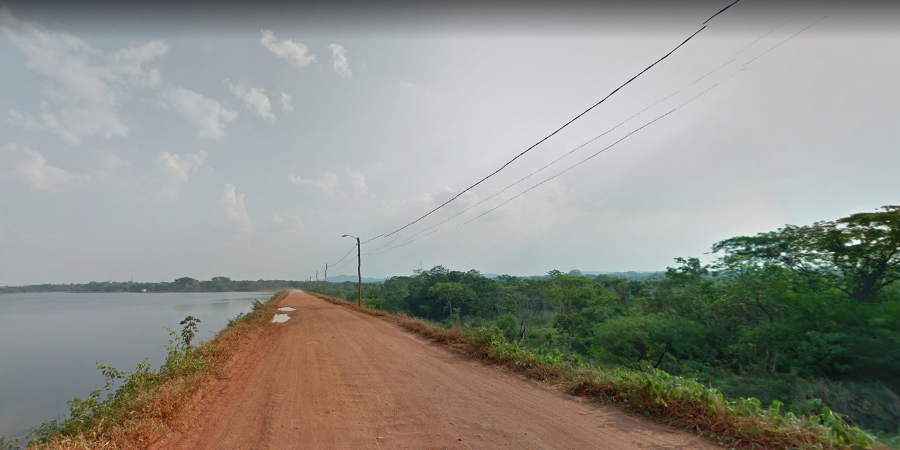
Near San Ignacio de Velasco, Bolivia – © Google 2018

The vintage Beechcraft AT-11 landed eight souls on a little dirt airstrip near San Ignacio de Velasco in Bolivia. Intelligence said he’d be making a stopover in this tiny hamlet to visit an old friend, another German expat.

He’d just founded Transmaritima, Bolivia’s first ocean shipping company and was anxious to brag about it, especially to other war criminals who were still cowering in fear.

The aircraft halted and the pilot killed the engines. “We’ll be returning to La Paz as soon as we refuel. We won’t be coming back unless we get your signal.”

Five of the passengers had already disembarked with their equipment. The sixth approached the cockpit. “If we don’t succeed, there will be no reason to come back.”

“You’ll succeed.”

“We plan to. The sons of Nazi butchers must wipe the blood from our hands. In less than twenty-four hours, Klaus Barbie will be dead.”

I wrote this for the What Pegman Saw writing challenge. The idea is to take the Google maps image and location presented and use it to inspire crafting a flash fiction piece no longer than 150 words. My word count is 149.

Today, the Pegman takes us to San Ignacio de Velasco, Bolivia. According to Wikipedia, there isn’t much information available about the town or José Miguel de Velasco Province. However, both articles mention the area possessing a small population of the descendants of post-World War II German immigrants.

That was the hook.

Looking at this morning’s email notification from Bookbub, I’d seen a title by Tania Crasnianski (translated by Molly Grogan) called Children of Nazis which includes interviews with the children of Himmler, Göring, Höss, Mengele and others.

I also found a 1982 New York Times article about Klaus Barbie, who was the SS commander in Lyons, France between 1942 and 1944. He had fled to Bolivia after the war and unfortunately, did quite well for himself.

In the 1960’s, Barbie really did found Transmaritima, Bolivia’s first ocean shipping company, in a joint venture with the navy. I decided to put all of that together and formed an elite team of assassins, the sons of Nazi war criminals, who had taken on the mission of wiping their bloody legacy from the face of the Earth.

To read other stories based on the prompt, go to InLinkz.com.

Oh, among other fun facts, San Ignacio de Velasco in the present day does have a dirt strip for an “airport.” Figured they could have one in the 1960s as well. Keep in mind this is fiction, and Barbie was not assassinated. He was eventually captured, tried, convicted, and died in prison in Lyon, France in 1991 at the age of 77.

The Highjump Mystery

U.S. Navy Martin PBM-5

A U.S. Navy Martin PBM-5 Mariner in flight – Public Domain

December 30, 1946 – Antarctica

“George 1 calling Little America base, come in Little America, over.”

The radio receiver aboard the US Navy Martin PBM-5 Mariner flying somewhere near Thurston Island emitted harsh static but no message of hope.

“Nothing doing, Lieutenant.” Radioman James Robbins turned to Bill Kearns, the aircraft’s co-pilot. I can’t raise anyone. It’s like there’s no one out there.”

“And I can’t see anything through this blizzard. Can you figure out our heading, Skipper?” The expression on Kearns’ face was one of bewilderment.

“Magnetic and radio compasses are useless.” Captain Ted Burns gripped the aircraft’s yoke as if some force were trying to tear it out of his hands. “There’s some sort of interference, but we’re not close enough to the magnetic pole for that to be the cause.”

Continue reading

The Pirate Anne Bonny

Anne Bonny

Artist’s depiction of the pirate Anne Bonny

The crash of wave and snap of sail sung to her, and Anne Bonny was never more alive than when she was at sea. Now that she and Calico Jack Rackham were wedded, aboard the stolen and former Royal Navy frigate “William,” she, Rackham, and her closest companion Mary Read had recruited a new crew and were far from Governor Rogers and his Nassau boot lickers.

“Wanted pirates. That’s what they’ll call us, isn’t that true Annie?”

“Aye and it is, Mary. It is true, and we’ll plunder the continent from Boston to the Carolinas. We’ll be rich, and as respected as much as any man.”

“But Calico Jack still be the Captain.”

Anne turned the wheel to bring the mainsail into the wind. Jack was inspecting the repairs on the foredeck, and there was no member of the crew close enough to hear them over the roar of the sea.

“That’s true as well, Mary, but all things be temporary.”

Continue reading

The President’s Ill-Fated Proposal

tulum

Photo Credit: Popo le Chien – 13 Sept 2016 – Tulum’s Templo del Dios Viento (Temple of Wind God, left) and Castillo (castle, right)

President Lincoln’s Secretary of State William Henry Seward stood at what was called the Temple of the God of Wind at Tulum gazing northeast over the waters toward the island of Corzumel. Mexican President Benito Juarez summarily dismissed Lincoln’s proposal for American freed slaves to be relocated to that small bit of land off the Yucatan peninsula, but Seward had to see it for himself.

Lincoln was the President, and Seward did what he was told, but his conscience as a man and a Christian told him that if a man were truly free and a citizen of the United States, then his former status as slave should be wiped clean, rather than him becoming a societal pariah. If only he could convince the President of this.

The breeze in his face, Seward became a prophet. “Freedom is the right to tell people what they do not want to hear.”

I wrote this for the What Pegman Saw writing challenge. The idea is to use a Google maps image and/or location as the inspiration for crafting a piece of flash fiction no more than 150 words long. My word count is 150.

Of course, I looked up Tulum, but consulting Google maps, I found it was fairly close to the island of Cozumel. It was a small bit of history of that island from 1861 that caught my attention, since the proposal I write about above did actually occur.

I have no idea about how the real Seward felt about it, so I made something up. Also, it seems that Lincoln did succeed briefly, in 1862, in establishing a short-lived colony of ex-slaves on Île à Vache off the coast of Haiti.

The quote I put in Seward’s mouth is attributed to author George Orwell, which would indeed have made the Secretary of State a “prophet,” since Orwell wouldn’t be born until 1903.

To read other stories based on the prompt, visit InLinkz.com.

The Dragon’s Head

dragon's head

Photo credit: Jeff Chep – Found at the Amusing Planet blog

Their campaign against Peking was succeeding, but General Hiroki Sato had to land his troops at Shanhai Pass, then march to the city to relieve the siege.

“Is this bombardment necessary? There are likely few Chinese troops present.”

Admiral Ako Yamamoto could barely hear above the cannon fire.

“Better this than an ambush.” He returned to his binoculars and gasped.

“What?” Sato took the binoculars from the terrified Yamamoto and beheld a sight he thought only possible in myth.

This end of the Great Wall of China, regaled in fable as the “dragon’s head,” was proving that its name was not merely symbolic. Stone, brick, tamped earth, and wood was miraculously transforming into an enormous serpent, the legendary defender of China.

A thousand men met their fate in the sea that morning in July of 1900, and then the dragon rose to destroy the rest of the invaders investing her land.

I wrote this for the What Pegman Saw writing challenge. The idea is to use a Google maps street image and location as the inspiration for crafting a piece of flash fiction no more than 150 words long. My word count is 150.

Today, the Pegman takes us to The Great Wall of China. As you might imagine, the wall has a long and fascinating history, which makes crafting a wee tale about it difficult.

I decided to focus on its western edge, which is at Lop Nur or “Lop Lake.” I discovered that in July 1900 (or 1904 depending on the source), the Japanese landed troops at Shanhai Pass where the wall dips into the sea, to re-enforce a siege against Peking. You can click the link to Amusing Planet to learn more, but that part of the wall is called “the dragon’s head” because it looks like a dragon dipping down to have a drink from the ocean.

Now imagine that the wall isn’t really a wall, and you’ve got a fantastic tale on your hands.

To read more stories based on the prompt, visit InLinkz.com.