The Praying Man

Gurara Waterfalls

Gurara Waterfalls © Samson Rohan Google Maps – 2017

“Daddy, who’s that man by the river? He looks strange.”

“Just some of the local color, Janet. Don’t pay attention to him. They all beg.”

“George, stop being racist. We’re here at Gurara Falls for a vacation. Nigeria is his country, not yours.”

George Dukes rolled his eyes. Thousands of miles from home and she was still nagging. He looked back and saw a couple walking toward the native. Probably felt sorry for him, the saps.

Buba the Hunter continued praying to his gods in this strange place as the two outsiders approached, a man and woman. The woman was speaking to him, but used the language so oddly.

“Please, you must come with us. You don’t belong here. We can take you home.”

He looked up. For two days, he had prayed to Gura and Rara for a way back to his village. Were these people their emissaries?

I wrote this for the What Pegman Saw writing challenge. The idea is to use a Google maps image and location as the prompt for creating a piece of flash fiction no more than 150 words long. My word count is 149.

Today, the Pegman takes us to Gurara Waterfalls in Nigeria. I looked it up on Wikipedia and discovered the falls were thought to have been discovered in 1745 by a Gwari hunter named Buba. The falls and river are believed to have been named after the two deities Gura and Rara.

In keeping with my recent science fiction stories The Devil from the Fire and Blood Libel, I decided to dislocate Buba in time, though not in space.

Today, the falls are a tourist attraction complete with a resort boasting a recreation center and seven-star hotel. I populated that hotel with modern “ugly American” tourists, but also with physicist Everett Carson and his companion, historian and linguist Aiyana Zheutlin (originally a character from my “Time Traders” books, written as a homage to the works of Andre Norton [the late Alice Norton]). They’ve come to take Buba to the phenomenon (out of public view in this wee tale) and back home.

To read other stories based on the prompt, go to InLinkz.com.

Disaster

mary bay

Mary Bay on Yellowstone Lake, Yellowstone National Park – Photo Credit: Yellowstone Vacation Blog

“It’s so serene here. I’m having a hard time believing you’e right, Craig.” Geologist Joanne Palmer looked out over Yellowstone Lake from Mary Bay, which was thought to have been created sometime in the last 14,000 years by a Hydrothermal explosion. It was a favorite spot for Park tourists and reminded her of family vacations with Mom and Dad.

“Most people worry about the next volcanic eruption but hydrothermals occur independently. Data from our experimental geosensor device says just about all of southern Idaho and eastern Wyoming will have to be evacuated within the next 12 to 18 months.”

“Are you sure? I mean, displacing millions of people…what if we’re wrong?”

“What if we’re right and don’t say anything about it, Joanne? We work for the U.S. Geological Survey. We have a responsibility…”

“I know. We have to tell America that the next Armageddon will be happening right in their own backyard.”

yellowstone hot spot

Location of the Yellowstone Hotspot. Numbers indicate the time of the eruption, in millions of years ago – Found at Wikipedia.

I wrote this for the What Pegman Saw writing challenge. The idea is to use a Google maps image and/or location as the inspiration for creating a piece of flash fiction no more than 150 words long. My word count is 150.

Today, the Pegman takes us to Yellowstone National Park. I live in southwestern Idaho which isn’t all that far from Yellowstone, but I remember it mainly from all the vacations my family took there when I was young. It’s fabulous place with lots of interesting features.

Of course, the idea of having a supervolcano in your own backyard is a fun idea, but I discovered that hydrothermal explosions are also a thing, so I decided to create a mini-disaster story based on them. I also found a map tracking the Yellowstone “hot spot” over the last 16 million years and saw that it “traveled” all across southern Idaho. What if it all went up along that track at once?

To read other stories based on the prompt, go to InLinkz.com.

Treasure Hunter

timbuktu

Among Timbuktu’s places of study is the historic Sankore University – Photo Credit: DBImages, Alamy Stock Photo

Deidra Maher whored her way through France and Spain to earn passage across Morocco, Algeria, and finally to Mali. Since inheriting the cipher from her great-granduncle as his only living relative, she spent the next five years accomplishing what he had failed to do in twenty. Shon Knowles certainly had a keen mind but not a brilliant one, so the secret of the cipher eluded him. However, his great-grandniece was considered a prodigy, though an undisciplined one, yet it still took her half a decade to master the ancient code.

It was unusual for a woman to travel alone, even a European one, in Islamic nations, but she was now posing as a reporter covering the first Festival au Désert to be held in the region since 2013. Making her way through the horde of residents and tourists along Askia Mohamed Boulevard in Timbuktu, Deidra arrived at Hotel Colombe 2, a modest but adequate accommodation. She only planned to stay for a day, two at the most. For the present, comfort was her main interest.

The city had once been a hub of Islamic learning many centuries past, but eventually began to decline and finally collapsed under the heel of French rule. Yet, the cipher contained a map to what Knowles believed were long forgotten tunnels under Mosquée Sankoré. All she had to do was break in.

Continue reading

Flight 19

flight 19

Flight 19 Avengers, FT-28, FT-36, FT-81, FT-3, FT-117 and at the top PBM-5 Bu. Nu. 59225 (squadron number 49) – Found at Wikipedia

“We should be landing at Treasure Cay Airport in about ten minutes.”

Lori couldn’t relax knowing they were flying into weather that was nothing like the forecast.

“I’m sure the pilot is competent.” Zach chided his wife on her former career as a Navy combat pilot. She never could relax when flying commercial. “It’s just a little fog.”

“The weather was supposed to be partly cloudy. Does that look like partly cloudy to you?”

He bent over her to look, giving her a quick kiss which made her smile.

“Fog’s clearing. What are those?”

She looked again. “Flight 19.” The pilot of their chartered plane wouldn’t know what the five aircraft were holding a parallel course, but she did. ATC Marsh Harbor must be going nuts.

“An antique air show?”

“Nope. Those five Grumman TBM Avenger torpedo bombers disappeared over seventy years ago. I’ve got to talk to our pilot.”

I wrote this for the What Pegman Saw writing challenge. The idea is to use a Google Maps image and location to inspire the creation of a piece of flash fiction no more than 150 words long. My word count is 149.

Today, the Pegman takes us to Treasure Cay, Bahamas. Wikipedia wasn’t particularly revealing about the location, and while the larger environment of the Abaco Islands has an interesting history, I felt a bit lazy this morning and decided not to do all that much research.

The Bahamas are on the northern edge of the Bermuda Triangle, and while I don’t believe the triangle really is some sort of mystical or otherwise mysterious portal to other times or dimensions, I thought I’d give Flight 19, five Grumman TBM Avenger torpedo bombers that disappeared in the triangle on 5 December 1945, a way to finally get home, albeit almost 73 years late.

To read other stories based on the prompt, visit InLinkz.com.

The Last Ride

christine

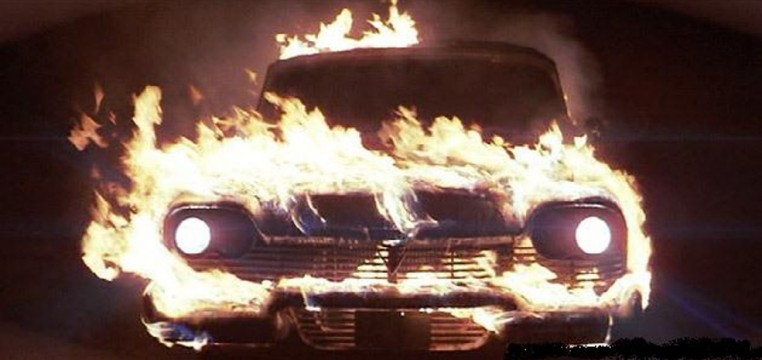
Scene from the 1983 film “Christine.”

Lance and Karl Ellis and their girlfriends Brandi and Jennie had been disappointed after visiting Cross Castle near Clinton Road. No Satan worshipers, goat’s heads, or dead cats. Now they were racing north as the Jiles black pickup roared after them.

Jennie screamed hearing another shotgun blast but Lance turned the curve just in time and it missed.

“We never should have come out here, Karl.” In the backseat, Brandi hit his shoulder.

“Wait. Can’t see his headlights in the mirror. He’s gone.”

They’d sought one terror and a different one nearly killed them. Now they were safe. Then the restored 1958 Plymouth Fury lunged forward.

“Slow down. We’re okay.” Jennie put her hand on Lance’s shoulder.

“It’s not me. The car’s doing it by itself.”

“Knock if off.” Karl was laughing nervously.

Then the radio came on and the analog tuner cycled across the dial picking out different stations, “Hello…kidz…I…am…Christine.”

I wrote this for the What Pegman Saw writing challenge. The idea is to take a Google Maps image and location and use them as the inspiration for crafting a piece of flash fiction no more than 150 words long. My word count is 150.

Today, the Pegman takes us to Clinton Road, West Milford, New Jersey which according to the description, has a “strange reputation.” I started with Wikipedia but decided not to use it since there is so much else on the web about this stretch of highway.

There’s a ton of info at Weird NJ about the Ghost Boy and Cross Castle, but I also found an interesting article about the Jiles Jones Phantom pick-up truck. I used the latter two legends in my wee tale.

Then, just for fun, I added a small element from Stephen King’s 1983 novel Christine.

Rather than me writing lengthy descriptions of all of this, click the links I’ve provided to learn more.

To read other stories based on the prompt, go to InLinkz.com.

The Alien Cure

karovy vary

A panorama showing most of the spa/historic section of Karlovy Vary – Photo taken and panorama created by Bobak Ha’Eri – Found at Wikipedia.

“The healing powers of the thermal springs here at Karlovy Vary have been known since the Bronze Age, Vasnev.”

“Oh please don’t mention the Bronze Age, Ross. I have very unpleasant memories from that era.”

“I was there too, you know. However we’re not here for our health.”

“I thought we were supposed to be preparing for a manned excursion to the stars. Why are we in the Czech Republic with a Forerunner scanning device.”

“You should be able to figure that out.”

“Of course, you suspect the health effects of the spa are artificial.”

“Right, just like the red goo used in Forerunner spaceship acceleration couches.”

“Shall we partake then and covertly scan the waters?”

“Let’s. Ashe thinks a Forerunner outpost could be buried underneath the city.”

“Who knows what wonders or terrors are there?”

“But can their technology be accessed in the present or only in the past?”

I wrote this for the What Pegman Saw writing challenge. The idea is to use a Google Maps image and location as the prompt to create a piece of flash fiction no more than 150 words long. My word count is 150.

Today, the Pegman takes us to Karlovy Vary in the Czech Republic. The healing powers of the spa there have been known since the bronze age and the bronze age always reminds me of my “Time Traders” series which I began last July with The Recruit and is based on a series of novels written by Andre Norton (pseudonym, née Alice Mary Norton).

We last saw Ross Murdock and Vasnev Romanovich in my epilogue to “Key Out of Time” way back at the end of October. I haven’t done anything with this series since then, though it’s still posed for the next “novel,” and I thought I’d dust off Ross and Vasnev and have them investigate the spa in the present. I wonder how many miracles in our world could be attributed to the alien influences of the Forerunners?

To read other stories based on the prompt, go to InLinkz.com.

Forgotten Hero

ute petraglyph trail

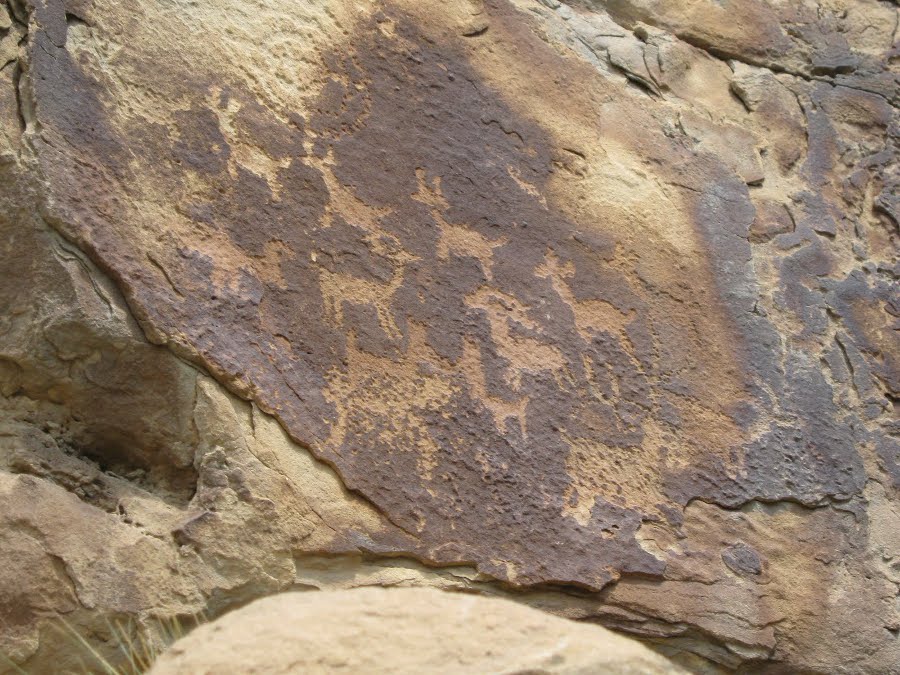
© gjhikes.com – available for non-commercial use.

The explosion at the house he rented in Cascade would keep the cops off his back long enough for him to hike up Palisade Rim Trail. He told the locals he wanted to study the Ute petroglyphs when there weren’t any tourists around. It was an easy trail and just about anyone who wanted to see them could. That was the beauty of it all. No one suspected the secret.

Wasn’t dawn yet and damned cold but he made it. Large number of petroglyphs probably meant this was a frequent camping area. The real reason the Utes visited here often didn’t survive into the modern age. He’d failed this time. The Sun Lords weren’t in this version of reality. Richard Hunter activated the time gate using the Moreira device and stepped back into 1959 to try again. He and the Forgotten Heroes had to find them before they conquered the multiverse.

I wrote this for the What Pegman Saw writing challenge. The idea is to take a Google maps location and image and use them to inspire the creation of a piece of flash fiction no more than 150 words long. My word count is 150.

Today the Pegman takes us to Palisade Rim/Ute Petroglyph Trail, Colorado. I had a tough time with this one. Seems like a nice place to visit, but where’s the action?

The trailhead is just a few miles away from Cascade, Colorado but while the area has a few interesting stories, none of them grabbed me. I tried looking up current news articles for Cascade, but the closest thing I found was a house explosion in Colorado Springs.

I looked up the trail itself and found a couple of reviews including one from GJHikes.com and another from Colorado West Outdoors. Finally, I tried to find out how old the petroglyphs were.

I had some sort of time travel story in mind and at first, I was just going to use one of the character names from the original Rip Hunter, Time Master comic book which first appeared in issue 20 of Showcase in May 1959. Then while reading the history of the character, I decided to adopt some of the elements from the mid-1980s “Crisis on Infinite Earths” story arc.

The “Moreira” device is named for Ruben Moreira, the original “Rip Hunter” artist in 1959.

I know it’s ridiculous but it’s the best I could come up with, especially when I haven’t had breakfast yet (as I write this).

Since I read the trail ends at a high cliff, my only other idea was a suicide, but that seemed pretty grim.

To read other stories based on the prompt, go to InLinkz.com.
Notzrim

jerusalem

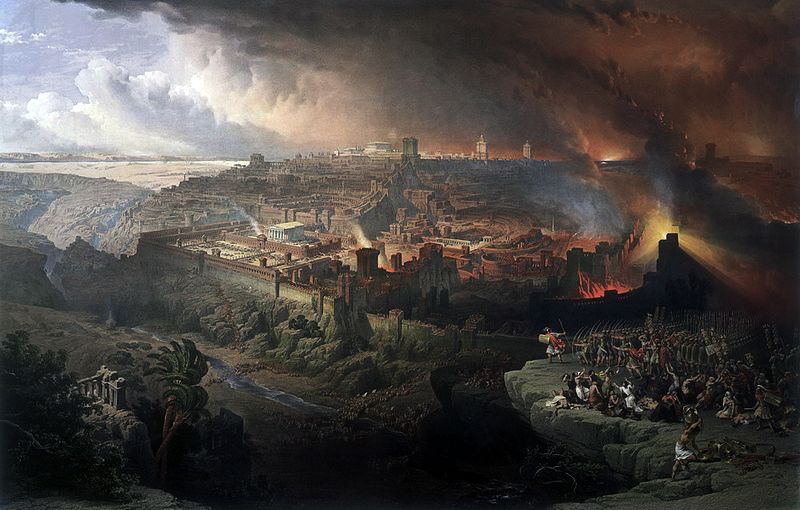
David Roberts’ The Siege and Destruction of Jerusalem by the Romans Under the Command of Titus, A.D. 70

The group of men entering the synagogue at Terni caused murmuring among the Jewish men and not a few of the women. Everyone’s hearts sagged with news of the fall of Jerusalem and the destruction of the Holy Temple of Hashem by the Romans. These men had been there. They were refuges forced into the diaspora. How long had it been since any of the Terni Jews made the journey to the Holy City to offer Korban to Hashem?

After the reading of the Torah and the Prophets the synagogue officials sent to them, saying, “Brethren, if you have any word of exhortation for the people, say it.”

Yochanan stood and said, “Men of Yisrael, and you who fear Hashem, listen. Hashem has brought to Yisrael a Savior, Yeshua Ben Yosef, after Yochanan had proclaimed before his coming a mikvah of teshuvah to all our people and even the Goyim.”

I wrote this for the What Pegman Saw writing challenge. The idea is to take a Google Maps street image and location and use them as a prompt for creating a piece of flash fiction no more than 150 words long. My word count is 150.

Today, the Pegman takes us to Terni, Italy. Like most places in Europe, Terni has a rich history going back to ancient times. Wikipedia says Terni was founded around the 7th Century BCE and was conquered by the Romans in the 3rd Century BCE. I have no idea if in the late First Century CE there was a Jewish population and a synagogue present, but I pretended there was.

After the Romans destroyed Jerusalem and the Holy Temple in 70 CE, there would doubtless have been countless Israeli refuges who were forced into the diaspora (exile among the nations). The Jews who had long lived in the cities and nations in the Roman empire would have journeyed to the Holy City only rarely because of the distance and difficulty in traveling in those days, so seeing a group of their Hebrew brothers arriving from the recently destroyed Jewish capital would have caused quite a stir, but there’s more than that.

It is a common belief in Christianity, Judaism, and even among other religions and in atheism that Jesus and then the Apostle Paul created a new religion called “Christianity” and converted many Jews and many more Gentiles to it. It is often thought that the Law (Torah) and all of the Jewish customs and traditions mandated by God were “nailed to the cross with Jesus.” My studies have convinced me that nothing could be further from the truth for the Jewish people.

The group of men from Jerusalem in my story are devout Jewish followers and disciples of Yeshua (Jesus) the foretold Maschiach (Messiah) and many witnessed him after the resurrection and then they told many others.

I borrowed a bit of Acts 13, specifically verses 15, 16, and 23 to put words in the mouth of my fictional Yochanan (John). Although Jewish devotion to Yeshua eventually fell away, we are unsure of just how many years or centuries such Jewish faith in him continued, perhaps even into the 3rd Century CE and beyond. No one knows for sure. However, that devotion would be a wholly Jewish extension of Pharisaic belief, not something that had no resemblance to its root source. That’s what I tried to communicate in 150 words.

For the sake of my narrative, I used a classic painting of the siege of Jerusalem above rather than an image associated with Terni, Italy.

To read other stories based on the prompt, go to InLinkz.com.

Immortal in Ice

sami

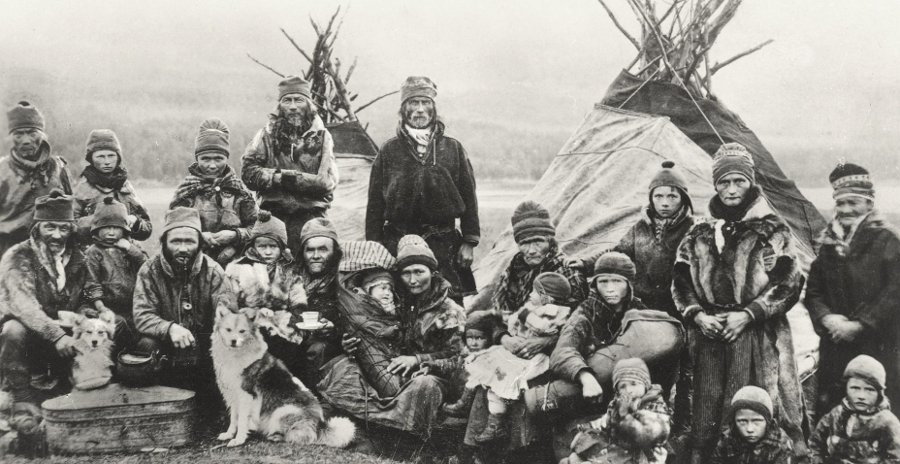
Nordic Sami (Saami) people in Sapmi (Lapland) – Taken between 1900 and 1920 by Granbergs Nya Aktiebolag – Public Domain

William Shaw wanted to be alone, which is why he had settled in Lapland for a time. Unfortunately, history once again worked against him. The Nazis invaded as part of their offensive against the Soviets. He escaped into the icy wilderness rather be captured. No one could know his secret.

He couldn’t really die, not from starvation or exposure. Wounds healed almost instantly. However he could feel pain. His extremities were frozen. He’d walked as far into the mountains as his body would allow. If not death, then a long winter’s nap would be as welcome.

Then men came. They said nothing, looking to be hunters of reindeer. Shaw was picked up and taken to their camp. It had been long since he had come this way, hundreds, maybe thousands of years prior. He had lived among the Sami before. Perhaps he used to be one of them.

I wrote this for the What Pegman Saw challenge. The idea is to take a Google Maps location and image and use them as a prompt for creating a piece of flash fiction no more than 150 words long. My word count is 148.

Today, through something of a mishap, the Pegman takes us either to Northern Norway or Northern Finland. That’s a lot of territory to cover, but I picked Finland because I thought everybody else would pick Norway (the idea just popped into my head) and because it borders Russia, which could afford some interesting possibilities.

Since we’re talking northern Finland, the northern most portion is Lapland and man does it ever get cold there.

Of all the qualities this area possesses, I was drawn to the Regional Coat of Arms which depicts a traditional Wildman.

After doing a bit of reading, I found that the wildman is an iconic image associated with both northern Norway and Finland and possibly meant to depict an ancient member of the Sami people. The Sami are the only and northernmost indigenous people inhabiting areas of Norway, Sweden, Finland, and Russia. There are Sami who live along the coast and also the Mountain Sami who traditionally have hunted and also herded reindeer.

All of that is very interesting, but I needed a protagonist. I first considered a vampire, but then I recalled a character I created named William Shaw who I first introduced in January 2017 and reprised a few days later.

Shaw is an immortal or very-long-lived person, someone who has existed so long, he cannot remember where he came from originally or how old he really is. In my first story, I also made him a time traveler. He had met his love in early 20th century England, but then due to an argument, she left him. Unfortunately, it was to travel to America aboard the doomed RMS Titanic. Decades later, he was determined to use a time machine to go back and save her, but then there would be two identical immortals existing from April 1912 forward in time so I dropped the idea of expanding that story.

Here, we have Shaw still mourning his lost love, hiding in northern Finland. Sadly, his timing was off, because the Nazis invaded Finland including Lapland during World War Two as part of Operation Barbarossa, their plan to invade the Soviet Union.

So, not wishing to be captured and perhaps being discovered by the Nazis to be an immortal (if they tortured him, his wounds would heal almost immediately, which would certainly be noticed), he took the long trek north to meet his fate or at least to enter the next chapter of his life.

To read other stories based on the prompt, go to InLinkz.com.
The Bristol Connection

hogarth

William Hogarth’s 1756 painting “Sealing of the Tomb” displayed at St Nicholas Church in Bristol – © BBC.com

Ian Dennis didn’t look like a spy, which worked to his advantage. Although the MI6 man fancied himself a “Sean Connery” type in his youth, he was now middle-aged with thinning blond hair and a bit of a belly paunch.

No one gave him a second glance as he walked into the newly reopened St Nicholas Church in Bristol, which had been closed since World war Two due to bomb damage. Ian absolutely loathed conspiracy theories, particularly the pseudo-religious type depicted in those Dan Brown books, but if his source was right, the renovated triptych “Sealing of the Tomb,” originally painted in 1756 by William Hogarth, contained both ancient and modern clues to the identities of the people behind human trafficking.

In the 18th century, Bristol was a center for the transport of slaves to America. If the triptych’s clues bore out, then it was today as well.

I wrote this for the What Pegman Saw writing challenge. The idea is to use a Google maps place and street photo as the inspiration for crafting a piece of flash fiction no more than 150 words long. My word count is 147 (and on the first draft, too).

Today, the Pegman takes us to Bristol in the UK.

After finding its location using Google Maps, I looked up the local news and found this item at BBC.com dated 23 January 2018: St Nicholas Church closed since World War Two to reopen.

The church had actually still been open as a museum since sometime in the 1950s and displays what I gather is a quite famous triptych (three paneled painting) called “Sealing of the Tomb” painted by William Hogarth in 1756.

In looking up Bristol, I discovered it was heavily involved in the slave trade in the 18th century. I looked up William Hogarth thinking I might tie all of this together somehow and for a moment thought I had something. He’s buried at St Nicholas Church but in Chiswick, London, not Bristol.

The most controversial thing I found about him was that he was a Freemason and often used Freemasonry symbolism in his paintings. There are all kinds of Masonic conspiracy theories, but for 150 words, I wasn’t going to do that much work, so I made up some stuff.

I decided to revive MI6 agent Ian Dennis, last seen in the eighth and final chapter of my Mauritius Robbery Affair series. Since part of the theme involves slavery, I invoked a human trafficking storyline pulled from my Mikiko Jahn series.

Although Ian views fictional works such as Dan Brown’s The Da Vinci Code with distaste, I decided that’s exactly the sort of story I was going to write (I’ve never read the book nor seen the movie and after reading several reviews, have no intention of doing so).

One last thing. My work is purely fiction and yes, it does involve real people and places. However in no way am I suggesting that the actual William Hogarth was involved in slavery or any sort of criminal conspiracy, nor am I saying there’s anything sinister about the St Nicholas Church in Bristol or the painting “Sealing of the Tomb.” I made all that up just for giggles.

To read other wee tales based on the prompt, go to InLinkz.com.