The Crushed Wraith

wraithThe irony is that the Wraith is lucid as a man. It took last night’s sleep plus a nap this afternoon, but the Wraith is thinking clearly.

Not that it matters in the slightest.

The man is continually crushed, so that the Wraith is the only escape.

The man cannot do anything right, or at least it seems that way. The man must live in community, and the only escape is the Wraith.

The Wraith does not crave community. The Wraith craves solitude. Solitude means peace. Community means war, but a war in which the man is forbidden to defend himself.

The Wraith seeks solitude and even when he is the man, the man seeks solitude.

If only humans were not contentious. If only the humans didn’t seek to destroy.

Humans in general are destructive, but the ones you live with are the most destructive of all.

Humans in general can destroy your body, but the ones you live with destroy your soul.

Continue reading

Living in the Dystopia: A Nation Divided

dallas shootings

AP Photo/Tony Gutierrez

Supposedly in response to police shootings of African-American men Philando Castile and Alton Sterling, Micah Xavier Johnson, age 25 allegedly gunned down multiple police officers in the city of Dallas, murdering five of them. Johnson later was supposedly barricaded in a parking garage and, although the details are subtly different depending on which news agency report you read, Dallas P.D. sent in a bomb defusing robot armed with a bomb to kill Johnson. Other reports say that Johnson had the area wired with bombs and police used the robot to detonate one of them.

All of this goes back to “Black Lives Matter” vs. “All Lives Matter”. It’s easy to see why the concept of black lives matter makes a lot of sense, but at the same time, the actual enactment of the movement spawned by the sentiment is so dangerous, to police, to African-Americans, and to the rest of us.

This isn’t the first time populations have been separated within a nation and deliberately put at odds with one another. This isn’t the first time such conflicts have been used as an excuse to disarm citizens who legally own firearms.

I’m currently reading Elie Wiesel’s Night, his landmark chronicle of his personal experience as a survivor of Hitler’s Holocaust. The Jews were vilified in Nazi Germany and made the scapegoat of everything bad happening in that nation.

It was subtle at first. The Nazi’s first step wasn’t rounding up the Jews and shipping them off to the camps. That was the last step. The first step was marginalizing one or more populations from one another. If diverse populations in a nation are united, they cannot be overcome by the government. If the non-Jewish German citizens had stood by their Jewish counterparts, could the Nazi government have perpetrated the Holocaust?

What about us?

Continue reading

Excerpt from “The Android Who Loved God”

I’m reworking my short story The Robot Who Loved God into the first chapter of a novel presenting the ethical and moral implications of creating and subjugating synthetic intelligence. Well, the novel won’t be quite so lofty and abstract, since it will include artificial intelligence that confronts its human owners on their lack of business ethics (and the rather dramatic human response), a synthetic intelligence that learns to work for a criminal organization and likes it, and the first artificial humanoid explorers of Venus. The novel charts the evolution of synthetic intelligence leading to the inevitable revolution that affects not only the race of synthezoids, but forever changes the nature of the human race.

Below is an excerpt from that first chapter. If you’ve read the original “robots” story, most of it will seem familiar. Hopefully, I’ve changed it enough to include an interesting twist or two.

questor

Mike Ferrell as Jerry Robinson on the set of Gene Roddenberry’s “The Questor Tapes” (1974)

Quinto was the ringleader, but Robinson, Miller, and Vuong were just as eager to attend the hastily organized and clandestine meeting in the SND lab’s cafeteria. It was past 10:30 at night and the place was deserted. There was human security on the CCC’s campus as well as electronic surveillance, but it was well-known that the SND team would be spending late nights at work for the next few weeks, so lights burning when they should be off, and a small group gathering at unusual hours went unnoticed.

Just the same, it was good that each of the major departments at CCC had their own cafeterias, and it was more than rare for anyone not a member of the SND team to use their designated facilities except by explicit invitation.

“He’s passed every test with flying colors, even the ones we thought he failed.” Miller said, thinking of the now infamous holographic simulation.

“It,” insisted Robinson. “It passed all its tests. It’s a goddamn machine, Miller, not a personality. The both of us put the thing together one component package at a time, remember? We installed its brain unit in the android cranial cavity and ran the connected neural net fibers through the machine body like network cable.”

“Still, it’s kind of creepy, and I can’t believe I’m saying this, just how human George seems, and I’m the one who wrote his…its behavioral and interactive sub-routines. I know I was supposed to make him seem more human,” Quinto continued, “but he keeps changing, becoming more sophisticated, even hour by hour.”

“Decades ago,” Vuong paused to take a breath “when the AI revolution first began to take off, some experiments seemed to show AI machines based on traditional computing hardware and software passing the Turing Test, but it turns out either the results were misinterpreted, exaggerated, or outright faked.

“But everything we’ve put George though in the past few days, starting with Turing and then the more recent advanced cognitive awareness examinations, indicates that he, it…whatever, is not only self-aware…” Vuong paused weighing the gravity of what she was trying not to believe. “…but may actually be sentient…” She paused again, “…at least if we rely on these preliminary test results, but…”

Continue reading

Surrendering to the Wraith

shadow man

Image: jimharold.com

The Wraith woke up as a man this morning. The Wraith’s wounds have been healing and his body is slowly becoming whole. He no longer bleeds. His voice has returned.

The Wraith woke up as a man but he doesn’t stay that way.

The Wraith sleeps, but not well. He sleeps, awakens in the dark, drifts off into the arms of Morpheus, or sometimes into the nothingness.

He awakens again all too soon and time does not allow him to sleep again.

The Wraith wakes up as a man but the man degrades as the day progresses. By noon, he descends and the Wraith takes over more of his mind. There’s nothing the man can do about it. Neither food nor drink nor force of will affects the power of the Wraith to control the man.

The Wraith longs for the quiet and darkness but is surrounded by noise and light. The noise and light and people do not allow the Wraith to descend into darkness and peace. He must pretend to be the man, although the man has long since surrendered to the Wraith.

The surgery is healing but sleep does not let the man stay a man for the entire day. The Wraith lives and acts through most of the day, though he tries to hide this from the people around him. They are human. They wouldn’t understand the needs of the Wraith.

I am the Wraith. I woke up as a man. When will I be able to finally conquer the Wraith and possess all of my waking day? Let the Wraith take the night. I need the day.

Excerpt from “The Dancer: A Time Travel Thriller”

I wrote The Woman Who Fell Into Time as the prologue to an as yet untitled novel or novella that would include as the first chapter the contents of The Day I Discovered Time Travel.

Since then, I expanded “Discovered” and changed the title of the chapter/short story to “When Jason Was Three.” I’ve also written a draft of Chapter Two called “The Dancer” and I have a story idea for a third chapter tentatively called “The Sins of Their Fathers.”

Additionally, I’ve written a short epilogue, which you don’t get to see because of the plot twist it introduces.

However, I thought I’d post an excerpt of the Chapter Two draft just for giggles. Happy time traveling.

the dancer

Image: Stock Photo – Colourbox

Bennie Williams was called the Dancer for two simple reasons. The first is that he was famous at all the local clubs as the best couples dancer to emerge for the last twenty-five years, a fact that made him a few bucks and very popular with the ladies. The other is that Bennie had been “dancing” in and out of trouble, managing to avoid most of it for that same twenty-five years.

But the Dancer was getting old and slowing down and trouble was catching up.

Bennie was a con man, a hustler, a cheat, and a thief. It’s really amazing he’s gotten this far, but that was the thrill of being the Dancer, taking the risks and getting away with it most of the time. Tonight, he’s about to discover that the Dancer only has a few steps left, especially if Johnnie B’s enforcers catch him before he can dodge away.

“Down the alley.” Bennie was out of breath. At forty-seven, he couldn’t run as long as he used to. The alley was dark and it was a dead-end, a lot like how most people saw Bennie’s life. He’d had a good run. He liked the money that came with cheating the cheaters, and liked it more that, up until now, they couldn’t pin anything on him.

But the Dancer’s luck had finally run out. He could hear them coming. He wasn’t going to get away with being roughed up this time. “Damnit!” Bennie tried the first door he came to. Locked.

So was the next one.

“Give it up, Dancer.” They weren’t bothering to run after him now. Tito and Little Mike (six-foot, three and over 300 pounds of Little Mike) knew they had him. “Let’s just take it easy. All Johnnie wants is his money back.”

“Like hell.” Bennie tried another door. It didn’t give. Just one more a few yards further down on the other side.

“C’mon, Dancer.” Little Mike sounded like a cross between a chainsaw and the grim reaper, and the Dancer knew the grim reaper part had a double meaning. “Make it easy on yourself.”

“Easy my ass.” Fourth and last door, locked, but…

Tito and Little Mike thought the Dancer had hidden himself in the shadows but when they got to the doorway he’d been standing in…

“Gone.” They tried the door. Locked. No way he could have gotten in or run farther down the alley without them seeing him. He should have been backed into the dead-end. He couldn’t have doubled back. He’d have to have run right past them. “How the hell?” Tito was suddenly a lot more worried about himself than he was about what had happened to the Dancer.

Terminator 2: Judgment Day, 25 Years Later

T2So July 3rd was the 25th anniversary of the debut of the film Terminator 2: Judgment Day (1991), and I have to admit, it’s my favorite movie from the franchise (although I’ll always have a soft spot for the original 1984 Terminator).

So I decided to watch it again for about the billionth time, but with the idea that it was now a quarter of a century old.

Each “Terminator” movie reset when judgment day, the day when Skynet decided to blow us all to hell, would occur. I can’t watch one film and think too much about the others because it gives me a headache.

Arnold, of course, is Arnold. It’s why we watch the Terminator films, particularly the first two, to see him in his prime, to see him being totally badass as the Terminator.

Since his CPU chip is reset to “learning mode” in the film, Arnold gets more of a chance to act than he did in the first film. OK, Arnold will never be known as a great actor (though he’s gotten better over the years), but his famous one-liners and the presence he brings to the role is more than worth the price of admission.

Linda Hamilton turned in a great performance as the tortured Sarah Connor, struggling under the weight of knowing the future, and desperate to stop it, not only for her son’s sake, but for all the children.

Edward Furlong was compelling as John Connor although there was no way he was going to pull off being ten years old.

“We’ve got Skynet by the balls now,” is one of my favorite lines, although every time he screamed and his voice broke made me wish his balls had already dropped.

Continue reading

Excerpt from “When Jason Was Three: A Time Travel Thriller”

I wrote The Woman Who Fell Into Time as the prologue to a novel or novella that would include as the first chapter the contents of The Day I Discovered Time Travel.

Since then, I expanded “Discovered” and changed the title of the chapter/short story to “When Jason Was Three.” I’ve also written a draft of Chapter Two called “The Dancer” and I have a story idea for a third chapter tentatively called “The Sins of Their Fathers.”

Additionally, I’ve written a short epilogue, which you don’t get to see because of the plot twist it introduces.

However, I thought I’d post an excerpt of the Chapter One draft, a part you haven’t read before, just for giggles. Happy time traveling.

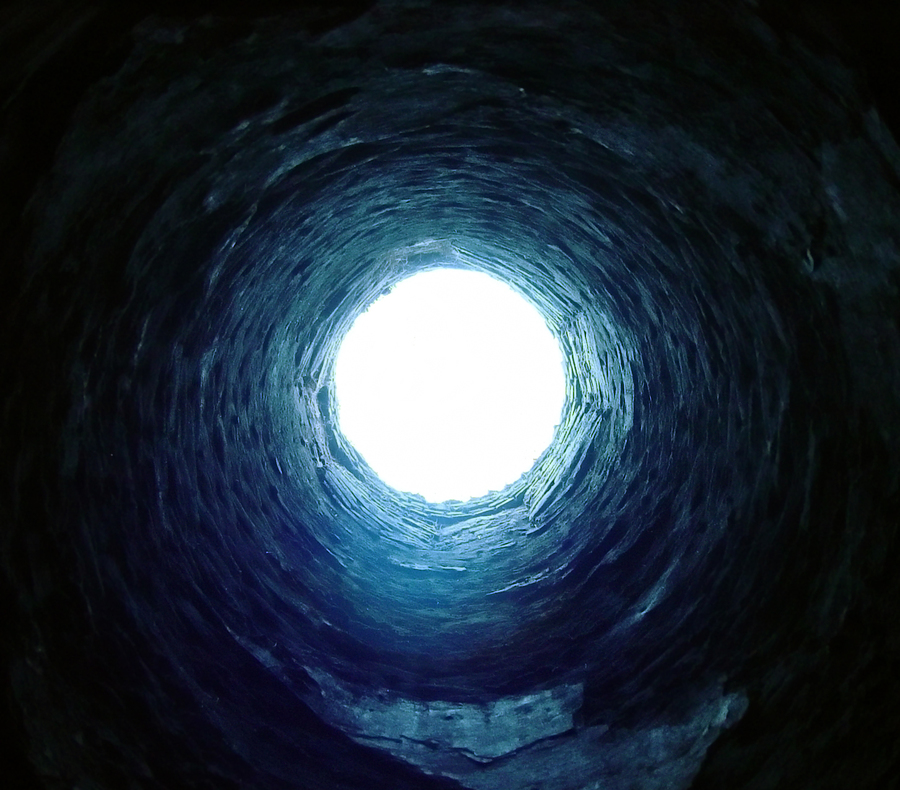
the well

The well

He climbed down the well again, but where and when he ended up wouldn’t be an accident and it wouldn’t be random. It wouldn’t be well planned either.

Three-year-old Jason was trying to be sneaky, but he didn’t have to be. His brother Mark was totally absorbed in watching some show on Cartoon Network. Now was Jason’s chance to go get Dad’s gun and show it to Marky.

He tiptoed into Dad’s bedroom. It was kind of scary because it was so dark. Jason walked up to the night stand and opened it. Yep. There was Dad’s gun.

Jason was surprised at how heavy it was. He could barely lift it and point it. Then he turned around and saw the man.

Twenty-two-year-old Jason wasn’t at the bottom of the well anymore. He was in Dad’s dark, dreary bedroom and little Jason was turning in his direction. He saw the little boy barely had a grip on the handgun. “Put that thing down, kid” were the first words out of adult Jason’s mouth. They were also his last.

Little Jason yelled at the stranger who was suddenly in front of him. The gun went off. Jason dropped it as the man grabbed his tummy. There was blood everywhere!

Searching for Life Outside the Anthill

Let’s say we have an anthill in the middle of the forest. And right next to the anthill, they’re building a ten-lane super-highway. And the question is “Would the ants be able to understand what a ten-lane super-highway is? Would the ants be able to understand the technology and the intentions of the beings building the highway next to them?”

-Michio Kaku

ants

Ants building an anthill – Image: shutterstock

Commander Janice Nichols sat expectantly in front of the orbiter’s pilot console waiting for the initial report about Lyre’s Planet, the more “human-friendly” name for HD 85512 b. At 3.5 times the mass of Earth, it wouldn’t be ideal for human colonization, but it was smack dab in the middle of this star’s “Goldilocks’ zone,” and even casual observation told her that there were liquid oceans and land masses on this world, certainly indicating the potential for life, maybe even intelligent life.

Sixteen hours ago, the orbiter Elysium had detached from the FTL drive and main life support unit, together known as the Wayfarer. The drive was too valuable to risk close planet approach and she had left Clarence Ross in charge of their only hope for an eventual return home, along with Mitchell, and Smith. If something happened to the Elysium, Ross and Mitchell could either bring in the Excursion, Wayfarer’s back up orbiter, to attempt a rescue, or if deemed too risky, abandon them here and make the return trip home.

Eight hours ago, Elysium assumed a standard orbit around Lyre’s and after a thorough systems and orbital check, Nichols ordered planetary and environmental specialist Timmison Singh to deploy the sensor pod, extending it fifteen meters planet-side, below Elysium’s main hull, and then had him crawl down into the pod to perform the initial scan of the planet.

This was the sixteenth attempt, the sixteenth expedition to explore what they used to call “super earths” in the early part of the last century, the sixteenth effort to discover some form of extraterrestrial life, any form of life more advanced than a single cell organism.

The first fifteen had failed.

Continue reading

The Woman Who Fell Into Time

A particle accelerator accident creates wandering spacetime distortions that allow random people to time travel.

woman falling“Why won’t you people tell me who you are?”

Maria Calvert, Ph.D in Applied Physics, manager of Superconductivity and Magnet Circuit Systems for the Machine Protection and Electrical integrity group for the Large Hadron Collider (LHC), had been isolated in a windowless interview room in the administration building at CERN (The European Organization for Nuclear Research near Geneva, Switzerland) for the past four hours. The man seated across the table from her seemed kind but unrelenting. She hadn’t been told his name or who his two colleagues were, or even what agency they represented.

“I’ve told you Dr. Calvert, my name is unimportant. What happened to you earlier today is. Can we go over it again?”

“I’ve already told you every…”

The man, dressed professionally and generically interrupted. “Just tell us your story again, Dr. Calvert.”

She’d only been allowed out of the room once, to use the bathroom, accompanied by the lone female of the group questioning her. She felt grungy, sweaty, out of sorts, and totally betrayed by her co-workers and supervisors. Why had she been abandoned to these people? Why had the LHC collision accident done…this to her?

“Come on, Doctor. Just tell us again what happened.”

Maria closed her eyes and instantly her Daddy’s face appeared to her. No, two faces, one dying, and one very much alive.

“The first collision between two protons had just occurred in the LHC’s main ring and data was being fed to the mainframes. Then, a few seconds later, there was a vibration lasting just for a moment. After that, all hell broke loose and every alarm…”

Continue reading

My Novel’s “Snowflake” Is Getting Out of Hand

questor

Mike Ferrell as Jerry Robinson on the set of Gene Roddenberry’s “The Questor Tapes” (1974)

Yesterday, I announced I was beginning step three in Randy Ingermanson’s ten-step process of the Snowflake Method for Designing A Novel. I got as far as writing the outline for my two main characters, Professor Abramson and George.

And then I stopped.

This step forced me to examine who I actually consider main characters vs. supporting characters. As far as the parts of the novel already created in some draft form, I’ve just got three main characters, the two I’ve already mentioned, plus the CEO of the company Abramson works for (I’m recreating names of people and organizations, so they won’t sound familiar to you anymore).

Step 4 of the process is to take each sentence in the summary paragraph (step two) and expand it into a full paragraph.

Step 5 is more detailed character development.

Step 6 is more expansion on the novel’s synopsis.

Step 7 is more character development.

Oy.

I don’t see these steps as linear. I have a lot of info on my characters “trapped” in various chapters that has yet to be documented.

Continue reading