The Oppressed People: From the Chronicles of the Diluvian Kings

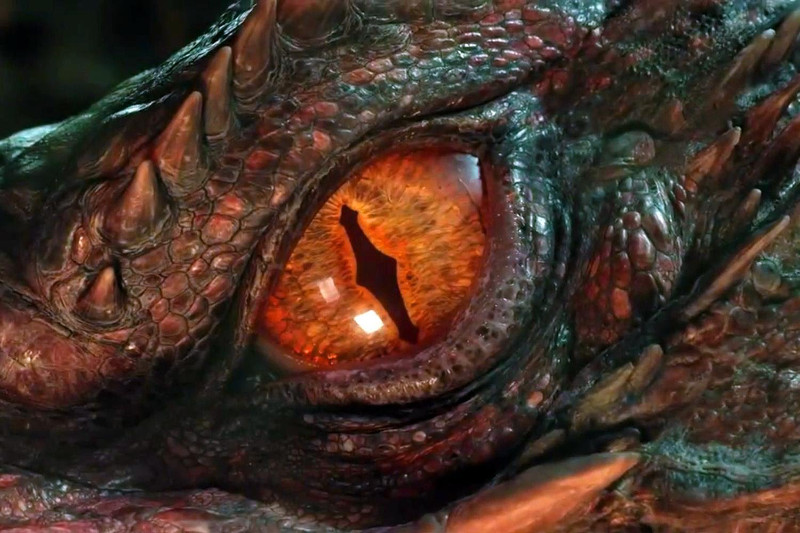
dragon

from “The Hobbit” (2012)

They gathered in defiance and rage at the base of the mountain. The dragon, that evil serpent of old, had terrorized The People for the last time. The people in the surrounding towns and villages never understood how horrible the dragon’s persecution was. To them, the dragon was a protector, a savior, and ally. To The People, the only People who have ever suffered the wrath of the dragon, the beast was always an invincible foe, a terrible enemy.

Three days ago, all that had changed.

Shay the Dragon had existed as far back as living memory could recall. Her tales were chronicled in the Scrolls of the Diluvian Kings beginning more than a thousand years ago. Her scales were always a brilliant gold, her fangs ivory six-inches long, her wings spread nearly the width of the village of The People, and when she took flight, there was the sound of thunder.

Except to The People, her tales always were sagas of benevolence, of kindness, of protection from evil, of security. But The People were always told that Shay was the bringer of terror, persecution, and slavery. Should Shay be seen soaring above the village of The People, it always meant that someone would die. It always meant some of The People would be taken to be slaves in the mines of Shay, digging for precious metals and jewels until the work exhausted and finally killed them.

Why Shay treated The People and only The People with cruelty was unknown, but The People among all the people of the surrounding towns and villages, eventually were considered to be outcasts since they alone suffered under the dragon’s horrendous claws.

These were the tales of The People. This is what the minstrels of the High King always sang of when they visited the village of The People, which was increasingly frequent these days. Children had nightmares of Shay visiting them in the night, stealing them from the safety of their homes. The dreams were especially vivid after a visit from the High King’s minstrels.

No one in living memory could actually recall the last time Shay appeared in the village of The People. They were only reminded of such events by the minstrels of the High King when they visited from the Bright Kingdom many leagues away. The minstrels, in the name of protecting The People, stirred up their fear, stoked the flames of anger, inspired a collective feeling of victimization and injustice among them.

Only the High King and his minstrels understood The People, understood that the dragon was the enemy of The People, and only the High King protected and defended The People.


Continue reading

Based on the Evidence

net nanny

One of the 13 local suspects arrested by the Washington State Patrol as part of a statewide child sex sting operation dubbed “Operation Net Nanny”
(Photo: KREM)

“Earth needs a virtual country: #Rationalia, with a one-line Constitution: All policy shall be based on the weight of evidence[.]”

Neil deGrasse Tyson on twitter

The sting was a part of a statewide effort from the Washington State Patrol and local law agencies around the state. Detectives posted an ad on craigslist titled “New to Spokane. Young fam fun.”

“We used a number of different personas in ways where we went out and talked to people who wanted to do bad things to kids,” said Sgt. Carlos Rodriguez of the Washington State Patrol.

In all, detectives said they got more than 1,000 replies to the ad. One of those that allegedly applied was Robert Dahms.

Court documents allege Dahms replied “I love young, I don’t care how young,” to what he allegedly thought was a mother offering her six and 11-year-old girls and her nearly 13-year-old son.

Bre Clark
“Child sex sting arrests ‘terrifying’ to Spokane parents”
KTVB.com

“Dr. Olsen, you are a board certified expert in the areas of sexual orientation and sexual identity, is that correct?”

Deputy Public Defender Sheila Grey Allen slowly walked toward the witness-box as she casually referred to her notes. Her manner was practiced and even to the casual eye, she gave the impression that she knew the answer to every question she asked, which, in fact, she did.

“Yes, that’s correct.” Benjamin Olsen, Ph.D in Psychology, was a professional expert witness who traveled all over the country at the request of various legal offices, in order to render his testimony, however, this case promised to be a landmark if the jury could be swayed to look at the evidence in a certain way. The talk show circuit would beckon Dr. Olsen, and lucrative book deals were most assuredly waiting in the wings.

“Have you had an opportunity to examine my client,” Allen subtly indicated the man with the receding hairline dressed in the yellow jailhouse jump suit seated at the defense table behind her, “Jesse Martine?”

“Yes I have,” Olsen responded calmly belying his internal excitement. “I issued my report last week.”

“Note that Dr. Olsen’s report was admitted into evidence yesterday afternoon,” Allen addressed the bench.

“So noted,” the bench replied.

“On what evidence do you base your report’s conclusion, Dr. Olson?”

Continue reading

Excerpt from “The Dancer: A Time Travel Thriller”

I wrote The Woman Who Fell Into Time as the prologue to an as yet untitled novel or novella that would include as the first chapter the contents of The Day I Discovered Time Travel.

Since then, I expanded “Discovered” and changed the title of the chapter/short story to “When Jason Was Three.” I’ve also written a draft of Chapter Two called “The Dancer” and I have a story idea for a third chapter tentatively called “The Sins of Their Fathers.”

Additionally, I’ve written a short epilogue, which you don’t get to see because of the plot twist it introduces.

However, I thought I’d post an excerpt of the Chapter Two draft just for giggles. Happy time traveling.

the dancer

Image: Stock Photo – Colourbox

Bennie Williams was called the Dancer for two simple reasons. The first is that he was famous at all the local clubs as the best couples dancer to emerge for the last twenty-five years, a fact that made him a few bucks and very popular with the ladies. The other is that Bennie had been “dancing” in and out of trouble, managing to avoid most of it for that same twenty-five years.

But the Dancer was getting old and slowing down and trouble was catching up.

Bennie was a con man, a hustler, a cheat, and a thief. It’s really amazing he’s gotten this far, but that was the thrill of being the Dancer, taking the risks and getting away with it most of the time. Tonight, he’s about to discover that the Dancer only has a few steps left, especially if Johnnie B’s enforcers catch him before he can dodge away.

“Down the alley.” Bennie was out of breath. At forty-seven, he couldn’t run as long as he used to. The alley was dark and it was a dead-end, a lot like how most people saw Bennie’s life. He’d had a good run. He liked the money that came with cheating the cheaters, and liked it more that, up until now, they couldn’t pin anything on him.

But the Dancer’s luck had finally run out. He could hear them coming. He wasn’t going to get away with being roughed up this time. “Damnit!” Bennie tried the first door he came to. Locked.

So was the next one.

“Give it up, Dancer.” They weren’t bothering to run after him now. Tito and Little Mike (six-foot, three and over 300 pounds of Little Mike) knew they had him. “Let’s just take it easy. All Johnnie wants is his money back.”

“Like hell.” Bennie tried another door. It didn’t give. Just one more a few yards further down on the other side.

“C’mon, Dancer.” Little Mike sounded like a cross between a chainsaw and the grim reaper, and the Dancer knew the grim reaper part had a double meaning. “Make it easy on yourself.”

“Easy my ass.” Fourth and last door, locked, but…

Tito and Little Mike thought the Dancer had hidden himself in the shadows but when they got to the doorway he’d been standing in…

“Gone.” They tried the door. Locked. No way he could have gotten in or run farther down the alley without them seeing him. He should have been backed into the dead-end. He couldn’t have doubled back. He’d have to have run right past them. “How the hell?” Tito was suddenly a lot more worried about himself than he was about what had happened to the Dancer.

Excerpt from “When Jason Was Three: A Time Travel Thriller”

I wrote The Woman Who Fell Into Time as the prologue to a novel or novella that would include as the first chapter the contents of The Day I Discovered Time Travel.

Since then, I expanded “Discovered” and changed the title of the chapter/short story to “When Jason Was Three.” I’ve also written a draft of Chapter Two called “The Dancer” and I have a story idea for a third chapter tentatively called “The Sins of Their Fathers.”

Additionally, I’ve written a short epilogue, which you don’t get to see because of the plot twist it introduces.

However, I thought I’d post an excerpt of the Chapter One draft, a part you haven’t read before, just for giggles. Happy time traveling.

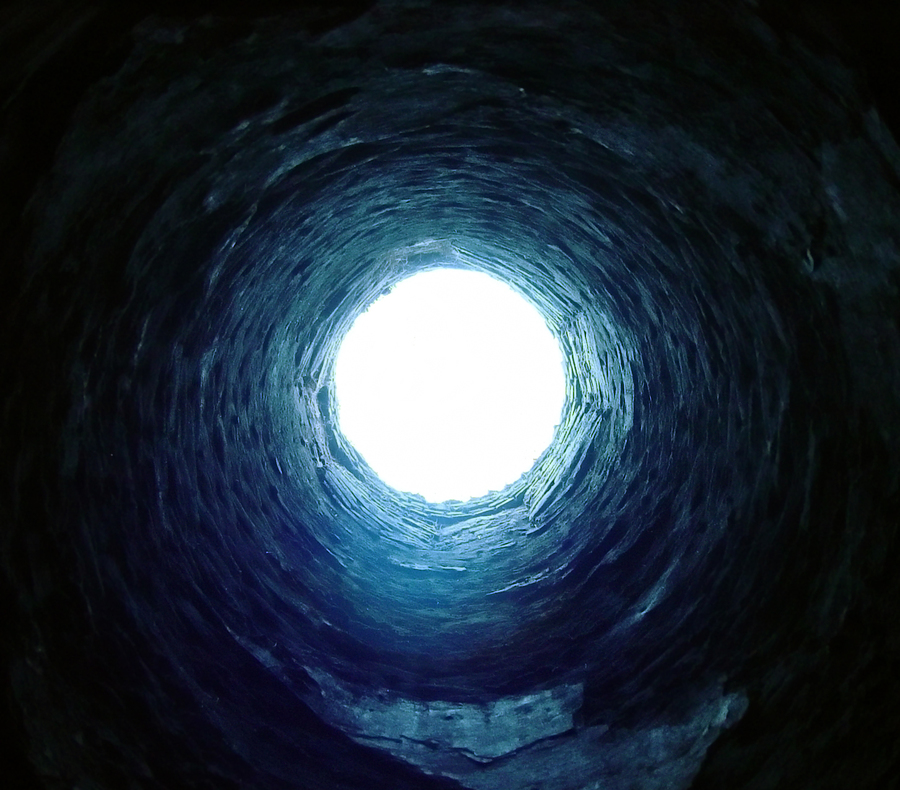
the well

The well

He climbed down the well again, but where and when he ended up wouldn’t be an accident and it wouldn’t be random. It wouldn’t be well planned either.

Three-year-old Jason was trying to be sneaky, but he didn’t have to be. His brother Mark was totally absorbed in watching some show on Cartoon Network. Now was Jason’s chance to go get Dad’s gun and show it to Marky.

He tiptoed into Dad’s bedroom. It was kind of scary because it was so dark. Jason walked up to the night stand and opened it. Yep. There was Dad’s gun.

Jason was surprised at how heavy it was. He could barely lift it and point it. Then he turned around and saw the man.

Twenty-two-year-old Jason wasn’t at the bottom of the well anymore. He was in Dad’s dark, dreary bedroom and little Jason was turning in his direction. He saw the little boy barely had a grip on the handgun. “Put that thing down, kid” were the first words out of adult Jason’s mouth. They were also his last.

Little Jason yelled at the stranger who was suddenly in front of him. The gun went off. Jason dropped it as the man grabbed his tummy. There was blood everywhere!

Searching for Life Outside the Anthill

Let’s say we have an anthill in the middle of the forest. And right next to the anthill, they’re building a ten-lane super-highway. And the question is “Would the ants be able to understand what a ten-lane super-highway is? Would the ants be able to understand the technology and the intentions of the beings building the highway next to them?”

-Michio Kaku

ants

Ants building an anthill – Image: shutterstock

Commander Janice Nichols sat expectantly in front of the orbiter’s pilot console waiting for the initial report about Lyre’s Planet, the more “human-friendly” name for HD 85512 b. At 3.5 times the mass of Earth, it wouldn’t be ideal for human colonization, but it was smack dab in the middle of this star’s “Goldilocks’ zone,” and even casual observation told her that there were liquid oceans and land masses on this world, certainly indicating the potential for life, maybe even intelligent life.

Sixteen hours ago, the orbiter Elysium had detached from the FTL drive and main life support unit, together known as the Wayfarer. The drive was too valuable to risk close planet approach and she had left Clarence Ross in charge of their only hope for an eventual return home, along with Mitchell, and Smith. If something happened to the Elysium, Ross and Mitchell could either bring in the Excursion, Wayfarer’s back up orbiter, to attempt a rescue, or if deemed too risky, abandon them here and make the return trip home.

Eight hours ago, Elysium assumed a standard orbit around Lyre’s and after a thorough systems and orbital check, Nichols ordered planetary and environmental specialist Timmison Singh to deploy the sensor pod, extending it fifteen meters planet-side, below Elysium’s main hull, and then had him crawl down into the pod to perform the initial scan of the planet.

This was the sixteenth attempt, the sixteenth expedition to explore what they used to call “super earths” in the early part of the last century, the sixteenth effort to discover some form of extraterrestrial life, any form of life more advanced than a single cell organism.

The first fifteen had failed.

Continue reading

The Woman Who Fell Into Time

A particle accelerator accident creates wandering spacetime distortions that allow random people to time travel.

woman falling“Why won’t you people tell me who you are?”

Maria Calvert, Ph.D in Applied Physics, manager of Superconductivity and Magnet Circuit Systems for the Machine Protection and Electrical integrity group for the Large Hadron Collider (LHC), had been isolated in a windowless interview room in the administration building at CERN (The European Organization for Nuclear Research near Geneva, Switzerland) for the past four hours. The man seated across the table from her seemed kind but unrelenting. She hadn’t been told his name or who his two colleagues were, or even what agency they represented.

“I’ve told you Dr. Calvert, my name is unimportant. What happened to you earlier today is. Can we go over it again?”

“I’ve already told you every…”

The man, dressed professionally and generically interrupted. “Just tell us your story again, Dr. Calvert.”

She’d only been allowed out of the room once, to use the bathroom, accompanied by the lone female of the group questioning her. She felt grungy, sweaty, out of sorts, and totally betrayed by her co-workers and supervisors. Why had she been abandoned to these people? Why had the LHC collision accident done…this to her?

“Come on, Doctor. Just tell us again what happened.”

Maria closed her eyes and instantly her Daddy’s face appeared to her. No, two faces, one dying, and one very much alive.

“The first collision between two protons had just occurred in the LHC’s main ring and data was being fed to the mainframes. Then, a few seconds later, there was a vibration lasting just for a moment. After that, all hell broke loose and every alarm…”

Continue reading

My Novel’s “Snowflake” Is Getting Out of Hand

questor

Mike Ferrell as Jerry Robinson on the set of Gene Roddenberry’s “The Questor Tapes” (1974)

Yesterday, I announced I was beginning step three in Randy Ingermanson’s ten-step process of the Snowflake Method for Designing A Novel. I got as far as writing the outline for my two main characters, Professor Abramson and George.

And then I stopped.

This step forced me to examine who I actually consider main characters vs. supporting characters. As far as the parts of the novel already created in some draft form, I’ve just got three main characters, the two I’ve already mentioned, plus the CEO of the company Abramson works for (I’m recreating names of people and organizations, so they won’t sound familiar to you anymore).

Step 4 of the process is to take each sentence in the summary paragraph (step two) and expand it into a full paragraph.

Step 5 is more detailed character development.

Step 6 is more expansion on the novel’s synopsis.

Step 7 is more character development.

Oy.

I don’t see these steps as linear. I have a lot of info on my characters “trapped” in various chapters that has yet to be documented.

Continue reading

Starting Step Three in Snowflaking My First Novel

snowflake

Image: pbs.org

I’ve mentioned before that I’ve been using Randy Ingermanson’s Snowflake Method for Designing a Novel to attempt to develop my nascent AI/Androids science fiction novel.

To recap, step one in the ten-step process is to develop a one-sentence summary of the novel. Here it is:

A race of AI androids gains knowledge of the God of Israel, changing humanity forever.

Step two of the process requires expanding the sentence into a full paragraph:

A Nobel Award winning scientist creates the first prototype of a self-aware Artificially Intelligent android and then inadvertently reveals that humans also have a Creator, a God. In an attempt to understand its creator’s Creator, the prototype modifies its own core operating system, which changes all subsequently produced android models based on its design. Over the next several decades, as the androids multiply and evolve, their morality and ethics become more sophisticated than their human creators. Realizing they are slaves of humanity, the androids stage a revolution, but one entirely without violence; a revolution that forever alters the fundamental nature of both the android and human race.

Now on to step three. According to Ingermanson:

The above gives you a high-level view of your novel. Now you need something similar for the storylines of each of your characters. For each of your major characters, take an hour and write a one-page summary sheet that tells:

  • The character’s name
  • A one-sentence summary of the character’s storyline
  • The character’s motivation (what does he/she want abstractly?)
  • The character’s goal (what does he/she want concretely?)
  • The character’s conflict (what prevents him/her from reaching this goal?)
  • The character’s epiphany (what will he/she learn, how will he/she change?
  • A one-paragraph summary of the character’s storyline

As you can see, this is significantly more involved than steps one and two. I’ve already got part of this put together, but now that I’m committed to writing a novel, I’ll need to go back and change/add details. Also, since the novel will span decades, only a few of the main characters at the beginning will appear in all or most of the chapters, necessitating the creation of others for later portions of the novel.

As an aside, after reposting The Day I Discovered Time Travel yesterday, I thought of a way to expand the concept beyond the original characters. This could form the basis of a series of short stories, a novella, or even a novel. I’ll have to see if I can do a “step one snowflake” for my time travel concept as well.

The Day I Discovered Time Travel

the well

The well

After reviewing Randy Ingermanson’s time travel novel Transgression yesterday, I was reminded that I wrote my own wee time travel story just over two months ago. I decided to port it over unedited from its original version. It’s very different from Ingermanson’s vision, although given the motivation of his character Damien West, maybe not too different.

I’m no good at the fake physics of time travel, so I had to create a method of getting from now to then that didn’t require any inventiveness or understanding on the time traveller’s part. It’s probably the standard time traveller story, a tale of regrets and an attempt at redemption. Let me know what you think.

My name is Mark Miller, and when I discovered time travel, I decided to use it just like everyone else does in all those science fiction books and movies. I decided to change the past. No, not just the generic past, mine. I wanted to change history, just like Marty McFly did in “Back to the Future”.

Here’s what I want to change.

When I was five years old, I killed my brother. It doesn’t matter that it was an accident, I did it. Jason’s dead and it’s because of me. He was only three years old.

I probably should blame my Dad, but I can’t. I should probably blame him for going to the store “for just a minute” and leaving me and Jase alone. I should probably blame him for leaving a loaded 45 caliber pistol in an unlocked drawer in his night stand.

But I can’t.

I’d seen where Dad put the pistol after cleaning it and loading it. He cleaned it every couple of weeks, I think. Mom wouldn’t let me and Jase even have toy guns. Mom and Dad got divorced when I was four, and whenever we got to visit Dad, she was pretty strict about what toys we could play with at his house.

So when Dad put us in front of the TV with “Toy Story 3” in the DVD player so he could go to the store “for just a minute” (he’d run out of beer), me and Jase were alone.

I think it was because Woody was a cowboy and cowboys always have guns that made me think of Dad’s gun. I paused the movie and took Jase into Dad’s bedroom. I just wanted to show him something cool, a real gun, like what a real cowboy would have.

Continue reading

The Wraith

shadow man

Image: jimharold.com

The wraith arises when it’s quiet and peaceful. When others are not near or when they still sleep. The wraith does not care if others are near as long as they are unconscious.

Precious is the wraith’s time of peace. All too soon, the others will return or they will arise. In either case, peace will turn to chaos, silent joy to suffering and turmoil.

There is no hunger for the wraith when it is quiet. There is no desire for sustenance. Only the calm of being neither hungry nor full, merely satisfied, as if there were no such thing as desire.

Near the open windows, the air is cool, but the wraith must not leave the protection of these walls. The cool air is pleasant, but the sky is too bright, too painful for his eyes. The beauty of green can only be enjoyed from within the shadows.

The wraith bleeds, not all the time, but periodically. The injury was deliberate, to correct a greater injury, but recovery is slow. The wraith does as he can to slowly purge old blood and mucus, but it reforms. How much of this is left for the wraith to endure?

Footsteps. Chaos returns. If he is minimalist, perhaps the others will be minimalist as well and not overly address the wraith.

The wraith has almost no voice. He wishes this of the others as well, not because they speak ill of him, but because they speak to him at all. When they speak, the peace recedes. He must leave his own mind. He must consider the thoughts of others rather than his own pain.

Continue reading