Worlds: Stupid Sci-Fi Film Tricks, The Nuclear Option.

independence day

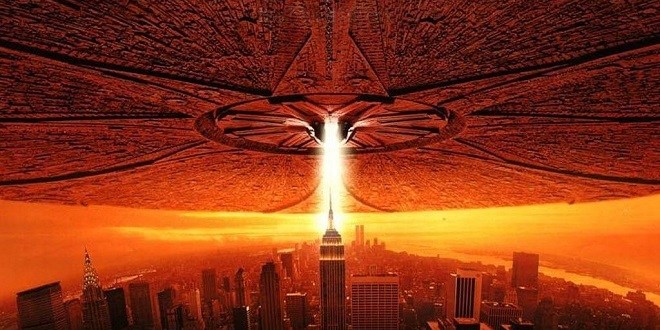
Poster from the 1996 film “Independence Day”

Periodically, I read fictional stories depicting the aftermath of a nuclear war as having devastating effects 500, 800, 1000 years or more afterward. But when I consult a credible source on the topic, recovery from such an event is considered relatively swift (months and years, not centuries). It is true that in the case of a “modest” nuclear war such as between India and Pakistan, nuclear winter (or significant cooling at any rate) would last years/decades, but afterward there would still be recovery.

Don’t get me wrong, I’m not saying nuclear war is a good thing or that it shouldn’t be avoided, but it seems when a lot of folks consider the “unthinkable,” whether it’s nations using nuclear weapons or a person using a firearm in the commission of a crime, there’s a tendency to jump from zero to panic.

Huggins’ blog post reminded me of this, so I thought I’d do a reblog.

Oh, “Independence Day” is my favorite “Fourth of July” movie. Really, you can’t take it seriously. It’s just for fun.
G. Scott Huggins's avatarG. Scott Huggins

A version of this post appeared earlier on my Patreon site, but I thought it was worth exploring here.

Let me introduce you to one of my pet peeves about SF movies in general, through that awesomely terrible film, Independence Day, a film that apparently existed for the sole purpose of trying to make Will Smith and Bill Pullman as President Lone Starr into badasses, if you kinda squint. Hard.

What was the funniest moment in Independence Day? Was it Will Smith’s “Welcome to Earth,” line? Brent Spiner’s performance as the clueless Area 51 boss? No, I suggest that it was the parts where humanity attempts to fight 15-mile diameter floating city-battleships with air-to-air missiles. It’s kind of a credit to the movie that when the shields go down and the missiles hit the targets that the response form the audience is a cheer rather than, “Wow, the humans scratched…

View original post 546 more words
What If Jesus Christ Became King of the World Two-Thousand Years Ago?

I’m having some frustrating connection problems today. I can get to Google sporadically, but I can’t open search results, nor can I get to Amazon. I’ve tried a Windows and Mac computer and multiple web browsers but it doesn’t make a lot of difference. I’ve rebooted my modem a few times and it seems to help temporarily, so I don’t know if it’s my connection or if there’s some sort of horrendous DDOS event attacking part of the internet.

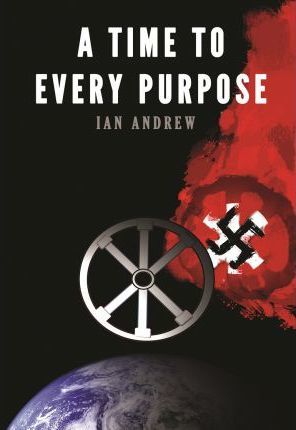
The reason this is particularly frustrating just now is that in one of my Gmail accounts (when I can get to it), I found a Bookbub notice for an eBook called A Time to Every Purpose by Ian Andrew. The Google books blurb says about the book:

After eighty years of brutal Nazi domination millions have been persecuted and killed in a never-ending holocaust. But this oppressive and violent world still retains a few heroes;Now Leigh, the preeminent scientist of her generation, is pitched into the final battle. One that ranges from London to Berlin to Jerusalem. But will she destroy what she loves to save what she can only imagine? After one more murder and one chance remark, now is the time to reset history. The new novel by Ian Andrew.

However, the Bookbub description is more interesting:

Visit an alternate timeline where Jesus was never crucified, leading to 2,000 years of peace — and a society totally unequipped to contend with the rise of Nazism. Will inventor Leigh Wilson destroy everything she knows to reset history?

I’m tempted to buy the book (although since I cannot currently reach Amazon, I don’t know how) just to see how the author pulled off not crucifying Rav Yeshua (Jesus Christ) and yet had him fulfill his role of Messiah in the first century CE (which is what would have to happen for their to be 2,000 years of peace presumably).

On my sister blog Morning Meditations where I write religious commentaries, I’ve asked this same question of my readers. If, instead of the Jewish Messiah King being crucified by the Romans, he started is world-wide reign as King, what would have been his motivation and how would God the Father have consented to this? It would require rewriting, not only significant portions of the New Testament, but the Old Testament as well.

It’s a compelling thought and I’d love to write my version of this story. Ideas?

Why Should You Write Superversive Fiction?

super boy

© iStock

About the time I started my latest stint at writing fictional short stories, I discovered something called Superversive Fiction and particularly Superversive Science Fiction.

According to Russell Newquist, here’s generally what we can expect from Superversive Fiction:

Continue reading

A Reader’s Analysis of “The Robot Who Loved God”

One of my regular readers on my Morning Meditations blog took the time to read The Robot Who Loved God and render a detailed analysis. He emailed me a 35-page Word doc not only correcting my typos (I’m amazed I missed so many after making multiple passes through the story – all typos have been corrected here but not in my original story at A Million Chimpanzees), but offering numerous editorial comments.

I’m including those comments here as well as my responses. I hope you’ll find them as illuminating as I did.

Quotes from the referenced story will be indicated as such in bold text and the content itself in italics. Editorial notes will be in red-colored text. My responses will be in regular text.

Continue reading