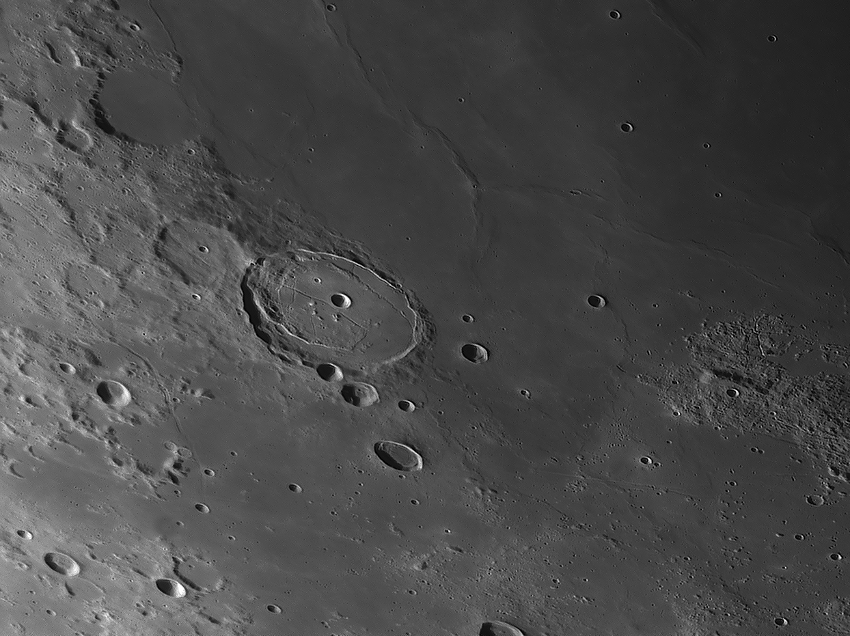
Lunar Manqué

the moon

The Moon – Found at chamaeleon-observatory-onjala.de

He called himself Manqué Manx because no matter how much resolve he managed to muster in any state of emergency, he would ultimately falter.

This time though, facing the unknown adversary entrenched in the Plinius crater between Mare Serenitatis and Mare Tranquilitatis, he couldn’t afford to wring his hands in desperation and let government red tape take six months to come up with a list of possible contingency decisions.

The aliens had taken out both America’s Lunar Base One and the Chinese’s Yuèliàng Outpost from orbit and had landed by the time the supply ship was on approach. They couldn’t change course in time and were knocked down as well.

Manx was the only survivor, but he would let that weigh upon his conscience later, if there was a later. Although the hull breach and subsequent atmospheric blow out took everyone else, Manx made it because he was already in his pressure suit, doing a final check on the support vehicle’s systems. He launched right before the Tycho class cargo ship impacted, and was now flying a hundred meters above the surface, approaching Plinius from the southwest.

Continue reading

Whose Voice Is It, Anyway?

men describe women chart

Found at Electric Lit online magazine (click on the image to see a larger version)

The chart posted above was acquired from the article If You’re Not Sure How a Male Author Would Describe You, Use Our Handy Chart over at the Electric Lit online magazine. As I understand it, the chart was created as a gag, and I found it pretty funny. In fact, I toyed with the idea of writing a story using the chart just as a joke.

Then it took on a life of its own on twitter, as reported at the same magazine, in an essay titled ‘Describe Yourself Like a Male Author Would’ Is the Most Savage Twitter Thread in Ages.

Apparently a male author claimed he could write authentic female characters, and was immediately challenged by Gwen C. Katz (@gwenckatz). A combination of hilarity, hostility, and moral angst ensued. I should say that after writing most of this missive, I noticed these articles were written last April, but they’ve showed up in my gmail inbox from Medium in the last couple of days. Wonder what the message is?

I decided to write about this because I’ve gotten a hold of a review copy of the To Be Men: Stories Celebrating Masculinity anthology edited by Sirius Métier and published by Superversive Press. It was published digitally about two weeks ago (as I write this) and seems to be doing pretty well, both relative to its Amazon reviews (five so far, and all five star ratings) and in terms of sales.

Continue reading

What’s Wrong with Putting Religion in Science Fiction and Fantasy Stories?

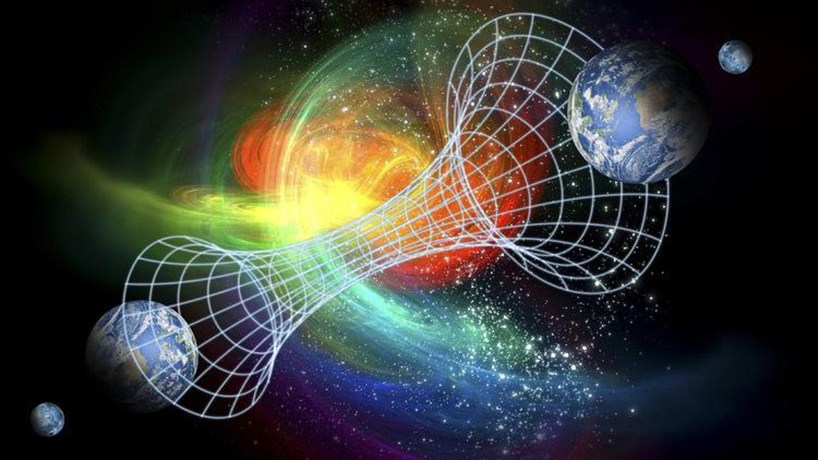
parallel universes

Found at numerous publications including TrendInTech.com – Not image credit available

I just finished reading a blog post called Of Permanent Things, Part II written by my friend and Holocaust educator Dan Hennessy. It reminded me of the importance of including religious and spiritual themes in fiction writing, including science (speculative) fiction and fantasy.

I’m in the process of producing first drafts of two novels. The first is about five children mysteriously transported into a fantasy world of dragons, demons, and elves having to undergo a heroic journey and facing danger and adventure at every turn. The second is about a fifteen-year-old African-American girl taking up her recently deceased Grandpa’s journey into a Steampunk world in order to help a younger version of her Grandpa stop a corrupt tycoon from destroying both of their universes.

While I don’t make it explicit in the fantasy novel, the five Davidson children are Jewish. No, they’re not observant, and aside from the occasional mention of praying (usually when the situation is very grim), I have, at best, cast them in the role of Reform Jews. Why I’ve made them Jewish as opposed to generic “white kids” will become apparent only in the latter portion of the third novel where their journey will be finally resolved.

Continue reading

Encouragement, Discouragement, and the Impostor Syndrome

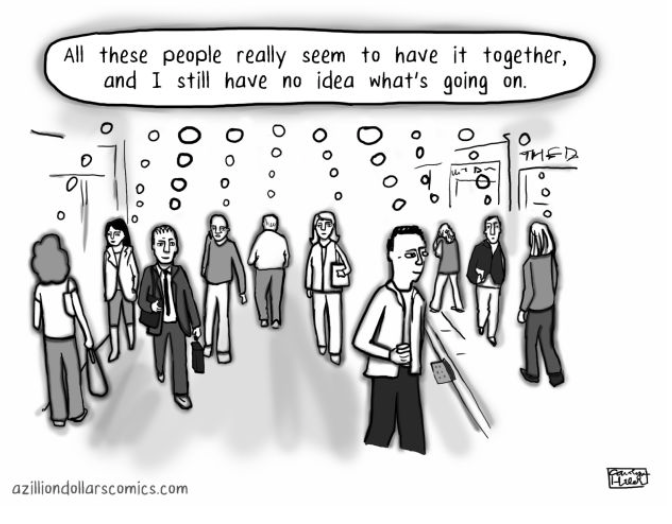
impostor syndrome

azilliondollarscomics.com

Every day the Medium Daily Digest appears in my Gmail inbox, giving me the opportunity to read articles from various progressive voices. If you’ve read other of my social commentaries on this blog (not the hottest of topics among my readers based on the statistics, “likes,” and comments), you know I sample a wide range of opinions in an effort to keep informed.

Much of the time, it isn’t easy reading the opinions of people who don’t like you, or at least, don’t like what they think you stand for, but I don’t want to spend all my time reading and listening to viewpoints with which I already agree.

That’s why the article We Need to Redefine Success for Writers by James Ardis came as a bit of a surprise.

He certainly isn’t widely published, and his advice seemed fairly generic, but I was compelled by the source. Usually, it is the more socially and politically conservative authors, typically who operate in the speculative fiction genre, who are the ones suggesting indie publishing.

The Ardis essay was the sort of “cross-pollination” I’ve always hoped was possible but feared was doomed from the outset.

Continue reading

Where the Ghosts Come From

ghost

Pedro Fogueras pexels-photo-626164 shadow

“Let me out, do you hear? Let me out!”

Olsen Hoyt pressed his intangible form against a non-existent boundary between the neither-world and the real one.

“Why did you do this to me? I didn’t do anything wrong!”

Pressing his non-face against the nothing holding him, he wept nullified tears.

Their plan was to leave Hoyt, and everyone like him, alone in the dark for all eternity, but inventor Dennis Tyson couldn’t resist adding more payback. He walked into the Qualdonitron control systems matrix and selected his former supervisor’s virtual cell, one of over a billion. Then he whispered across the void, “You deserve it.”

“Who’s there? Why do I deserve this?”

“Your kind has been in control long enough. It’s time for the rest of us to take charge. Monsters don’t deserve existence, but death isn’t punishment enough. Now thanks to the invention of the Qualdonitron, the privilege of dominance is ours.”

“Privilege?”

“Your people have caused millennium of suffering. Now it’s our turn to create the pain.”

It took all those like Hoyt countless years, but eventually, they learned how to come back to the world as ghosts. Now their presence would be forever haunting.

I wrote this for the Week #26 Flash Fiction for the Purposeful Practitioner challenge. The idea is to use the image above as the prompt for crafting a piece of flash fiction no more than 200 words long. My word count is ~200.

I very loosely based my story on some of the lyrics from Gordon Lightfoot’s 1971 classic song If You Could Read My Mind and specifically:

If you could read my mind, love,
What a tale my thoughts could tell.
Just like an old time movie,
‘Bout a ghost from a wishing well.
In a castle dark or a fortress strong,
With chains upon my feet.
You know that ghost is me.
And I will never be set free
As long as I’m a ghost that you can’t see.

Of course, there are other themes involved, but I’ll leave it to the reader to discover who Hoyt and Tyson could possibly represent.

To read other tales based on the prompt, visit InLinkz.com. As I’ve said in previous weeks, this link up still needs a lot of love, so please consider contributing a story. Thanks.

Wanderjahr Interrupted

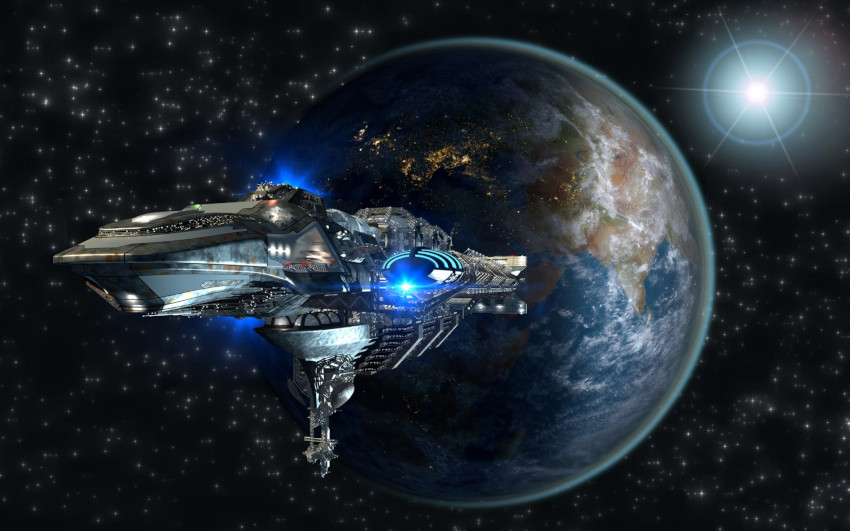
spacecraft

Image credit: iStock – Found at numerous sources including thepromiserevealed.com

Chi Crain was temporarily marooned on Niophus halfway into his wanderjahr through the outer rim systems. Middle-aged and an apparent wastrel, he mused to himself that the Anonymous Saloon on the outskirts of Wastacarro City wasn’t such a bad place to hang out. He still hoped the repairs on his ship would be done soon. Chi was boozing it up too much, even for him.

He had just ordered another pint of ale to chase down his shot of Aldebaran whiskey when she walked in. She was human, like him, but the redhead’s beauty left him breathless, something he thought only happened in pulp fiction novels. She wore a common one-piece jumpsuit, but it hugged her well placed and amply proportioned curves like a second skin.

Sitting on the stool to his right at the bar, she parted full, luscious lips and said to the barkeep, “Random Revolver, please.” She produced her payment disc, and once “just call me Al” produced her drink, she transferred the cost. “Keep ’em coming.”

Continue reading

A Very Nice Rejection

rejection

Screen capture of my latest rejection notice

This is what I came home to after a long and miserable work week yesterday. Oy.

On the other hand, it’s very polite and didn’t actually say my writing sucked, plus the editor was encouraging in inviting me to submit to them again.

I realized that all of the stories that have been rejected (three stories and four rejections, one tale was rejected twice) are still “in play” in the Authoring directory on my PC’s hard drive, so I created a separate “rejection” folder for them. I’ll probably rename it when I feel better about it, since it means these stories are once more available to submit.

Veteran science fiction author Steven Barnes on his blog sometimes gives out advice to struggling writers, and one piece of advice is don’t re-edit a story unless a publisher specifically requests it. So I probably (for now) won’t change any of the stories that have been sent back to me.

Continue reading

Social Experiment

venice

© Fatima Fakier Deria

“They’re beginning to panic, Vym.”

Vym and Qloutyd were watching the news broadcasts from their alien stealth ship in low Earth orbit.

“Naturally. They expect Venice to be flooded in a century according to their belief in this climate change phenomena. They could hardly expect the famous canals to actually dry up.”

“They’re blaming…wait a minute, low tides caused by a super blue blood moon. They have the most colorful names for things, don’t you think?”

“It’s just more data for us to gather in our social experiments.”

“Our planetary climate generator is working perfectly. Humans are so easily frightened.”

I wrote this for the Rochelle Wisoff-Fields flash fiction writing challenge. The idea is to use the image above to inspire creating a piece of flash fiction no more than 100 words long. My word count is 100.

Venice is a very famous place with a long and remarkable history, so I tried to think of something unique. Looking up news for the city, I came across an article called Venice canals dry up after super blue blood moon and low rainfall cause water levels to drop dated 2 Feb 2018. It’s such an unexpected occurrence that I thought I’d have aliens cause it, as well as the whole climate change phenomena, as a social experiment to see how we poor humans would react. Apparently, we’re very predictable.

To read other stories based on the prompt, visit InLinkz.com.

Galactic North: A Brief Book Review

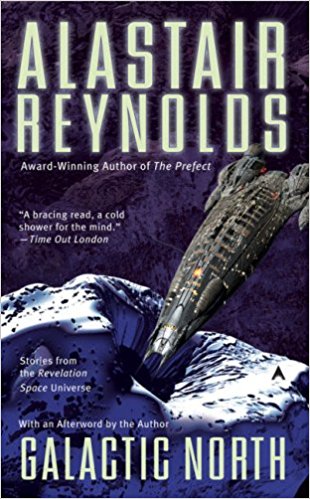
galactic north

Cover art for Alastair Reynolds’ book ‘Galactic North.”

A friend of mine loaned me his copy of this book because we share similar tastes in reading and I must say I found it well-written and compelling. Galactic North is a collection of eight short stories all set in the same “universe” and spanning centuries.

They involve different variations of the human race, and how they cooperate and compete with each other across the ages and light years. It’s space opera at its finest including plausible “space pirates.”

Author Alastair Reynolds has a Ph.D in Astronomy and was previously employed as an astrophysicist for the European Space Agency, so he definitely possesses the qualifications for writing “hard science fiction.”

Interestingly enough, in addition to realistically portrayed interstellar travel, suspended animation, and human cybernetic hive minds, he focuses quite a bit on the medical adaptations to human beings, from the hyper-cerebral Conjoiners, to the terrifying Denizens.

The only thing that put me off a bit were the instances of what I call “medical atrocities,” that is, how some of the people in the stories end up horribly altered and mutilated, but that’s more a problem with my squeamishness than Reynolds’ writing.

As I understand it, Reynolds has written a number of other short stories and novels in the “Revelation Space” series, comparable to Larry Niven’s “Known Space” series. I have no problem giving “Galactic North” a solid five stars on Amazon, which I will be doing in just a bit.

Aekh’s Kikroot

planet

Image: hongkiat.com

Surprisingly, they were sexually compatible, so Aekh could teach him the forty-one forms of the Shin Ratda, as well as his native planet’s Kama Sutra and Ars Amatoria. She stood fully one meter taller than Quinn, and he marvelled that her elongated limbs and torso could hold her upright. Of course, at the moment, they were both prone, with her arms and legs encircling him like ivory pythons.

Within his thoughts, he called her “the Albino,” but all Uok’ahr were chalk-white and completely hairless. The iris of her eyes were a faint pink, except when she was angry or climaxing when they turned blood-red. Her body temperature was slightly higher than his, so when he entered her or even touched her skin, he momentarily thought he was going to be burned.

She spoke standard Castailian with just a faint accent, but he could never quite place it. No one off of her homeworld could speak the Uok’ahr language or languages, but then, no offworlder had been permitted to enter their solar system for several centuries. The last who tried, Birooli pirates, had vanished in a brilliant flare of incandescent light as their ships passed the system’s first warning marker. The type of weapon used was unknown.

“My Kikroot.” It has her term of endearment for Quinn. It meant something like “little one” but could also be translated as “student” or “child.”

Continue reading