The True Origin of Captain America

will smith captain america

Actor Will Smith depicted as Captain America

“You must be the puniest nigger I’ve ever seen, boy. What’s your name again?”

“Johnson, Samuel G., Private, Sir.”

Sam Johnson was the most unlikely soldier in his unit, but then again, he would have been an unlikely soldier in any army in the world. He’d suffered from a number of ailments in childhood including rheumatic fever. His family was poor. Papa died when he was only a baby and Mama had to work three jobs just to keep him fed. They had no money for doctors and his old Aunt Bessie said it was only Mama’s love that kept him alive.

He grew up but not very much. He was tall, but thin, his clothes fitting him like loose blankets. Because of his ill-health, he wasn’t fit for much hard work, but what he lacked in muscle, he made up for in heart and determination.

Like most colored folk, he expected the white folk to call him “nigger,” “coon,” and the like, and he took more than his fair share of beatings, not just because he was a colored man, but because he fought back. To say he fought back meant that he had the will, but he could no more throw a solid punch than Josephine Baker could win the Miss America Pagent.

Continue reading

The Escape


bleak

© Sue Vincent

“Are you out of your mind, Jake? If we get caught here, they’ll add ten years to our sentences.”

“Relax, Hubie. We won’t get caught. Now get off your lazy butt and help me drag the raft higher on the rocks. We’ve got to get it in undercover.”

Jacob “Jake” Falco and Hubert “Hubie” Pavoni had both been sent up for twenty years to life for their part in the largest bank heist of the 20th century. Three guards and two hostages were killed during the shootout and only Jake and Hubie got away long enough to hide the $10 million in cash they’d made off with. That was six years ago, and they were still the only two men alive who knew where to find a fortune.

“Okay, Jake. We’ve got the raft and supplies under this outcropping, so it can’t be spotted from the air and sure as hell no one’s going to step foot in this place except crazy people like us.”

Continue reading

The Bulgarian Falcon

sofia

© Google – June 2017 – Millennium Center- Sofia, Bulgaria

Zukovsky left Istanbul because of her. She would soon discover she’d stolen a fake. Then her employer would return using lethal means to get the item.

He entered Bulgaria posing as a Jewish refuge, settling in Sofia just as Tsar Boris III plunged his nation into World War Two.

“It would not be wise to leave Istanbul right now, Mr. Gutman.”

“Nonsense, Cairo. I’m convinced Zukovsky took the item into Bulgaria.”

“I insist we wait here. You are British. I am from Greece. Turkey is neutral but Bulgaria has joined the Axis. Do you really think we’ll be allowed across the border?”

“I will not allow the item to escape me again.”

“You’ve waited seventeen years to get it, you corpulent fool. You can wait a bit longer.”

maltese falcon

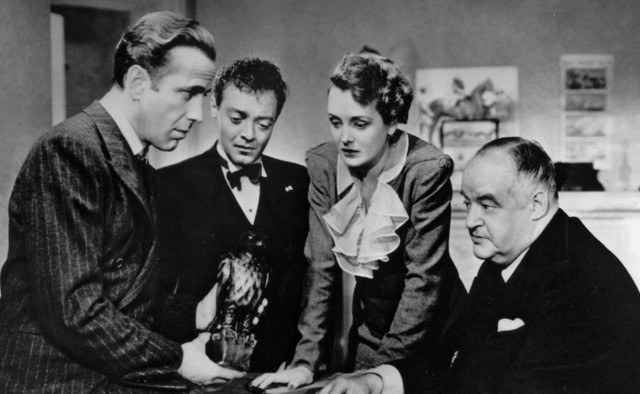
Sam Spade (Humphrey Bogart), Joel Cairo (Peter Lorre) Brigid O’Shaughnessy (Mary Astor), and Kasper Gutman (Sydney Greenstreet) in the 1941 film “The Maltese Falcon”.

“Stay here with that boy you met at the cabaret if you’d like, but nothing shall prevent me from acquiring the Maltese Falcon.”

I wrote my wee tale for the What Pegman Saw flash fiction writing challenge. The idea is to take the presented location and a Google maps image and use them as the inspiration for crafting a story no more than 150 words long. My word count is 150.

Today, the Pegman takes us to Bulgaria and given its rich history, it was difficult for me to settle on a particular setting or story line. The Wikipedia page had too much information, and I couldn’t find a local news story that was compelling.

I did notice on the map that Bulgaria borders Turkey. I saw the city of Istanbul and suddenly remembered the 1941 film version of the Maltese Falcon. At the end of the movie, Kasper Gutman, played by Sydney Greenstreet, and Joel Cairo, played by Peter Lorre, realize they’ve been duped by a fake and that the real Maltese Falcon must still be with the exiled Russian Zukovsky. I had always wondered what happened to them and the Falcon after that.

I leveraged items both from the 1941 movie (there are at least two other cinematic adaptations) as well as Dashiell Hammett’s original 1929 serialized story (which later was collected into a novel) to craft my tale.

The novel quite clearly alluded to a gay attraction or affair between Cairo and Gutman’s “gunsel” Wilmer Cook (in the movie, played by Elisha Cook Jr.) but that was completely removed from the 1941 film version. I added that back to Cairo’s character here, thus blending the two versions of the history.

I still own a copy of the novel, purchased decades ago, and I’ve seen the film starring Humphrey Bogart and Mary Astor many times and hopefully you have too. If not, please click on the links I’ve provided and at least read the summaries.

I also looked up the history of Turkey, Bulgaria, and Sofia, specifically just prior to and during World War Two for added context.

To view other stories based on the prompt, go to InLinkz.com.

The Name on the Gravestone

rosenberg

Found at commons.wikimedia.org

“No one even knew his first name, just the initial A.”

“It’s okay, Bubbe. It took a long time, but we finally found your Dad.”

Esther Rosenberg Katz had been waiting for this day since she was old enough to understand her precious Abba was lost in the war. She grew up with her mother, two brothers, numerous uncles, aunts, and cousins but she was always without her Tateshi.

Thanks to years of research and her computer savvy granddaughter, Esther finally found him.

“Are you going to have him exhumed so he can be buried in Israel?”

“No, Elisheva. We’ll leave him here with his comrades. Hashem will restore him to Israel in His time.

Esther reached into her handbag, opened the small container inside, took out the soil she’d brought from the Holy Land and sprinkled it on Abraham Rosenberg’s grave in her final duty as his daughter.

Today at “What Pegman Saw” we are taken to Kanchanaburi, Thailand and specifically to the Kanchanaburi War Cemetery. I found the image above when doing a google search and found it and the cemetery’s history fascinating.

The idea is to use the Pegman Google image to create a piece of flash fiction no more than 150 words long. My word count is 149. I’ve added some links in the body of the story to explain certain words and concept that might not be readily apparent to all readers.

To read other stories based on the prompt, go to InLinkz.com.

The Apparition

hammerfest

© Google 2017

Nine-year-old Erik Lund quietly crept out of Hammerfest’s historic Hauen Chapel. He never knew his great-grandfather and didn’t understand why people were upset at his death. Bored with the service, he went outside to play in the snow-covered cemetary. That’s when the man in the old-fashioned uniform appeared.

“You must not be here. Go back inside.”

Erik had seen men like him in a history book. They were called Nazis. They’d been here a long time ago.

“Who are you?”

“A man who regrets many things.”

Erik was too young to understand, but captivated by the stranger.

“Go inside to your family. Go!”

Erik started to get scared, turned around, and ran. He didn’t see the apparition vanish. He didn’t see the seventy-year-old unexploded German mine the ghost had kept him from detonating.

The next summer, a groundskeeper would find it and have it safely removed.

hausen chapel

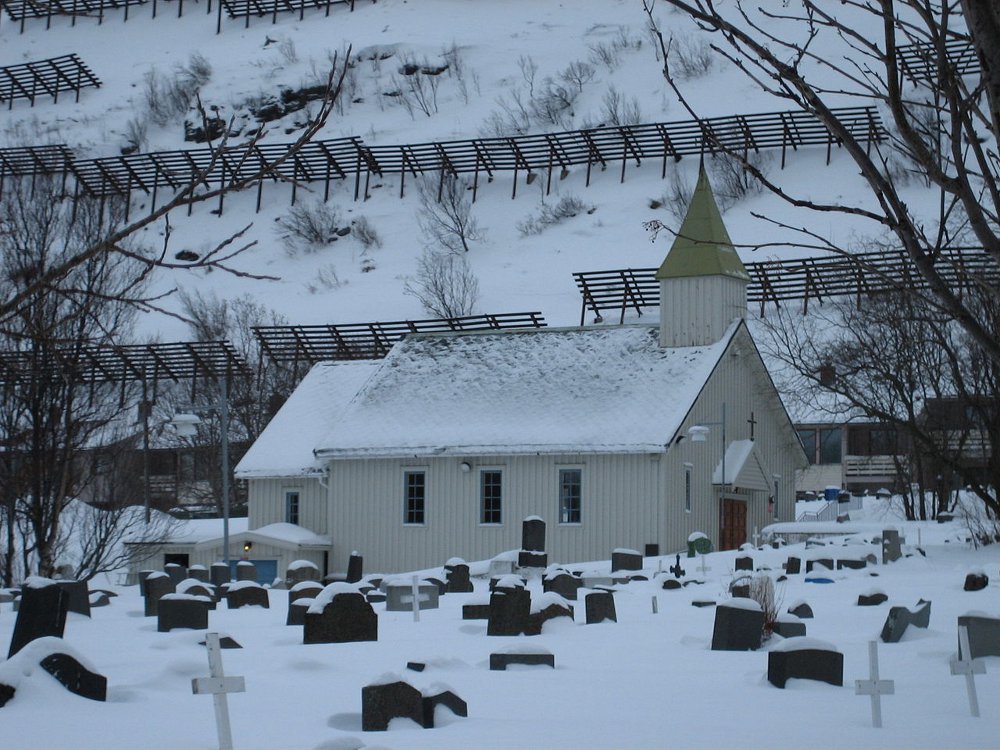
Hauen Chapel in Hammerfest – found at Wikipedia

I wrote this for the What Pegman Saw weekly photo prompt based on a Google maps location. The goal is to write a piece of flash fiction no longer than 150 words. My story is 146 words long.

This week the location is in Hammerfest, Norway. After doing a bit of Wikipedia research on the town, I discovered Hammerfest had been occupied by the Nazi’s during World War II. When they left in 1945, they destroyed almost the entire town. Only the historic Hauen Chapel pictured just above this commentary, survived.

I also found out that to this day, mines and munitions left over from the war are still being found and disposed of. I decided that a long dead German soldier, regretting his role in Hammerfest, came back one last time to save a child from the consequences of this single Nazi’s actions.

For more stories based on this week’s prompt, visit InLinkz.com.

The Corridor

corridor

© Dale Rogerson

Ken Watanabe wasn’t shown the entrance off the courtyard when he took over Santa Fe’s historic Museum. The ex-Curator gave him the keys. The door had been locked since 1943. No one knew why. There was no eastern door inside, but it was apparent on the outer wall.

Hesitantly, he used his key, opened the door, and saw a lit, multi-arched corridor. Then he heard a voice at the other end. “Glad those Japs were locked up after what they pulled at Pearl Harbor.”

His father was interned here 74 years ago on Ken’s first birthday. He never opened the door again.

There’s a larger story being told but it’s hard to compress into 100 words or less.

The photo reminded me somewhat of Southwestern architecture, which is why I placed my tale in Santa Fe, New Mexico. I wanted to do a “corridor through time” story, but I needed a date where the other end of the tunnel linked. I looked up Santa Fe at Wikipedia and discovered that during World War Two, it had a Japanese Internment Camp. Beginning in June 1942, 826 Japanese-American men were arrested and imprisoned.

I remember actor George Takei saying that when he was a small child, he and his family were similarly interned because of their Japanese heritage. Thus my tale was born.

I wrote this as part of the Friday Fictioneers challenge hosted by Rochelle Wisoff-Fields. The goal is to write a short story of 100 words or less based on the photo prompt you see above (and as I mentioned, I just made it at exactly 100 words).

To read more stories based on this week’s prompt, visit InLinkz.com.