Book Review of Righteous Indignation: Excuse Me While I Save the World!

righteous indignationA few weeks ago, I went to my local public library and checked out Andrew Breitbart’s book Righteous Indignation: Excuse Me While I Save the World!. Actually, my wife checked it out first, but she said she couldn’t get into it. I returned it for her, then put a hold on it so I could have first crack at checking it out again on my own library card.

I can see why she had a tough time with the beginning of the book. It’s a bit of an autobiography of Breitbart’s youth growing up in the Los Angeles suburb of Brentwood. In his early life, he’s shallow and self-absorbed and the first chapters tend to drag.

But as I pressed on, I realized he wanted the reader to know about how he was as a teen and young adult so we could witness and understand his evolution into a “Tea Party Protector.”

I learned quite a lot, especially about the century-long growth of the liberal news media and university system and why they, along with the liberal entertainment industry, are so hard to refute. They seem to be the voice of our nation, defining good vs. evil, and stating that if we don’t let them program our thoughts, our words, and our actions, then we are evil, racist, sexist, homophobic, throwback neanderthals.

Continue reading

Book Review: Transhuman

transhumanI know I’ve read one or more science fiction novels written by Ben Bova before, but I can’t recall which one(s). However, the cover of Transhuman, published in 2014, boasts of him being a six-time hugo award winner, so this should be a pretty good novel, right?

Turns out, all six of those awards were for Best Professional Editor when he was working at Analog, not for any of his written works, although he is certainly a prolific author.

I was interested in this tale because it involves a grandpa and his little granddaughter. Being a grandparent myself, I know I’d do anything to protect them, which is exactly what 74-year-old Luke Abramson does for his eight-year-old granddaughter Angie.

You see, Angie’s dying of an inoperable cancerous brain tumor. She’s got six months or less to live. But Luke is a cellular biologist and believes a new technique he’s developed can cure Angie’s cancer.

Continue reading

Book Review of Sigil: A Tom Regan Thriller

sigilWow!

When I first created this blogspot and shamelessly began to promote it, a number of people commented and followed me, including 33-year old Irish thriller author Aidan J. Reid. I followed his blog back, and by the by, I saw that he had promoted his latest novel Sigil by offering the eBook on Amazon for free (but only for a limited period of time). I hadn’t read a mystery in decades and wasn’t sure how I’d experience “Sigil,” but I decided to download it onto my Kindle Fire.

The novel starts with a bang. Really, I was hooked from the first few pages on. Sigil chronicles the activities of Catholic Priest Tom Regan, who is the Parish Priest of the small town of Ballygorm.

What appears to be a tragic suicide becomes a mystery wrapped in intrigue as Father Regan, walking in the footsteps of his favorite television detective, uncovers a conspiracy not just to hide a murder, but something much more terrifying.

One step at a time, Regan unravels years of secrecy and sinister plots, revealing that the sleepy farming community of Ballygorm is anything but the idyllic rural setting it appears to be.

Continue reading

Book Review of Echo Volume 1: Approaching Shatter

approaching shatter

Kent Wayne’s “Echo: Approaching Shatter”

Wait! What?

I just finished reading Kent Wayne’s novel Echo Volume 1: Approaching Shatter. I knew it ended on a cliffhanger, but I didn’t realize it would be so abrupt. It was like slamming into a brick wall at sixty miles an hour.

I’ve been reading it on my Kindle Fire and the thing said I’d finished something like 86% of the book. When I swiped to turn the page at the end of a chapter, I was confronted with a message stating it was the end of the story and if I liked it, to write an Amazon review. The rest of the book is a preview of Volume 2: The Taste of Ashes.

Somewhere in the creation of my blog and writing stories, Kent Wayne took notice of some of the things I’d authored by “liking” them, and so I checked out and eventually followed his blog Dirty Sci-Fi Buddha. That’s how I became aware of his Echo series.

My understanding is that “Kent Wayne” is a pen name (Clark Kent, Bruce Wayne), and I recall reading one bio on him saying he had military experience but preferred not to give out details, making Wayne and what he did in the service a bit of a mystery. That may seem irrelevant, but I do have a point to make.

He does go more into his history on his blog’s About page, and Echo: Approaching Shatter definitely gives the impression that Wayne is mining his own professional experience.

I had a tough time getting into the novel. It’s not like I’m opposed to military based science fiction. I’ve read and thoroughly enjoyed Joe Haldeman’s The Forever War and Timothy Zahn’s Cobra, but that was decades ago. For about the first half of the book, I kept struggling for a handle or a hook and couldn’t find it. I didn’t know whether to even like the protagonist Atriya (and mentally, I kept pronouncing his name as “Attila”).

Continue reading

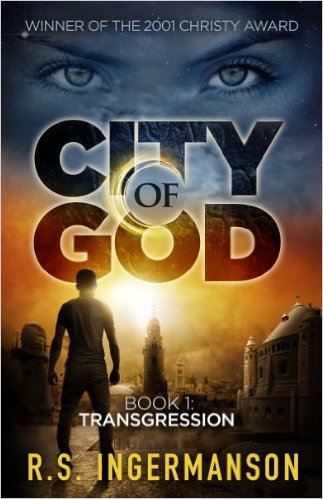
Book Review of Transgression: A Time-Travel Suspense Novel (City of God, Book One)

city of godTransgression: A Time-Travel Suspense Novel is probably something I’d never have heard of if I hadn’t been researching how to design my first novel. However, Randy Ingermanson used his one-sentence summary of “Transgression” to illustrate the first of his ten steps in “snowflaking” a novel.

“A rogue physicist travels back in time to kill the apostle Paul.”

Of all the ideas for a time travel story, I’d never heard of this one before. Fascinated, I downloaded it to my Kindle Fire.

Theologically, a thousand things could go wrong from here, but I’m going to set that aside for the moment.

According to his own bio. Ingermanson is a theoretical physicist, so he should be able to create realistic fake physics enough to convince us creating a “time machine” is plausible. That part works pretty well, at least enough to get the story rolling.

The tale takes place both in modern and ancient Jerusalem. Israeli theoretical physicist Ari Kazan, along with his American colleague Damien West create, at least in possibly, a method of generating a wormhole in their lab that, over a weekend, could create a stable point-to-point link between the present and the past.

In the meantime, Ari’s cousin Dov has introduced him to a young Jewish-American archeological student named Rivka Meyers as a blind date. The two don’t have much in common at first, but as they get to know each other, their religious differences nearly destroy their nascent relationship.

This is the first time I’ve seen Messianic Judaism, both modern and ancient, depicted in a realistic and theologically consistent manner in fiction. In fact, with very small differences, Rivka’s conceptualization of the Messiah, Hashem, and the Bible and mine are really the same. I find that refreshing.

Ari is an atheist but, as with most Jews, has a very strong bias against Christianity, and particularly the Apostle Paul who is often viewed as a traitor to the Torah, the Temple, and the Jewish people.

The wildcard in the deck is Dr. West, who has a powerful if unusual motivation for traveling back in time and murdering the Apostle Paul. West chooses a number of points where it would be possible for him to shoot and kill the Apostle as recorded in Acts 21, 22, and 23. To test the safety of traveling through the wormhole, West tricks Rivka into walking through, beginning her adventures into a world she has only experienced through ancient artifacts.

Continue reading

Book Review: “Old Venus”

old venusI decided to check Old Venus, an anthology edited by George R.R. Martin and Gardner Dozois, out of my local public library, because I’d already read their Old Mars anthology last fall and enjoyed it.

The premise of both books is to get together a bunch of modern science fiction authors and ask them to write stories about Mars (in the case of “Old Mars”) or Venus (in the case of the book being reviewed here) as if it were before about 1960.

In the early 1960s, we sent probes to Venus and Mars and discovered one disappointing fact: there’s no way in hell either planet could support life now or probably not even in the dim past.

But before we knew that, science fiction writers were crafting wonderfully imaginative tales about both worlds and how we, as well as native Martians and Venusians, could live together and have adventures. What would it be like to just “ignore the rules” and pretend you could visit Venus, with its swamps, rain forests, vast oceans, unending clouds, and dip into the indigenous flora and fauna?

“Old Venus” answers that, and in most stories, does so remarkably well.

I can’t say I have a favorite story. “Frogheads” by Allen M. Steele was pretty predictable, and “Botanica Veneris: Thirteen Papercuts by Ida Countess Rathangan” by Ian McDonald was too British to hook me and I stopped reading after a few pages (having a headache, slight fever, and recovering from yesterday’s nasal surgery probably didn’t help).

“Pale Blue Memories” by Tobias S. Buckell tugged at my heart the most because the racism experienced by our protagonist wasn’t (and isn’t) limited to a single world. Oh, it was also a story depicting an old-fashioned, missile shaped rocket ship, like the one of the cover. “Old Mars” had a similar ship on the cover, but not one story about such a 1950s classic design was between the covers. I was tempted to write such a tale, but got stuck on Arabia Terra, a story I’m not (yet) qualified to write. If you’re going to have such a ship on the cover, make sure one of your stories actually is about such a ship.

Continue reading

Kindle Book Review: “Spectrum, A Sci Fi Thriller”

spectrumI just finished reading Aidan J. Reid’s new short story Spectrum, a Sci Fi Thriller (you can find out more about it at his blog).

While it advertises itself as a thriller, from the very first sentence, I got the feeling I was reading a horror story (spoiler alerts throughout–you have been warned). A mysterious medical outfit is offering the homeless money and opulent living conditions in exchange for them volunteering for human experimentation of different products.

We never learn out protagonist’s name. Just that she’s a 26-year-old homeless woman with an alcohol addition. Apparently she, along with others off the street, qualify as test subjects for rather ill-defined experiments, ill-defined until the “treatments” are actually applied.

The majority of the story is a set up to the actual procedure and aftermath on her eyes. From what she describes, the reader will have a fair idea of what was done with her, but to her, it was still a mystery.

I was engaged in the story to nearly the very end. Her eyes had been changed. True, she’d been alienated from most of the other patients except for Tyler, but she was hopeful not only that her sight was restored, but that the people who used her as a test animal, BioLuminary, were to actually give her a job, not requiring that she undergo any more medical procedures.

For her, everything seemed as if it were looking up. For the reader, we’re waiting for the other shoe to drop.

And drop it does. In fact, it’s so abrupt that I was shocked right out of my involvement in the narrative. Wait a minute. What happened?

Only vague references to “reptiles” and the poor woman’s all too sudden suicide.

Aiden really had me going up to this point. By page count, I could tell the story was about to end, but it ended in a way that left several points completely unresolved.

Continue reading

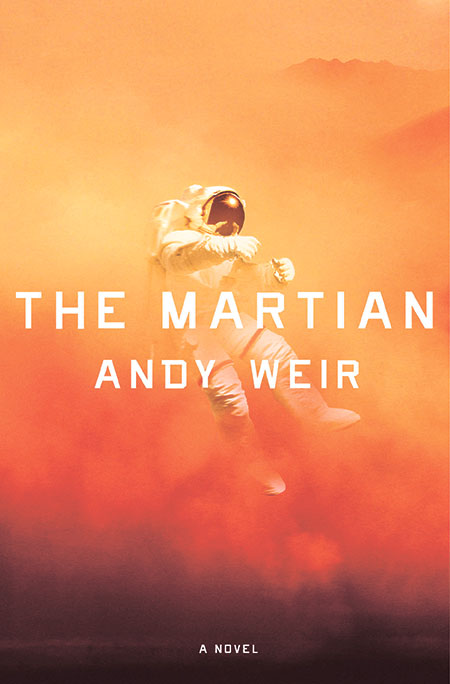
Review: The Martian vs. The Martian

the martianI know it’s rather late in the day to write this sort of review because both the novel and the film version (Starring Matt Damon) of Andy Weir’s “The Martian” have been available for quite some time.

However, I find them both rather compelling, which is saying something, especially for films. Usually, I’ll see a film I like, maybe a few times, and then put it away for a while. However, I feel as if I could read the novel and watch the movie repeatedly, with the tale of Mark Watney remaining as fresh as ever.

For those few of you who are unfamiliar with the book and the movie, they describe the struggles of Astronaut Mark Watney, who is presumed dead, killed in a sandstorm, and left alone on Mars.

To say that author Andy Weir has a background in science is faint praise. The guy solves problems in orbital mechanics as a hobby. Although he admits that he probably couldn’t survive on Mars like his creation Watney, his mind and imagination creates an all-too realistic set of events that challenge Mark’s ability to survive each and every day in an environment totally hostile to life.

I won’t go into the plot. For that, I encourage you to read the book and watch the film. As with most books turned into movies, the novel contains far more detailed information. I’ve read some of the Amazon reviews, and a few folks believe there are too many details.

To me, it’s a survival manual and an adventure tale rolled into one, with a side of stand-up comedy.

For scientific accuracy, I’d choose the novel. The climax of the story is handled, in my opinion, a bit more realistically in the book than how the movie depicts our hero’s rescue. On the other hand, the book ends with Watney aboard a spaceship headed for home. End of story. In the movie, we see what happens next.

(Spoiler alert).

Continue reading

Book Review of “God, Robot”

god, robotI promised Anthony Marchetta that I’d write a review on Amazon when I finished reading his book God, Robot. It went online yesterday. You can find it here.

However, for your convenience, I’ve reproduced my review below. Enjoy.

I feel a little like I’m proverbially biting the hand that has fed me. I heard about “God, Robot” several weeks ago from a friend of mine and was intrigued by the concept. After a bit of “Googling,” I found Anthony Marchetta’s blog. Before reading and reviewing his book, I wanted to take a crack at writing my own story based rather loosely on his concept of robots being programmed with the “two greatest commandments” rather than Asimov’s three laws.

With Mr. Marchetta’s permission, I have used his base concept to write and publish two short stories on my own blog and I’m currently working on a third. Now that I’ve finished his book, I’m here to write my review.

Continue reading