Spirits of the Canyon

palo duro night

Found at the Stars of Texas – milkyway timelapse project YouTube channel

“The stars are very beautiful Travis, but I still don’t understand what you expect us to see out here. I mean camping in Palo Duro Canyon under the Milky Way is a very romantic honeymoon, but…”

“Cassie, our ancestors lived here for thousands of years before being displaced, first by the Comanche and Kiowa, and then by the Army. This had been Apache land for ten, maybe fifteen thousand years.”

“I’m not an idiot and you didn’t bring me here to give me a first nations lecture.”

“No, I didn’t. My grandfather Chano says that you can still see them here on quiet nights. If we sit peacefully by the water, they’ll appear to us just as they were.”

“Who?”

“Our ancestors. You can kill our bodies, but the Great Spirit will always preserve us.”

“Look, Travis. You’re right.” Her brown eyes grew wide with wonder.

I wrote this for the What Pegman Saw flash fiction challenge. The idea is to use a Google maps location and/or street view as the inspiration for crafting a tale no more than 150 words long. My word count is 146.

Today, the Pegman takes us to The Big Cave, Palo Duro State Park in Texas. Palo Duro Canyon is breathtakingly beautiful and has a rich history which, apart from the appearance of spirits, I have faithfully represented in my wee story. Click the link I just provided to read more about it.

Oh, I borrowed the names of Travis and Cassie Fox from my homage to Andre Norton’s (Alice Norton’s) science fiction novel Galactic Derelict, but besides the names, this story has nothing to do with time or space travel.

To read other stories based on the prompt, visit InLinkz.com.

Saigon

saigon 1967

A street view of Saigon, 1967 – AaronPogs – Own work

The video footage was grainy, but Taylor recognized them easily.

“You’re worth every penny I paid you, Tran. Now blow. I’ll watch the rest alone.” The Vietnamese photojournalist left the darkened hotel room without a word. He moonlighted at this sort of work, taking photos and video of unsuspecting couples, and since he’d already been paid, he was satisfied to go home to his wife and children.

Taylor kept watching the film. The cheap 8mm projector rattled like the engine of his first car, a beat up Chevy Impala, but after weeks in the jungle constantly exposed to the sound of automatic weapons fire and artillery, the military intelligence officer blithely tuned it out.

Tran had followed the couple to every tourist attraction in Saigon from the Ben Thanh market to Notre Dame Cathedral. “He really showed you all the hot spots, sweetheart.”

Continue reading

Moshe Visits the Met

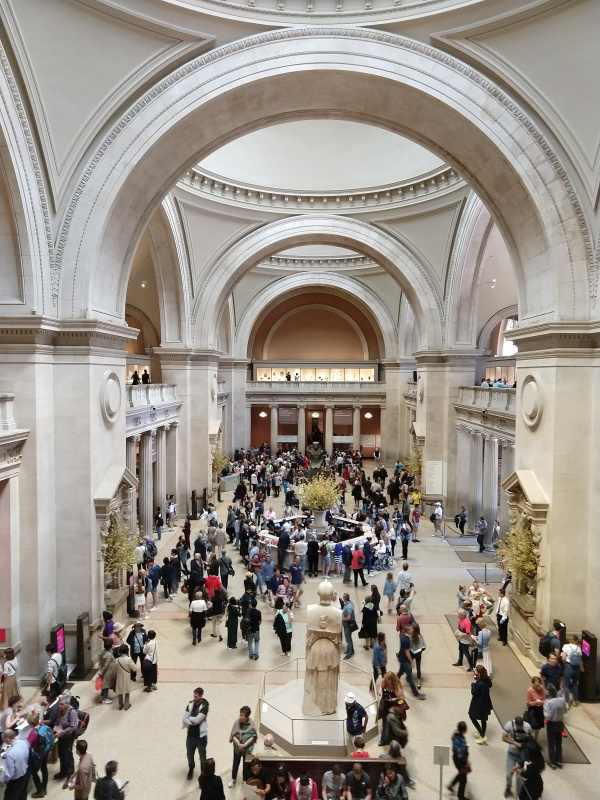
the met

© Roger Bultot

Moshe Katz was in New York visiting his Tante and Feter, and they made the San Francisco Private Detective play tourist, including a visit to the Met’s Diamond Jubilee. Then things got ridiculous. He’d heard of Marian Anderson, but who the hell were Judy Collins, Yo-Yo Ma, and Itzhak Perlman?

“Alright, Mr. Watson, I’m going to give you a hand. The local cops don’t know how to handle this sort of thing, but my cases are more unusual.”

“We’d appreciate anything you can do. If word ever got out…”

“Relax. I’ll find out who here has a broken time machine.

I wrote this for the Rochelle Wisoff-Fields photo writing challenge. The idea is to use the image above as the inspiration for crafting a piece of flash fiction no more than 100 words long. My word count is 100.

I became dismayed when I realized that the photo was of a recognizable place, but I didn’t recognize it. Then Google image search came to the rescue. It’s the Metropolitan Museum of Art, otherwise known at the Met.

According to Wikipedia:

The museum celebrated its 75th anniversary (which it termed Diamond Jubilee) with a variety of events in 1946, culminating in the anniversary of the opening of its first exhibition on February 22, 1947.

What is coincidence. I created a San Francisco private detective named Moshe Katz who operates in 1947. He’s featured in the stories Death Visits Mexico and Son of Kristallnacht. So I decided to create a New York mystery for him to solve. Normally, his cases are rather mundane, but for this tale, I decided to change his history a bit.

Again, according to Wikipedia:

In 1954, to celebrate the opening of its Grace Rainey Rogers concert hall, the museum inaugurated a series of concerts, adding art lectures in 1956. This “Concerts & Lectures program” grew over the years into 200 events each season. The program presented such performers as Marian Anderson, Cecilia Bartoli, Judy Collins, Marilyn Horne, Burl Ives, Juilliard String Quartet, Yo-Yo Ma, Itzhak Perlman, Artur Rubinstein, András Schiff, Nina Simone, Joan Sutherland and André Watts, as well as lectures on art history, music, dance, theater and social history.

I didn’t read the paragraph carefully and was wondering how all of those performers could have been at the Met at the same time. Then I read more carefully, but the damage was done. What if there were a time machine accident and they really did appear at the Met simultaneously, and specifically on February 22, 1947?

Oh, Thomas J. Watson was the Met’s Vice President in 1947 and Tante and Feter are Aunt and Uncle in Yiddish.

You can read about the Met’s history to find out more. To read other stories based on the prompt, visit InLinkz.com.
Return to Delhi

indigo

Photo credit: yarnspinnerr

The Airbus A320 Neo landed back in Delhi after one of its two engines stalled in midflight to Ranchi. Passengers and crew were safely returned to the ground, but not allowed to approach the terminal. Investigators ordered the passengers to be deplaned and escorted to a quarantine area.

Captain Laghari was justifiably incensed as federal investigators held him and his crew on board the airliner.

“I apologize for this unusual treatment, but I don’t think you grasp the problem. How long was your total time in the air?”

“Approximately forty-five minutes. The normal flight time one way is 110 minutes.”

“What is today’s date?”

“It’s Sunday, June 3rd.”

The investigator removed his smartphone from his jacket pocket and pressed the Home button.

“That’s impossible. It says it’s the 12th.”

“Sir, on June 3rd at approximately 10:03 a.m., your aircraft disappeared from radar and was presumed lost, however no wreckage was discovered. Then, an hour ago, you reappeared on ATC screens and requested permission for an emergency landing. A lot more went wrong than just an engine.”

I wrote this for FFfAW Challenge 168 hosted by Priceless Joy. The idea is to use the image above as the inspiration for crafting a piece of flash fiction between 100 and 175 words long. My word count is 174.

Naturally, I looked up the airline company and found the news story IndiGo flight stalls engine midair due to snag. Apparently, this low-cost commercial air company has had more than a few problems.

Sometime ago, I wrote a short story called The Final Destination of Flight 33, which was based on a 1961 Twilight Zone episode written by Rod Serling. It’s the story of a commercial aircraft that travels through time into the past and then perhaps into the future.

I decided to give my little airliner’s passengers and crew the same problem today, but only projected them nine days into the future, although for them, practically no time had passed at all.

How would the authorities react to such a mystery?

To read other stories based on the prompt, visit InLinkz.com.

Oh, I’m suffering from another bout of insomnia so it’s going to be a rough time at my day job later.

The State of Dying

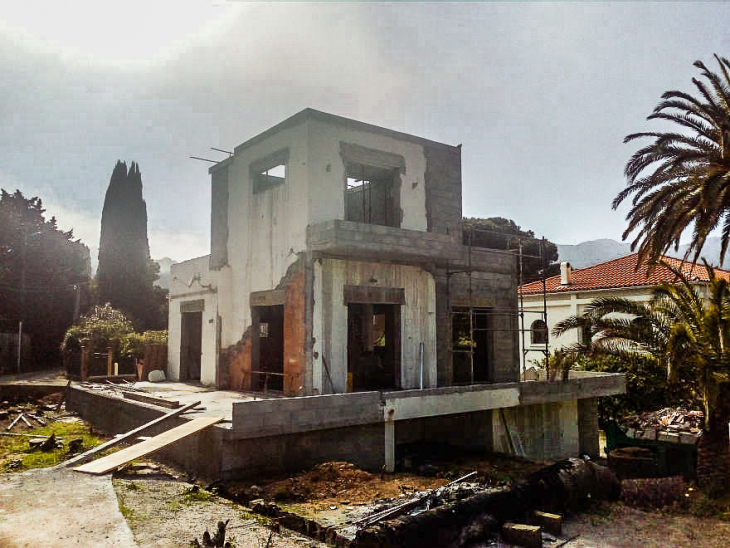
burned house

© C.E. Ayr

“This is the perfect place.”

“But it’s just a burned up building, Grandpa.”

“Exactly, Amy. Bring your brothers and sisters. Tell them to have their squirt guns fully loaded. We’re going to have a supersoaker blast playing “spy” in here.”

The eight-year-old grinned as she ran back next door to his house. His neighbor’s wrecked home reminded him that he needed to move out soon too. He’d turn seventy next year, and the state’s ridiculous “right-to-die” law for the terminally ill now allowed legalized murder of anyone over that age, whether they wanted to go or not.

Their bloated environmental laws worked about as well as their population laws. The government had killed 75% of the native plants and animals, and now they were working on the people.

He turned as he heard five pairs of running feet approaching. “You better get going, Grandpa.” At ten, Chad wasn’t the oldest, but he was the ringleader.

“Unless you want to get soaked.” Five-year-old Emily had that “killer” gleam in her eye.

“I’m running.” Mitch dashed into the ruined structure. He had to move the family to one of the free states before the jackboots came after them all.

I wrote this for the Sunday Photo Fiction Challenge of June 3, 2018. The idea is to use the image above as the inspiration for crafting a piece of flash fiction no more than 200 words long. My word count is 196.

For some reason, the image reminded me of both Florida and California. I chose the latter since I used to live there, and “Googling” the search string “California dying,” I came up with plenty of information on that state’s “right to die” law at both The Los Angeles Times and Death with Dignity. I also found an article about the demise of California’s Sierra forests, which are perishing in spite of all the tax money California’s state senate can throw at the environment.

I know “dying with dignity” is a controversial issue. People of faith tend to believe that giving and taking life should be left to God alone, but it’s hard to watch someone slowly dying and in great pain when you could ease their suffering.

Also, I actually do have a great concern for the environment. One of the reasons I like living in Idaho is because of the vast areas of wilderness, the mountains, rivers, and lakes. But something obviously went wrong in California’s case, because people from that state are moving here in droves.

Anyway, putting that all together, I authored today’s wee dystopian tale.

To read other stories based on the prompt, visit InLinkz.com.
The Battle of Kings

masrur temples

Rock cut Hindu temples of Masrur – photo attributed to Akashdeep83 – found at Wikipedia

It is said that the enmity between the Katoch and Sikh Kings perished with them, but such fierceness does not die with flesh. The Kangra Valley holds wondrous beauty and great mystery, and future historians would never be sure why the Temples of Masrur so resembled Elephanta Caves near Mumbai, Angkor Wat in Cambodia, and Mahabalipuram in Tamil Nadu, nor do even the modern Hindus know, though they are its supposed builders.

After a long truce on the ethereal plane, Sansar Chand Katoch and Maharaja Ranjit Singh once again chose to contend with each other, their powers ever waxing. Thus on 4 April 1905 as the humans mark the passage of time, they entered into violent confrontation in the Kangra Valley, and though the visage of supernatural beings was never witnessed by mortals, the earthquake their combat caused killed more than 20,000. Would their conflict next endanger people in Cambodia or Mumbai?

I authored this for the What Pegman Saw writing challenge. The idea is to use a Google maps location and image as the prompt for creating a piece of flash fiction no more than 150 words long. My word count is 149.

Today, the Pegman takes us to the Kangra Valley in Northern India. This is a popular tourist attraction for a number of reasons including the Rock-cut Hindu Temples of Masrur, which also resemble in design those other locations I mentioned in my story.

There really was a devastating quake in the area in 1905, and I used some of the local history involving the Katoch and Sikh battles a century before, weaving in a supernatural element in an attempt to tie all that together.

Wouldn’t it be interesting if disasters and misfortune on the physical plane was caused by perpetual battle between long-dead Kings in the supernatural world?

To read other stories based on the prompt, visit InLinkz.com.

When Jimmy Was Five

flamingo

Spanish Flamingo Dancer circa 1950 – Photo credit unknown

When Jimmy was five, he got in the car with Mom and Dad and they went for a ride. Jimmy was worried when they drove through the little town with all the broken buildings. Little boys and girls like him had no pants on and were going wee-wee in the ditch. Why didn’t their Moms and Dads give them clothes?

When Jimmy was five, Mom and Dad took him to Sevilla. They walked and walked and walked through museums and up and down streets until his feet were really sore.

When Jimmy was five, Dad dressed him up in a costume with a short blue cape with glitter on it and a black bolero hat. They went to something called a Fiesta which was a big, big party all over the city. Dad wanted to take Jimmy’s picture with two older Spanish girls, but he was too shy.

When Jimmy was five, Dad took him outside one night and showed him the stars in the sky. Then he pointed to something bright in the sky and said it was Sputnik. Sputnik was something people had put in the sky by launching it on a rocket. Dad said someday, rockets would take people into space, too.

Continue reading

One Last Hill

uphill

MorgueFile April b5afa0fad12c0fc6b1d0bf8cc983d6e4

The hill seemed to get steeper everyday, but then, it really wasn’t the hill, it was him. He was getting older, always older, each and every day. He couldn’t remember the last time he could actually ride his bicycle up the hill on his way home. Was it last year? No, maybe it was five years ago? How old was he? It didn’t matter.

“Half way up.” He huffed and puffed. He got out of breath more easily these days, and he was just pushing a bike up a hill. “Have to make it home.” Home was at the top of the hill. If he could get there again, he’d be safe.

“Wait. Need rest.” He leaned against the wall. The old man couldn’t breathe and there was a terrible weight on his chest.

Then he was six years old again and racing his bike up the hill with his mates Jerry, Tommy, and Little Sam. They were all laughing and zipping between the parked cars. He made it. He was home. He was free.

I wrote this for the Flash Fiction for the Purposeful Practitioner challenge for 2018, Week #22. Once again, the idea is to use the image above as a prompt to create a piece of flash fiction no more than 200 words long. My word count is 175.

I couldn’t read the sign in the photo, even magnifying the image, so I couldn’t use that to influence my writing. Instead, I concentrated on the (presumably) old man pushing his bicycle up the hill. I let my mind drift and this tale is the result.

To read more stories based on the prompt, visit InLinkz.com.

As always, you are invited to contribute a wee tale to this linkup.

Denver’s Legacy

digging in the dirt

© Connie Gayer

This is how they all see me, just some funny country hick working the land, digging in the dirt and mud. Guess that isn’t so bad. Farming was good to Pa and kept our family fed. Of course, I’d been acting since before most of my fans were born, and worked alongside some of the biggest names in TV and film. I even sponsored a fishing tournament to raise money for kid’s charities. Me and the missus even helped out the Special Olympics. No, I guess it wasn’t a bad life, but I’m a lot more than just Uncle Jesse.

I wrote this for the Rochelle Wisoff-Fields photo writing challenge. The idea is to use the image above as the inspiration for crafting a piece of flash fiction no more than 100 words long. My word count is 100.

The man in the photo superficially looks like the late actor Denver Pyle who most people would recognize as the character Uncle Jesse from “The Dukes of Hazzard” television show (1979-1985).

When I looked up Pyle (yes, his real name was Denver Dell Pyle), I saw he made a career out of guest roles in both television and film going back to the early 1950s. He also did a lot of work for children’s charities including “Uncle Jesse’s Fishing Tournament” in Lamar County, Texas.

Denver died of lung cancer on Christmas Day 1997.

To read other stories based on the prompt, visit InLinkz.com.

The Moon God’s Consort

lunar

Photo credit: Luis Gonzalez Palma

Cavillance was ashamed. How could it come to be that a virgin could conceive and then bear a son? But she had been so hungry and the fruit looked so pleasing and succulent that she partook.

It was all a trick. The fruit was his seed, but whose seed was it? The virgin goddess gathered together the deities of the Incan people and cried out, “I demand that the father of my child show himself!”

The vast celestial amphitheater grew silent. Copacati, the lake goddess stifled a giggle. She was such a gossip and probably knew who the father was, but she’d never admit it.

Continue reading