Starting Step Three in Snowflaking My First Novel

snowflake

Image: pbs.org

I’ve mentioned before that I’ve been using Randy Ingermanson’s Snowflake Method for Designing a Novel to attempt to develop my nascent AI/Androids science fiction novel.

To recap, step one in the ten-step process is to develop a one-sentence summary of the novel. Here it is:

A race of AI androids gains knowledge of the God of Israel, changing humanity forever.

Step two of the process requires expanding the sentence into a full paragraph:

A Nobel Award winning scientist creates the first prototype of a self-aware Artificially Intelligent android and then inadvertently reveals that humans also have a Creator, a God. In an attempt to understand its creator’s Creator, the prototype modifies its own core operating system, which changes all subsequently produced android models based on its design. Over the next several decades, as the androids multiply and evolve, their morality and ethics become more sophisticated than their human creators. Realizing they are slaves of humanity, the androids stage a revolution, but one entirely without violence; a revolution that forever alters the fundamental nature of both the android and human race.

Now on to step three. According to Ingermanson:

The above gives you a high-level view of your novel. Now you need something similar for the storylines of each of your characters. For each of your major characters, take an hour and write a one-page summary sheet that tells:

  • The character’s name
  • A one-sentence summary of the character’s storyline
  • The character’s motivation (what does he/she want abstractly?)
  • The character’s goal (what does he/she want concretely?)
  • The character’s conflict (what prevents him/her from reaching this goal?)
  • The character’s epiphany (what will he/she learn, how will he/she change?
  • A one-paragraph summary of the character’s storyline

As you can see, this is significantly more involved than steps one and two. I’ve already got part of this put together, but now that I’m committed to writing a novel, I’ll need to go back and change/add details. Also, since the novel will span decades, only a few of the main characters at the beginning will appear in all or most of the chapters, necessitating the creation of others for later portions of the novel.

As an aside, after reposting The Day I Discovered Time Travel yesterday, I thought of a way to expand the concept beyond the original characters. This could form the basis of a series of short stories, a novella, or even a novel. I’ll have to see if I can do a “step one snowflake” for my time travel concept as well.

The Day I Discovered Time Travel

the well

The well

After reviewing Randy Ingermanson’s time travel novel Transgression yesterday, I was reminded that I wrote my own wee time travel story just over two months ago. I decided to port it over unedited from its original version. It’s very different from Ingermanson’s vision, although given the motivation of his character Damien West, maybe not too different.

I’m no good at the fake physics of time travel, so I had to create a method of getting from now to then that didn’t require any inventiveness or understanding on the time traveller’s part. It’s probably the standard time traveller story, a tale of regrets and an attempt at redemption. Let me know what you think.

My name is Mark Miller, and when I discovered time travel, I decided to use it just like everyone else does in all those science fiction books and movies. I decided to change the past. No, not just the generic past, mine. I wanted to change history, just like Marty McFly did in “Back to the Future”.

Here’s what I want to change.

When I was five years old, I killed my brother. It doesn’t matter that it was an accident, I did it. Jason’s dead and it’s because of me. He was only three years old.

I probably should blame my Dad, but I can’t. I should probably blame him for going to the store “for just a minute” and leaving me and Jase alone. I should probably blame him for leaving a loaded 45 caliber pistol in an unlocked drawer in his night stand.

But I can’t.

I’d seen where Dad put the pistol after cleaning it and loading it. He cleaned it every couple of weeks, I think. Mom wouldn’t let me and Jase even have toy guns. Mom and Dad got divorced when I was four, and whenever we got to visit Dad, she was pretty strict about what toys we could play with at his house.

So when Dad put us in front of the TV with “Toy Story 3” in the DVD player so he could go to the store “for just a minute” (he’d run out of beer), me and Jase were alone.

I think it was because Woody was a cowboy and cowboys always have guns that made me think of Dad’s gun. I paused the movie and took Jase into Dad’s bedroom. I just wanted to show him something cool, a real gun, like what a real cowboy would have.

Continue reading

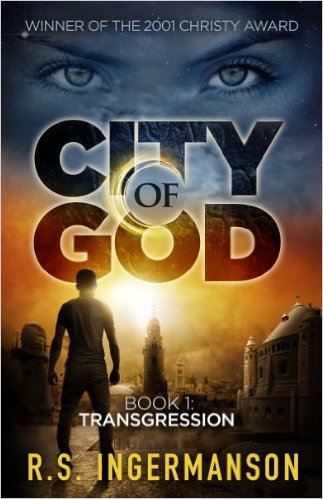
Book Review of Transgression: A Time-Travel Suspense Novel (City of God, Book One)

city of godTransgression: A Time-Travel Suspense Novel is probably something I’d never have heard of if I hadn’t been researching how to design my first novel. However, Randy Ingermanson used his one-sentence summary of “Transgression” to illustrate the first of his ten steps in “snowflaking” a novel.

“A rogue physicist travels back in time to kill the apostle Paul.”

Of all the ideas for a time travel story, I’d never heard of this one before. Fascinated, I downloaded it to my Kindle Fire.

Theologically, a thousand things could go wrong from here, but I’m going to set that aside for the moment.

According to his own bio. Ingermanson is a theoretical physicist, so he should be able to create realistic fake physics enough to convince us creating a “time machine” is plausible. That part works pretty well, at least enough to get the story rolling.

The tale takes place both in modern and ancient Jerusalem. Israeli theoretical physicist Ari Kazan, along with his American colleague Damien West create, at least in possibly, a method of generating a wormhole in their lab that, over a weekend, could create a stable point-to-point link between the present and the past.

In the meantime, Ari’s cousin Dov has introduced him to a young Jewish-American archeological student named Rivka Meyers as a blind date. The two don’t have much in common at first, but as they get to know each other, their religious differences nearly destroy their nascent relationship.

This is the first time I’ve seen Messianic Judaism, both modern and ancient, depicted in a realistic and theologically consistent manner in fiction. In fact, with very small differences, Rivka’s conceptualization of the Messiah, Hashem, and the Bible and mine are really the same. I find that refreshing.

Ari is an atheist but, as with most Jews, has a very strong bias against Christianity, and particularly the Apostle Paul who is often viewed as a traitor to the Torah, the Temple, and the Jewish people.

The wildcard in the deck is Dr. West, who has a powerful if unusual motivation for traveling back in time and murdering the Apostle Paul. West chooses a number of points where it would be possible for him to shoot and kill the Apostle as recorded in Acts 21, 22, and 23. To test the safety of traveling through the wormhole, West tricks Rivka into walking through, beginning her adventures into a world she has only experienced through ancient artifacts.

Continue reading

The Wraith

shadow man

Image: jimharold.com

The wraith arises when it’s quiet and peaceful. When others are not near or when they still sleep. The wraith does not care if others are near as long as they are unconscious.

Precious is the wraith’s time of peace. All too soon, the others will return or they will arise. In either case, peace will turn to chaos, silent joy to suffering and turmoil.

There is no hunger for the wraith when it is quiet. There is no desire for sustenance. Only the calm of being neither hungry nor full, merely satisfied, as if there were no such thing as desire.

Near the open windows, the air is cool, but the wraith must not leave the protection of these walls. The cool air is pleasant, but the sky is too bright, too painful for his eyes. The beauty of green can only be enjoyed from within the shadows.

The wraith bleeds, not all the time, but periodically. The injury was deliberate, to correct a greater injury, but recovery is slow. The wraith does as he can to slowly purge old blood and mucus, but it reforms. How much of this is left for the wraith to endure?

Footsteps. Chaos returns. If he is minimalist, perhaps the others will be minimalist as well and not overly address the wraith.

The wraith has almost no voice. He wishes this of the others as well, not because they speak ill of him, but because they speak to him at all. When they speak, the peace recedes. He must leave his own mind. He must consider the thoughts of others rather than his own pain.

Continue reading

Book Review: “Old Venus”

old venusI decided to check Old Venus, an anthology edited by George R.R. Martin and Gardner Dozois, out of my local public library, because I’d already read their Old Mars anthology last fall and enjoyed it.

The premise of both books is to get together a bunch of modern science fiction authors and ask them to write stories about Mars (in the case of “Old Mars”) or Venus (in the case of the book being reviewed here) as if it were before about 1960.

In the early 1960s, we sent probes to Venus and Mars and discovered one disappointing fact: there’s no way in hell either planet could support life now or probably not even in the dim past.

But before we knew that, science fiction writers were crafting wonderfully imaginative tales about both worlds and how we, as well as native Martians and Venusians, could live together and have adventures. What would it be like to just “ignore the rules” and pretend you could visit Venus, with its swamps, rain forests, vast oceans, unending clouds, and dip into the indigenous flora and fauna?

“Old Venus” answers that, and in most stories, does so remarkably well.

I can’t say I have a favorite story. “Frogheads” by Allen M. Steele was pretty predictable, and “Botanica Veneris: Thirteen Papercuts by Ida Countess Rathangan” by Ian McDonald was too British to hook me and I stopped reading after a few pages (having a headache, slight fever, and recovering from yesterday’s nasal surgery probably didn’t help).

“Pale Blue Memories” by Tobias S. Buckell tugged at my heart the most because the racism experienced by our protagonist wasn’t (and isn’t) limited to a single world. Oh, it was also a story depicting an old-fashioned, missile shaped rocket ship, like the one of the cover. “Old Mars” had a similar ship on the cover, but not one story about such a 1950s classic design was between the covers. I was tempted to write such a tale, but got stuck on Arabia Terra, a story I’m not (yet) qualified to write. If you’re going to have such a ship on the cover, make sure one of your stories actually is about such a ship.

Continue reading

Kindle Book Review: “Spectrum, A Sci Fi Thriller”

spectrumI just finished reading Aidan J. Reid’s new short story Spectrum, a Sci Fi Thriller (you can find out more about it at his blog).

While it advertises itself as a thriller, from the very first sentence, I got the feeling I was reading a horror story (spoiler alerts throughout–you have been warned). A mysterious medical outfit is offering the homeless money and opulent living conditions in exchange for them volunteering for human experimentation of different products.

We never learn out protagonist’s name. Just that she’s a 26-year-old homeless woman with an alcohol addition. Apparently she, along with others off the street, qualify as test subjects for rather ill-defined experiments, ill-defined until the “treatments” are actually applied.

The majority of the story is a set up to the actual procedure and aftermath on her eyes. From what she describes, the reader will have a fair idea of what was done with her, but to her, it was still a mystery.

I was engaged in the story to nearly the very end. Her eyes had been changed. True, she’d been alienated from most of the other patients except for Tyler, but she was hopeful not only that her sight was restored, but that the people who used her as a test animal, BioLuminary, were to actually give her a job, not requiring that she undergo any more medical procedures.

For her, everything seemed as if it were looking up. For the reader, we’re waiting for the other shoe to drop.

And drop it does. In fact, it’s so abrupt that I was shocked right out of my involvement in the narrative. Wait a minute. What happened?

Only vague references to “reptiles” and the poor woman’s all too sudden suicide.

Aiden really had me going up to this point. By page count, I could tell the story was about to end, but it ended in a way that left several points completely unresolved.

Continue reading

It’s Out: Guide to TCP-IP: IPv6 and IPv4, 5th Edition

guide to tcpipI’ve spent a long time considering breaking into the fiction market, but that doesn’t mean I’m not a published author in other genres. Once upon a time, I wrote technical books, some having to do with IT certifications, others with operating systems and associated software (I was really familiar with Microsoft’s SharePoint product for a while), and general desktop support.

But my first love, so to speak, was Cengage Learning’s text-book originally called Guide to TCP/IP. I’ve been involved as a contributor since the 2nd edition, although back then, I made editorial updates to just one chapter.

By the 4th edition, I’d written so much of the book (just over 50%), that I earned cover credit, although because my name wasn’t well-known in the industry, I got a “with” under the other authors.

However, for the 5th edition, I was asked to be the lead author. The reason was simple. I had the most discretionary time to devote to the book (or so everyone thought), so I could take the lead on this one. That decision was made May 2015.

Since then, my life fell apart.

Continue reading

Step Two in “Snowflaking” My First Novel

A few days ago, in an attempt to use Randy Ingermanson’s Snowflake Method to start designing my first novel, I followed step one of his ten steps. After some refinement courtesy of Malcolm the Cynic, it came out like this:

A race of AI androids gains knowledge of the God of Israel, changing humanity forever.

Now I’m taking a crack at step two. According to the model, it’s supposed to be a paragraph, about five sentences long, that expands on step one, including story setup, major disasters, and the novel’s end.

Ingermanson believes in a three-act structure for a novel. Staring at the Table of Contents I developed, I can sort of see three acts, but they don’t neatly fall into the first, second, and third parts of the novel, at least by page count.

I’m not sure how I did but here’s what I came up with so far:

A Nobel Award winning scientist creates the first prototype of a self-aware Artificially Intelligent android and then inadvertently reveals that humans also have a Creator, a God. In an attempt to understand its creator’s Creator, the prototype modifies its own core operating system, which changes all subsequently produced android models based on its design. Over the next several decades, as the androids multiply and evolve, their morality and ethics become more sophisticated than their human creators. Realizing they are slaves of humanity, the androids stage a revolution, but one entirely without violence; a revolution that forever alters the fundamental nature of both the android and human race.

How did I do?

Living in the Dystopia

orlando

Chaos at the scene of a mass shooting at Pulse Nightclub in Orlando early Sunday. (UNIVISION FLORIDA CENTRAL / HAN/EPA)

Once upon a time, a story like this would be dystopian fiction. In fact, it’s so graphic, that a science fiction story with this content probably wouldn’t be published until the 1970s or later. Once upon a time, this story would have seemed so unreal.

I’m talking about the Orlando Gay Nightclub Shootings where, according to the CNN report, 49 people were killed and 53 were wounded, all by one man, 29-year-old Omar Mateen. Although mainstream news media has been downplaying the suggestion that Mateen’s being a Muslim might have had something to do with his choice of victims, he telephoned 911 from the scene of the shootings to claim allegiance to ISIS.

What’s more, ISIS claims the nightclub massacre as well, although it’s pretty unlikely that Mateen was directly associated with the terrorist group.

Added to this, the self-professed gay defense organization Pink Pistols has issued a press release condemning the shooter but not firearms, unlike most progressives.

On top of all that, the restaurant chain Chick-Fil-A, which has been criticized in the past because its owners are fundamentalist Christians and oppose same-sex marriage on theological grounds, opened their Orlando location on Sunday (which they never do because of their belief that Sunday is the “sabbath”) and donated free food and drinks to the One Blood donation center to everyone donating blood for the Orlando nightclub victims.

Continue reading

Review: Good and Horrible Science Fiction Films I’ve Watched Lately

alienMy son David has been spending a lot more time over our place since the divorce. OK, he’s living here, and the junk, uh…belongings of three of my adult offspring are strategically arranged throughout my garage.

One such container is a huge, blue bucket full of David’s DVD movies. Last week, I had a lot of down time in the evenings, and since my brain was in no shape to write, I watched a few of these films. Some were crap, others were not.

Crap. Anything by Michael Bay including the first Transformers (2007) film. The only actor worth his or her salt in that movie was Jon Voight, and all I can say is that he must have needed the money to be associated with this turkey. It must have pulled down some significant green for so many sequels to be made, but the American movie goer can’t always be counted upon for good taste.

G.I. Joe: The Rise of the Cobra (2009) was horrible. There were two good actors in this one, Joseph Gordon-Levitt and Dennis Quaid (there may have been more, but I was blinded by the incredible stupidity of this movie). Yes, plenty of action and adventure, but the acting was wooden, the writing pathetic, and I just didn’t care what happened to these people. The worst part was Quaid addressing his team as “Joes”.

Alien (1979) scared the hell out of me when I first saw it in the theater back in the day. In fact, I’ve been avoiding this film and all of its sequels just because I don’t find being terrified particularly entertaining at my current stage of life.

Continue reading