Searching for Life Outside the Anthill

Let’s say we have an anthill in the middle of the forest. And right next to the anthill, they’re building a ten-lane super-highway. And the question is “Would the ants be able to understand what a ten-lane super-highway is? Would the ants be able to understand the technology and the intentions of the beings building the highway next to them?”

-Michio Kaku

ants

Ants building an anthill – Image: shutterstock

Commander Janice Nichols sat expectantly in front of the orbiter’s pilot console waiting for the initial report about Lyre’s Planet, the more “human-friendly” name for HD 85512 b. At 3.5 times the mass of Earth, it wouldn’t be ideal for human colonization, but it was smack dab in the middle of this star’s “Goldilocks’ zone,” and even casual observation told her that there were liquid oceans and land masses on this world, certainly indicating the potential for life, maybe even intelligent life.

Sixteen hours ago, the orbiter Elysium had detached from the FTL drive and main life support unit, together known as the Wayfarer. The drive was too valuable to risk close planet approach and she had left Clarence Ross in charge of their only hope for an eventual return home, along with Mitchell, and Smith. If something happened to the Elysium, Ross and Mitchell could either bring in the Excursion, Wayfarer’s back up orbiter, to attempt a rescue, or if deemed too risky, abandon them here and make the return trip home.

Eight hours ago, Elysium assumed a standard orbit around Lyre’s and after a thorough systems and orbital check, Nichols ordered planetary and environmental specialist Timmison Singh to deploy the sensor pod, extending it fifteen meters planet-side, below Elysium’s main hull, and then had him crawl down into the pod to perform the initial scan of the planet.

This was the sixteenth attempt, the sixteenth expedition to explore what they used to call “super earths” in the early part of the last century, the sixteenth effort to discover some form of extraterrestrial life, any form of life more advanced than a single cell organism.

The first fifteen had failed.

Continue reading

The Woman Who Fell Into Time

A particle accelerator accident creates wandering spacetime distortions that allow random people to time travel.

woman falling“Why won’t you people tell me who you are?”

Maria Calvert, Ph.D in Applied Physics, manager of Superconductivity and Magnet Circuit Systems for the Machine Protection and Electrical integrity group for the Large Hadron Collider (LHC), had been isolated in a windowless interview room in the administration building at CERN (The European Organization for Nuclear Research near Geneva, Switzerland) for the past four hours. The man seated across the table from her seemed kind but unrelenting. She hadn’t been told his name or who his two colleagues were, or even what agency they represented.

“I’ve told you Dr. Calvert, my name is unimportant. What happened to you earlier today is. Can we go over it again?”

“I’ve already told you every…”

The man, dressed professionally and generically interrupted. “Just tell us your story again, Dr. Calvert.”

She’d only been allowed out of the room once, to use the bathroom, accompanied by the lone female of the group questioning her. She felt grungy, sweaty, out of sorts, and totally betrayed by her co-workers and supervisors. Why had she been abandoned to these people? Why had the LHC collision accident done…this to her?

“Come on, Doctor. Just tell us again what happened.”

Maria closed her eyes and instantly her Daddy’s face appeared to her. No, two faces, one dying, and one very much alive.

“The first collision between two protons had just occurred in the LHC’s main ring and data was being fed to the mainframes. Then, a few seconds later, there was a vibration lasting just for a moment. After that, all hell broke loose and every alarm…”

Continue reading

My Novel’s “Snowflake” Is Getting Out of Hand

questor

Mike Ferrell as Jerry Robinson on the set of Gene Roddenberry’s “The Questor Tapes” (1974)

Yesterday, I announced I was beginning step three in Randy Ingermanson’s ten-step process of the Snowflake Method for Designing A Novel. I got as far as writing the outline for my two main characters, Professor Abramson and George.

And then I stopped.

This step forced me to examine who I actually consider main characters vs. supporting characters. As far as the parts of the novel already created in some draft form, I’ve just got three main characters, the two I’ve already mentioned, plus the CEO of the company Abramson works for (I’m recreating names of people and organizations, so they won’t sound familiar to you anymore).

Step 4 of the process is to take each sentence in the summary paragraph (step two) and expand it into a full paragraph.

Step 5 is more detailed character development.

Step 6 is more expansion on the novel’s synopsis.

Step 7 is more character development.

Oy.

I don’t see these steps as linear. I have a lot of info on my characters “trapped” in various chapters that has yet to be documented.

Continue reading

Starting Step Three in Snowflaking My First Novel

snowflake

Image: pbs.org

I’ve mentioned before that I’ve been using Randy Ingermanson’s Snowflake Method for Designing a Novel to attempt to develop my nascent AI/Androids science fiction novel.

To recap, step one in the ten-step process is to develop a one-sentence summary of the novel. Here it is:

A race of AI androids gains knowledge of the God of Israel, changing humanity forever.

Step two of the process requires expanding the sentence into a full paragraph:

A Nobel Award winning scientist creates the first prototype of a self-aware Artificially Intelligent android and then inadvertently reveals that humans also have a Creator, a God. In an attempt to understand its creator’s Creator, the prototype modifies its own core operating system, which changes all subsequently produced android models based on its design. Over the next several decades, as the androids multiply and evolve, their morality and ethics become more sophisticated than their human creators. Realizing they are slaves of humanity, the androids stage a revolution, but one entirely without violence; a revolution that forever alters the fundamental nature of both the android and human race.

Now on to step three. According to Ingermanson:

The above gives you a high-level view of your novel. Now you need something similar for the storylines of each of your characters. For each of your major characters, take an hour and write a one-page summary sheet that tells:

  • The character’s name
  • A one-sentence summary of the character’s storyline
  • The character’s motivation (what does he/she want abstractly?)
  • The character’s goal (what does he/she want concretely?)
  • The character’s conflict (what prevents him/her from reaching this goal?)
  • The character’s epiphany (what will he/she learn, how will he/she change?
  • A one-paragraph summary of the character’s storyline

As you can see, this is significantly more involved than steps one and two. I’ve already got part of this put together, but now that I’m committed to writing a novel, I’ll need to go back and change/add details. Also, since the novel will span decades, only a few of the main characters at the beginning will appear in all or most of the chapters, necessitating the creation of others for later portions of the novel.

As an aside, after reposting The Day I Discovered Time Travel yesterday, I thought of a way to expand the concept beyond the original characters. This could form the basis of a series of short stories, a novella, or even a novel. I’ll have to see if I can do a “step one snowflake” for my time travel concept as well.

The Day I Discovered Time Travel

the well

The well

After reviewing Randy Ingermanson’s time travel novel Transgression yesterday, I was reminded that I wrote my own wee time travel story just over two months ago. I decided to port it over unedited from its original version. It’s very different from Ingermanson’s vision, although given the motivation of his character Damien West, maybe not too different.

I’m no good at the fake physics of time travel, so I had to create a method of getting from now to then that didn’t require any inventiveness or understanding on the time traveller’s part. It’s probably the standard time traveller story, a tale of regrets and an attempt at redemption. Let me know what you think.

My name is Mark Miller, and when I discovered time travel, I decided to use it just like everyone else does in all those science fiction books and movies. I decided to change the past. No, not just the generic past, mine. I wanted to change history, just like Marty McFly did in “Back to the Future”.

Here’s what I want to change.

When I was five years old, I killed my brother. It doesn’t matter that it was an accident, I did it. Jason’s dead and it’s because of me. He was only three years old.

I probably should blame my Dad, but I can’t. I should probably blame him for going to the store “for just a minute” and leaving me and Jase alone. I should probably blame him for leaving a loaded 45 caliber pistol in an unlocked drawer in his night stand.

But I can’t.

I’d seen where Dad put the pistol after cleaning it and loading it. He cleaned it every couple of weeks, I think. Mom wouldn’t let me and Jase even have toy guns. Mom and Dad got divorced when I was four, and whenever we got to visit Dad, she was pretty strict about what toys we could play with at his house.

So when Dad put us in front of the TV with “Toy Story 3” in the DVD player so he could go to the store “for just a minute” (he’d run out of beer), me and Jase were alone.

I think it was because Woody was a cowboy and cowboys always have guns that made me think of Dad’s gun. I paused the movie and took Jase into Dad’s bedroom. I just wanted to show him something cool, a real gun, like what a real cowboy would have.

Continue reading

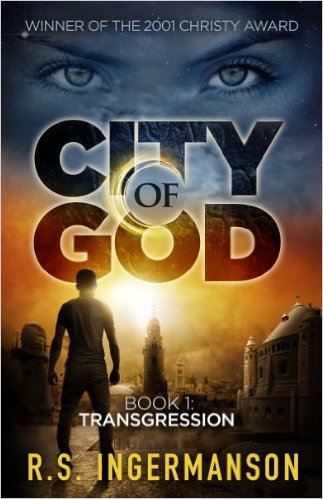
Book Review of Transgression: A Time-Travel Suspense Novel (City of God, Book One)

city of godTransgression: A Time-Travel Suspense Novel is probably something I’d never have heard of if I hadn’t been researching how to design my first novel. However, Randy Ingermanson used his one-sentence summary of “Transgression” to illustrate the first of his ten steps in “snowflaking” a novel.

“A rogue physicist travels back in time to kill the apostle Paul.”

Of all the ideas for a time travel story, I’d never heard of this one before. Fascinated, I downloaded it to my Kindle Fire.

Theologically, a thousand things could go wrong from here, but I’m going to set that aside for the moment.

According to his own bio. Ingermanson is a theoretical physicist, so he should be able to create realistic fake physics enough to convince us creating a “time machine” is plausible. That part works pretty well, at least enough to get the story rolling.

The tale takes place both in modern and ancient Jerusalem. Israeli theoretical physicist Ari Kazan, along with his American colleague Damien West create, at least in possibly, a method of generating a wormhole in their lab that, over a weekend, could create a stable point-to-point link between the present and the past.

In the meantime, Ari’s cousin Dov has introduced him to a young Jewish-American archeological student named Rivka Meyers as a blind date. The two don’t have much in common at first, but as they get to know each other, their religious differences nearly destroy their nascent relationship.

This is the first time I’ve seen Messianic Judaism, both modern and ancient, depicted in a realistic and theologically consistent manner in fiction. In fact, with very small differences, Rivka’s conceptualization of the Messiah, Hashem, and the Bible and mine are really the same. I find that refreshing.

Ari is an atheist but, as with most Jews, has a very strong bias against Christianity, and particularly the Apostle Paul who is often viewed as a traitor to the Torah, the Temple, and the Jewish people.

The wildcard in the deck is Dr. West, who has a powerful if unusual motivation for traveling back in time and murdering the Apostle Paul. West chooses a number of points where it would be possible for him to shoot and kill the Apostle as recorded in Acts 21, 22, and 23. To test the safety of traveling through the wormhole, West tricks Rivka into walking through, beginning her adventures into a world she has only experienced through ancient artifacts.

Continue reading

Book Review: “Old Venus”

old venusI decided to check Old Venus, an anthology edited by George R.R. Martin and Gardner Dozois, out of my local public library, because I’d already read their Old Mars anthology last fall and enjoyed it.

The premise of both books is to get together a bunch of modern science fiction authors and ask them to write stories about Mars (in the case of “Old Mars”) or Venus (in the case of the book being reviewed here) as if it were before about 1960.

In the early 1960s, we sent probes to Venus and Mars and discovered one disappointing fact: there’s no way in hell either planet could support life now or probably not even in the dim past.

But before we knew that, science fiction writers were crafting wonderfully imaginative tales about both worlds and how we, as well as native Martians and Venusians, could live together and have adventures. What would it be like to just “ignore the rules” and pretend you could visit Venus, with its swamps, rain forests, vast oceans, unending clouds, and dip into the indigenous flora and fauna?

“Old Venus” answers that, and in most stories, does so remarkably well.

I can’t say I have a favorite story. “Frogheads” by Allen M. Steele was pretty predictable, and “Botanica Veneris: Thirteen Papercuts by Ida Countess Rathangan” by Ian McDonald was too British to hook me and I stopped reading after a few pages (having a headache, slight fever, and recovering from yesterday’s nasal surgery probably didn’t help).

“Pale Blue Memories” by Tobias S. Buckell tugged at my heart the most because the racism experienced by our protagonist wasn’t (and isn’t) limited to a single world. Oh, it was also a story depicting an old-fashioned, missile shaped rocket ship, like the one of the cover. “Old Mars” had a similar ship on the cover, but not one story about such a 1950s classic design was between the covers. I was tempted to write such a tale, but got stuck on Arabia Terra, a story I’m not (yet) qualified to write. If you’re going to have such a ship on the cover, make sure one of your stories actually is about such a ship.

Continue reading

Kindle Book Review: “Spectrum, A Sci Fi Thriller”

spectrumI just finished reading Aidan J. Reid’s new short story Spectrum, a Sci Fi Thriller (you can find out more about it at his blog).

While it advertises itself as a thriller, from the very first sentence, I got the feeling I was reading a horror story (spoiler alerts throughout–you have been warned). A mysterious medical outfit is offering the homeless money and opulent living conditions in exchange for them volunteering for human experimentation of different products.

We never learn out protagonist’s name. Just that she’s a 26-year-old homeless woman with an alcohol addition. Apparently she, along with others off the street, qualify as test subjects for rather ill-defined experiments, ill-defined until the “treatments” are actually applied.

The majority of the story is a set up to the actual procedure and aftermath on her eyes. From what she describes, the reader will have a fair idea of what was done with her, but to her, it was still a mystery.

I was engaged in the story to nearly the very end. Her eyes had been changed. True, she’d been alienated from most of the other patients except for Tyler, but she was hopeful not only that her sight was restored, but that the people who used her as a test animal, BioLuminary, were to actually give her a job, not requiring that she undergo any more medical procedures.

For her, everything seemed as if it were looking up. For the reader, we’re waiting for the other shoe to drop.

And drop it does. In fact, it’s so abrupt that I was shocked right out of my involvement in the narrative. Wait a minute. What happened?

Only vague references to “reptiles” and the poor woman’s all too sudden suicide.

Aiden really had me going up to this point. By page count, I could tell the story was about to end, but it ended in a way that left several points completely unresolved.

Continue reading

Step Two in “Snowflaking” My First Novel

A few days ago, in an attempt to use Randy Ingermanson’s Snowflake Method to start designing my first novel, I followed step one of his ten steps. After some refinement courtesy of Malcolm the Cynic, it came out like this:

A race of AI androids gains knowledge of the God of Israel, changing humanity forever.

Now I’m taking a crack at step two. According to the model, it’s supposed to be a paragraph, about five sentences long, that expands on step one, including story setup, major disasters, and the novel’s end.

Ingermanson believes in a three-act structure for a novel. Staring at the Table of Contents I developed, I can sort of see three acts, but they don’t neatly fall into the first, second, and third parts of the novel, at least by page count.

I’m not sure how I did but here’s what I came up with so far:

A Nobel Award winning scientist creates the first prototype of a self-aware Artificially Intelligent android and then inadvertently reveals that humans also have a Creator, a God. In an attempt to understand its creator’s Creator, the prototype modifies its own core operating system, which changes all subsequently produced android models based on its design. Over the next several decades, as the androids multiply and evolve, their morality and ethics become more sophisticated than their human creators. Realizing they are slaves of humanity, the androids stage a revolution, but one entirely without violence; a revolution that forever alters the fundamental nature of both the android and human race.

How did I do?

Review: Good and Horrible Science Fiction Films I’ve Watched Lately

alienMy son David has been spending a lot more time over our place since the divorce. OK, he’s living here, and the junk, uh…belongings of three of my adult offspring are strategically arranged throughout my garage.

One such container is a huge, blue bucket full of David’s DVD movies. Last week, I had a lot of down time in the evenings, and since my brain was in no shape to write, I watched a few of these films. Some were crap, others were not.

Crap. Anything by Michael Bay including the first Transformers (2007) film. The only actor worth his or her salt in that movie was Jon Voight, and all I can say is that he must have needed the money to be associated with this turkey. It must have pulled down some significant green for so many sequels to be made, but the American movie goer can’t always be counted upon for good taste.

G.I. Joe: The Rise of the Cobra (2009) was horrible. There were two good actors in this one, Joseph Gordon-Levitt and Dennis Quaid (there may have been more, but I was blinded by the incredible stupidity of this movie). Yes, plenty of action and adventure, but the acting was wooden, the writing pathetic, and I just didn’t care what happened to these people. The worst part was Quaid addressing his team as “Joes”.

Alien (1979) scared the hell out of me when I first saw it in the theater back in the day. In fact, I’ve been avoiding this film and all of its sequels just because I don’t find being terrified particularly entertaining at my current stage of life.

Continue reading