Forgotten Hero

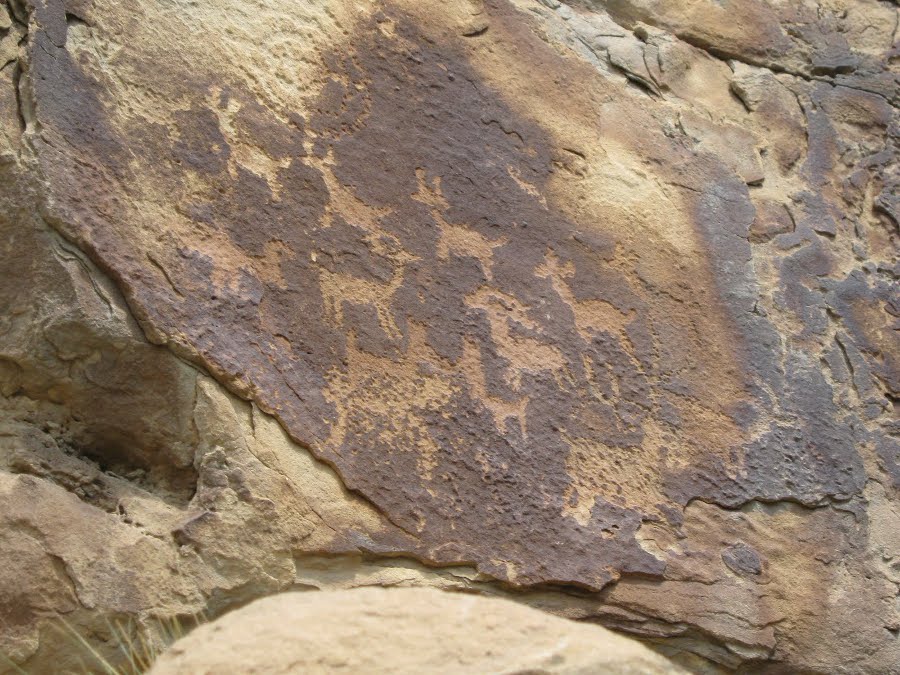
ute petraglyph trail

© gjhikes.com – available for non-commercial use.

The explosion at the house he rented in Cascade would keep the cops off his back long enough for him to hike up Palisade Rim Trail. He told the locals he wanted to study the Ute petroglyphs when there weren’t any tourists around. It was an easy trail and just about anyone who wanted to see them could. That was the beauty of it all. No one suspected the secret.

Wasn’t dawn yet and damned cold but he made it. Large number of petroglyphs probably meant this was a frequent camping area. The real reason the Utes visited here often didn’t survive into the modern age. He’d failed this time. The Sun Lords weren’t in this version of reality. Richard Hunter activated the time gate using the Moreira device and stepped back into 1959 to try again. He and the Forgotten Heroes had to find them before they conquered the multiverse.

I wrote this for the What Pegman Saw writing challenge. The idea is to take a Google maps location and image and use them to inspire the creation of a piece of flash fiction no more than 150 words long. My word count is 150.

Today the Pegman takes us to Palisade Rim/Ute Petroglyph Trail, Colorado. I had a tough time with this one. Seems like a nice place to visit, but where’s the action?

The trailhead is just a few miles away from Cascade, Colorado but while the area has a few interesting stories, none of them grabbed me. I tried looking up current news articles for Cascade, but the closest thing I found was a house explosion in Colorado Springs.

I looked up the trail itself and found a couple of reviews including one from GJHikes.com and another from Colorado West Outdoors. Finally, I tried to find out how old the petroglyphs were.

I had some sort of time travel story in mind and at first, I was just going to use one of the character names from the original Rip Hunter, Time Master comic book which first appeared in issue 20 of Showcase in May 1959. Then while reading the history of the character, I decided to adopt some of the elements from the mid-1980s “Crisis on Infinite Earths” story arc.

The “Moreira” device is named for Ruben Moreira, the original “Rip Hunter” artist in 1959.

I know it’s ridiculous but it’s the best I could come up with, especially when I haven’t had breakfast yet (as I write this).

Since I read the trail ends at a high cliff, my only other idea was a suicide, but that seemed pretty grim.

To read other stories based on the prompt, go to InLinkz.com.
Notzrim

jerusalem

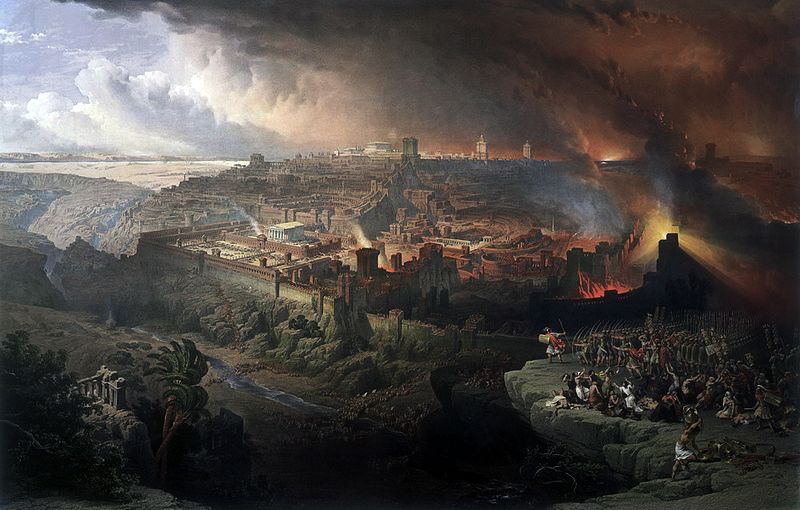
David Roberts’ The Siege and Destruction of Jerusalem by the Romans Under the Command of Titus, A.D. 70

The group of men entering the synagogue at Terni caused murmuring among the Jewish men and not a few of the women. Everyone’s hearts sagged with news of the fall of Jerusalem and the destruction of the Holy Temple of Hashem by the Romans. These men had been there. They were refuges forced into the diaspora. How long had it been since any of the Terni Jews made the journey to the Holy City to offer Korban to Hashem?

After the reading of the Torah and the Prophets the synagogue officials sent to them, saying, “Brethren, if you have any word of exhortation for the people, say it.”

Yochanan stood and said, “Men of Yisrael, and you who fear Hashem, listen. Hashem has brought to Yisrael a Savior, Yeshua Ben Yosef, after Yochanan had proclaimed before his coming a mikvah of teshuvah to all our people and even the Goyim.”

I wrote this for the What Pegman Saw writing challenge. The idea is to take a Google Maps street image and location and use them as a prompt for creating a piece of flash fiction no more than 150 words long. My word count is 150.

Today, the Pegman takes us to Terni, Italy. Like most places in Europe, Terni has a rich history going back to ancient times. Wikipedia says Terni was founded around the 7th Century BCE and was conquered by the Romans in the 3rd Century BCE. I have no idea if in the late First Century CE there was a Jewish population and a synagogue present, but I pretended there was.

After the Romans destroyed Jerusalem and the Holy Temple in 70 CE, there would doubtless have been countless Israeli refuges who were forced into the diaspora (exile among the nations). The Jews who had long lived in the cities and nations in the Roman empire would have journeyed to the Holy City only rarely because of the distance and difficulty in traveling in those days, so seeing a group of their Hebrew brothers arriving from the recently destroyed Jewish capital would have caused quite a stir, but there’s more than that.

It is a common belief in Christianity, Judaism, and even among other religions and in atheism that Jesus and then the Apostle Paul created a new religion called “Christianity” and converted many Jews and many more Gentiles to it. It is often thought that the Law (Torah) and all of the Jewish customs and traditions mandated by God were “nailed to the cross with Jesus.” My studies have convinced me that nothing could be further from the truth for the Jewish people.

The group of men from Jerusalem in my story are devout Jewish followers and disciples of Yeshua (Jesus) the foretold Maschiach (Messiah) and many witnessed him after the resurrection and then they told many others.

I borrowed a bit of Acts 13, specifically verses 15, 16, and 23 to put words in the mouth of my fictional Yochanan (John). Although Jewish devotion to Yeshua eventually fell away, we are unsure of just how many years or centuries such Jewish faith in him continued, perhaps even into the 3rd Century CE and beyond. No one knows for sure. However, that devotion would be a wholly Jewish extension of Pharisaic belief, not something that had no resemblance to its root source. That’s what I tried to communicate in 150 words.

For the sake of my narrative, I used a classic painting of the siege of Jerusalem above rather than an image associated with Terni, Italy.

To read other stories based on the prompt, go to InLinkz.com.
Immortal in Ice

sami

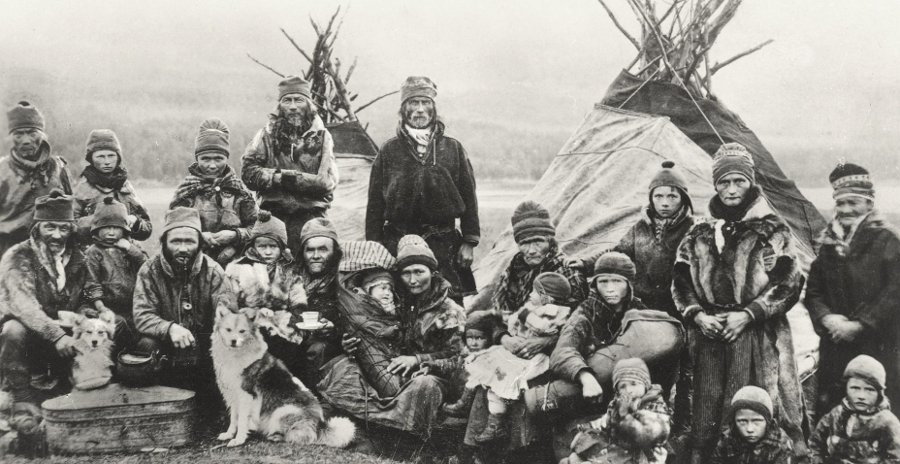
Nordic Sami (Saami) people in Sapmi (Lapland) – Taken between 1900 and 1920 by Granbergs Nya Aktiebolag – Public Domain

William Shaw wanted to be alone, which is why he had settled in Lapland for a time. Unfortunately, history once again worked against him. The Nazis invaded as part of their offensive against the Soviets. He escaped into the icy wilderness rather be captured. No one could know his secret.

He couldn’t really die, not from starvation or exposure. Wounds healed almost instantly. However he could feel pain. His extremities were frozen. He’d walked as far into the mountains as his body would allow. If not death, then a long winter’s nap would be as welcome.

Then men came. They said nothing, looking to be hunters of reindeer. Shaw was picked up and taken to their camp. It had been long since he had come this way, hundreds, maybe thousands of years prior. He had lived among the Sami before. Perhaps he used to be one of them.

I wrote this for the What Pegman Saw challenge. The idea is to take a Google Maps location and image and use them as a prompt for creating a piece of flash fiction no more than 150 words long. My word count is 148.

Today, through something of a mishap, the Pegman takes us either to Northern Norway or Northern Finland. That’s a lot of territory to cover, but I picked Finland because I thought everybody else would pick Norway (the idea just popped into my head) and because it borders Russia, which could afford some interesting possibilities.

Since we’re talking northern Finland, the northern most portion is Lapland and man does it ever get cold there.

Of all the qualities this area possesses, I was drawn to the Regional Coat of Arms which depicts a traditional Wildman.

After doing a bit of reading, I found that the wildman is an iconic image associated with both northern Norway and Finland and possibly meant to depict an ancient member of the Sami people. The Sami are the only and northernmost indigenous people inhabiting areas of Norway, Sweden, Finland, and Russia. There are Sami who live along the coast and also the Mountain Sami who traditionally have hunted and also herded reindeer.

All of that is very interesting, but I needed a protagonist. I first considered a vampire, but then I recalled a character I created named William Shaw who I first introduced in January 2017 and reprised a few days later.

Shaw is an immortal or very-long-lived person, someone who has existed so long, he cannot remember where he came from originally or how old he really is. In my first story, I also made him a time traveler. He had met his love in early 20th century England, but then due to an argument, she left him. Unfortunately, it was to travel to America aboard the doomed RMS Titanic. Decades later, he was determined to use a time machine to go back and save her, but then there would be two identical immortals existing from April 1912 forward in time so I dropped the idea of expanding that story.

Here, we have Shaw still mourning his lost love, hiding in northern Finland. Sadly, his timing was off, because the Nazis invaded Finland including Lapland during World War Two as part of Operation Barbarossa, their plan to invade the Soviet Union.

So, not wishing to be captured and perhaps being discovered by the Nazis to be an immortal (if they tortured him, his wounds would heal almost immediately, which would certainly be noticed), he took the long trek north to meet his fate or at least to enter the next chapter of his life.

To read other stories based on the prompt, go to InLinkz.com.
Night Prayer

pico duarte

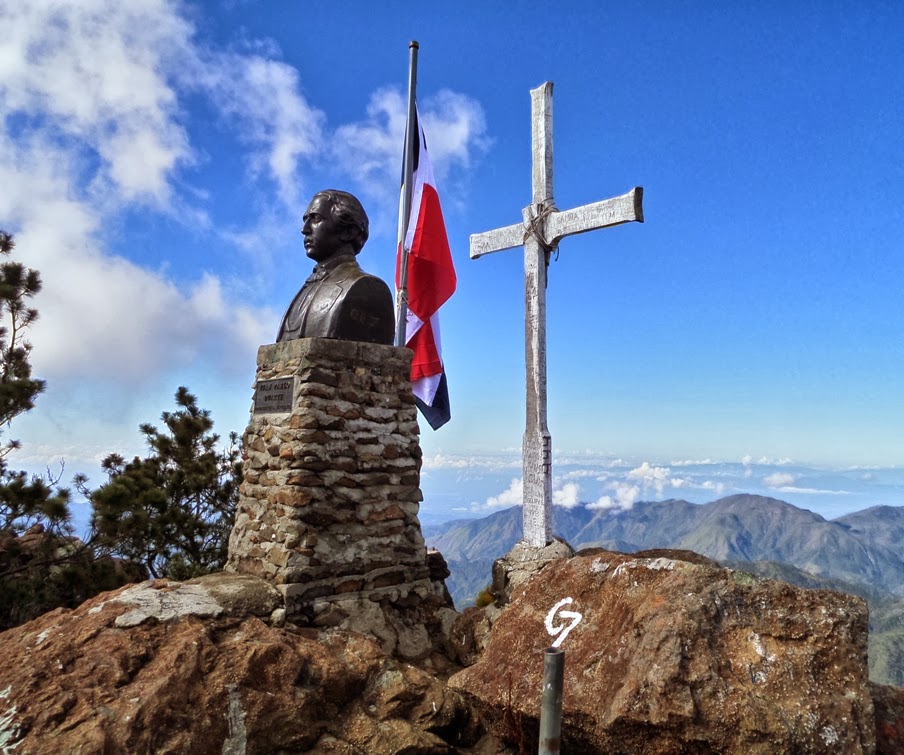
Summit of Pico Duarte in the Dominican Republic

Moshe Shmuel Cohen stood on the summit of Pico Duarte in the moonlight in front of the Dominican flag, the bust of Duarte and the “Christian symbol.” He had spent the day in a burrow well off the trail, concealed from light and curious eyes.

“You were not here my prior visit and are not so formidable as the Goyishe hunters believe.” He laughed bitterly.

“I was last here after Kristalnacht lamenting for my people, but how dare I pray to Hashem as I am? Hitler was a greater evil than I but there is an older evil seeking me. They are Van Helsing now but were Venandi when I was young. I’ll feed in La Ciénaga later, but soon I’ll need allies.

He turned to the cross. “No, not the God of the Christians for the Venatores claim him, but why would Hashem hear the prayers of a vampire?”

I wrote this for the What Pegman Saw writing challenge. The idea is to take a Google maps street image and location and use it as the inspiration for crafting a piece of flash fiction no more than 150 words long. My word count is 150.

Today, the Pegman takes us to the summit of Pico Duarte in the Dominican Republic.

I really, really didn’t plan on writing yet another vampire story, but every other approach I could think of fell apart, particularly due to the fact that the name of the summit and the objects located there weren’t present before about 1961.

However, I did discover that a small population of Jews did settle on the island before and during World War Two, so I decided to involve my Jewish vampire as well.

I introduced Moshe Cohen in the story The Shadow Meeting which was part of my original Sean Becker series. That series stalled and so I relaunched it with The Beginning of the Fall. The most recent story is They Will Run You Down In The Dark.

A modern organization of vampire hunters currently calls themselves The Van Helsings, but in Na Gauna Ni Tevoro, I revealed their original name as “The Holy Order of Venandi,” “Venandi” meaning “hunter” in Latin.

I’ve been struggling to find a way to reintroduce Moshe into the current Sean Becker universe and, seeing a bit of Jewish history on the island, decided to have him originally visit their and climb the summit in or around 1938.

Oh, I found out that the most likely place to begin the hike and ascent of Pico Duarte is from La Ciénaga.

By the way, I did find an article about the history of Jewish belief in vampires.

How would a Jewish vampire feel about the Christian symbol and about Hitler relative to his own experiences? If the Van Helsings are actually an ancient and radical Catholic order split off from the main church and the Pope, how would that affect a vampire who had been Jewish or Christian before the “change?”

To read other stories based on the prompt, go to InLinkz.com.

Na Gauna Ni Tevoro

wayfinders

Scene from the film “Wayfinders a Pacific Odyssey Hawaii”

Father Francisco DelVega Ortiz cursed Lucifer as he was brought before the pagan Chief. He had been part of a special mission to these islands, but Captain Scarr’s foolishness caused his ship to collide with an uncharted reef. Rough seas and high winds tore the Esteban apart. The Priest was the only survivor.

“I have met Europeans before.” The savage spoke in surprisingly good Spanish. “You make fine sacrifices and will strengthen the temple’s foundation.”

Father Ortiz was held by four mountain warriors but struggled defiantly. He spat out, “There will be others after me, Talamaur. Oh, yes. I know what you are. The Holy Order of Venandi will eradicate your kind in the name of the Virgin Mary.”

“Perhaps, Priest. My people will grow strong eating your sacrificed flesh, but I reserve the blood for myself.” The heathen Chief sitting on his obsidian throne bared long fangs and hissed.

Time for another short story for What Pegman Saw. The idea is to take a Google maps location and image and use it to inspire the creation of a piece of flash fiction no more than 150 words long. My word count is 150.

Today the Pegman takes us to Fiji. I was all set to write about a warm, tropical paradise when I looked up Fiji’s history and found some pretty disturbing news.

According to Wikipedia:

Over the centuries, a unique Fijian culture developed. Constant warfare and cannibalism between warring tribes were quite rampant and very much part of everyday life. During the 19th century, Ratu Udre Udre is said to have consumed 872 people and to have made a pile of stones to record his achievement. According to Deryck Scarr, “Ceremonial occasions saw freshly killed corpses piled up for eating. ‘Eat me!’ was a proper ritual greeting from a commoner to a chief.” Scarr also reported that the posts that supported the chief’s house or the priest’s temple would have sacrificed bodies buried underneath them, with the rationale that the spirit of the ritually sacrificed person would invoke the gods to help support the structure, and “men were sacrificed whenever posts had to be renewed”. Also, when a new boat, or drua, was launched, if it was not hauled over men as rollers, crushing them to death, “it would not be expected to float long”. Fijians today regard those times as “na gauna ni tevoro” (time of the devil). The ferocity of the cannibal lifestyle deterred European sailors from going near Fijian waters, giving Fiji the name Cannibal Isles; as a result, Fiji remained unknown to the rest of the world.

warrior

A Fijian mountain warrior, photograph by Francis Herbert Dufty, 1870s.

Yikes. Doesn’t sound like paradise to me. Also, as you can see, the title for my work of historical fiction and horror translates as “Time of the Devil,” which I found appropriate.

According to the same source, Dutch explorer Abel Tasman visited Fiji in 1643 and apparently lived to tell the tale. The first Europeans to settle in Fiji were beachcombers, missionaries, and whalers.

I’ve written eight chapters in my Sean Becker vampire series plus a number of “side tales” based on the same “universe.” I have introduced formal societies both of vampires and of vampire hunters. In the 20th and 21st century western nations, the Holy Order of vampire slayers is called “Van Helsing” after a fictional character in Bram Stoker’s 1897 novel “Dracula.” Earlier, including in the 17th century when this story is set, I gave them the name “Holy Order of Venandi” with “Venandi” meaning “hunter” in Latin (the best I could come up with…if someone more familiar with Catholicism can create a better name for a fictional order of fanatical vampire hunters, let me know).

I’m fascinated about how widely the legend of vampire-like creatures has spread and how far back in history they can be traced. Almost every human civilization and culture knows of vampires by one name or another. Vampire-like creatures of the island chain Vanuatu were called Talamaur. They weren’t bloodsuckers in the traditional “Dracula” vein, but they were close enough so I thought I could get away with “tweaking” the folklore.

Vanuatu is about 750 miles from Fiji and there is some evidence that ancient Polynesian people were able to make long sea voyages and settle on islands very distant from their origins. I don’t think it’s too much of a stretch to have a Talamaur arrive on Fiji in or before the 17th century (it is believed Fiji was settled between 3500 and 1000 BCE) and become a local chief.

Oh, in case you’re interested, the weather in Suva, Fiji today predicts thunderstorms with a high in the mid-80s F and a low in the mid 70s. Pretty humid and I doubt you’d be able to work on your tan.

To read other stories based on the prompt, go to InLinkz.com.

The Men I Never Met

Emek HaBacha

Emek HaBacha (Valley of Tears) Memorial – From Wikimedia Commons

It had started at Tel Saki on Yom Kippur, 6 October 1973 when six soldiers embarked on a routine reconnaissance mission to the outpost. For thirty-one year old Benjamin Wolff, now standing at the Valley of Tears memorial, it ended with the death of his uncle.

The Former U.S. Marine put his hand on a Syrian T62 tank. It also ended for Benjamin in Damascus on 13 March 1986 as a thirty-one year old reporter for the Associated Press was killed in a terrorist car bombing along with 59 other civilians.

His uncle had made Aliyah right after his nineteenth birthday and proudly joined the IDF. Dad stayed in the States pursuing a journalism career. Ben hadn’t known either of them, but they bound his soul here. He’d go back home to Idaho, to his wife and three children. By next fall, they’d be living in Haifa. They were Jews and this was their home.

I wrote this for the What Pegman Saw writing challenge. The idea is to take a Google Maps image and location and use it to inspire the crafting of a piece of flash fiction no more than 150 words long. My word count is 150.

Today, the Pegman takes us to Tel Saki which, depending on the source consulted, is in Syria or Israel.

Interestingly enough, Wikipedia has almost nothing on the location. This is in spite of the fact that a significant battle in the 1973 Yom Kippur War occurred there when a coalition of Arab nations including Syria launched a sneak attack on Israel on the holiest day on the Jewish religious calendar.

However other sources had tons of information such as The Friendship and Heritage Foundation and the Legal Insurrection blog. Since the Valley of Tears or Emek Habacha is in the same area and a decisive battle in that war was fought there, in my research I included an article from The Times of Israel and this time Wikipedia had a lot more to say.

For my research I discovered that there were terrorist car bombings in Damascus in 1986 including one conducted by Pro-Iraqi militants on March 10th which killed 60 people.

One of my sons (he’s a twin) is thirty-one and a U.S. Marine veteran and although I don’t anticipate that he or any of his siblings will make Aliyah to Israel (my wife is Jewish which means my children are too), he’s probably the one who would most likely go.

I created a sense of loss due to war for him which also connected him to Israel and the middle east in a unique way. Some might retreat from that heritage because of the violence, but others would and have fiercely embraced and defended the Jewish homeland.

To read other stories based on the prompt, go to InLinkz.com.

Sheltering Night

talnakh

© Google – October 2016

“Anton Vladimirescu Naga. I haven’t seen you since I was a little boy. Why are you here in Talnakh?”

“I am called Antonie now. It was kind of you to invite me into your home, Gennadi. Your generosity is like your father’s.”

“So is my stupidity for staying in this frozen hell, but the pay is good for mining engineers. Come back for old time’s sake, Antonie?”

“The climate.”

“Climate or the fact that the sun won’t rise here until the end of January? Yes, my father told me what you were when I became a man. You feasted on the denizens of the Norilsk Gulag every winter from before I was born until Khrushchev died.”

“Your Father was my friend. I hope you are too. I need a place to hide.”

“The hunter is now the hunted. Fear not. The Kosygin family has long been allies with the undead.”

I wrote this for the What Pegman Saw writing challenge. The idea is to take a Google maps image and location and use it as the inspiration for writing a piece of flash fiction no more than 150 words long. My word count is 150.

Today the Pegman takes us to Talnakh, Krasnoyarsk Krai, Russia. The Wikipedia entry for Talnakh is fairly sparse but it is only 16 miles (25 kilometers) north of Norilsk which has a broader history, both in terms of mining and as a former Gulag labor camp.

I’m obviously leveraging one of the characters from my Sean Becker Undead series, which I’ve done previously for a different flash fiction challenge. However, it is set in the present day, January 2018 to be exact, but referencing Antonie’s previous visits to the area during the winters between 1946 and 1964.

The sun doesn’t rise at all there from mid-December to the end of January so a perfect place for a vampire to hide, especially one being hunted by vampire slayers.

I wasn’t planning on writing another vampire-related tale, but the characteristics and history of the location lended themselves to such a story very nicely. To find out how Antonie got into this mess, read Incendiary.

To read other missives based on the prompt, go to InLinkz.com.

When It Deserves The Grave

buckhorn

Abandon’s church near the cemetery in the Buckhorn, Iowa ghost town.

He visited the ghost town of Buckhorn, Iowa with a very specific purpose. It was mid-December and the ground should have been frozen, but he was master of this universe and had absolute control over all the physical rules. He waved and a fresh grave appeared before him in the cemetery. He had no idea how long everything had been abandoned, but it seemed a fitting end for one more corpse.

He’d printed it out. 150 words only took up a single sheet of paper. He tore it into pieces, knelt down and dropped them in. Then with another wave, fresh earth covered the dead story. He caused a proper gravestone to be raised. “Here lies Last Flight. b. 16 Dec 2017, d. 16 Dec 2017. High Aspirations. Low Marks.”

“Fine. I’ll try again tomorrow.”

He walked back out of the story into his so-called real life. Neither was particularly satisfying this afternoon.

I can’t submit two stories at Inlinkz.com for the same prompt, but I can still comment on it. Egad, I had no idea such a simple tale would generate so much ire. I won’t delete it since I’m told we can learn more from our failures than our successes, but I can symbolically kill and bury it in a grave with the rest of the forgotten dead.

Oh, word count: 148.

Nothing more to see here. Time to move on.

There Are Worse Things Than Being A Tourist

versailles

The Palace of Versailles, France

“But I was just explaining the subtleties of the brass and tortoise shell…”

“It is forbidden, especially in English. We have paid guides and audioguides for that sort of thing, Mademoiselle. I must ask you and your party to leave.”

The museum guard then called reinforcements and escorted Julia-Sophie Dansen and her American friends out of Sun King’s grand apartments and the Palace of Versailles.

Once outside, the specialist in 18th century French art and curator of one of Amsterdam’s most prestigious art museums whirled back toward the Palace entrance and at the retreating guards. “You arrogant pricks. The French are worse than the American President!”

They could see the guard’s stiffen and momentarily slow their pace but then they re-entered the museum.

“Don’t you think that’s a little harsh, Julia-Sophie?” Henry gently tried to calm his host.

“They can’t do this to me. I’ll burn them alive on twitter!”

I wrote this for the What Pegman Saw writing challenge. The idea is to take a Google maps street image and location and use it to inspire the creation of a piece of flash fiction no more than 150 words long. My word count is 150.

Today, the Pegman takes us to The Palace of Versailles in France. This location has a very rich history making the selection of a specific topic very difficult. Of course I thought of some sort of historical piece, maybe involving time travel, but I’ve done that so many times before.

Then I looked up recent news articles about the location and hit the jackpot.

I decided to base my tale on a news story published on 31 October 2017 titled Versailles Palace accused of throwing out art historian for ‘commenting on works in English’ to friends .

It seems that Marie-Noëlle Grison, a specialist in 18th century French art and junior curator of graphic arts at Amsterdam’s Rijksmuseum was visiting the Sun King’s grand apartments with three “American friends” and was explaining to them the subtleties of brass and tortoise shell marquetry by André-Charles Boulle, the King’s illustrious furniture maker. A guard stopped her saying it was “forbidden” for her to do so stating that there are “guides and audioguides for that” (Oh, and other museums and similar establishments in France are guilty of similar behavior according to the story).

He then called security and had Grison and her party ejected (I made up the part about her yelling at them afterward).

This whole thing seems pretty unreasonable from my rather limited American perspective but apparently on top of the general admission, the museum charges €7 (£6) per person for a group guide and a private guide costs €15 per person, so perhaps this is a matter of economics and not just whether or not Grison was disturbing other museum patrons.

That seems kind of greedy and certainly arrogant to me, so I thought I’d have a little fun teasing the French along with Donald Trump just a bit. The news article certainly did nothing to improve my perception of the French but then again, the average French person might be quite different from museum guards (I can only hope).

By the way, this did create a small social media storm on twitter and the museum eventually offered an apology, though from my point of view, a rather half-hearted one. Go figure.

To read other stories based on the prompt, go to InLinkz.com.

Five Years On

memorial japan

In Namie Seiko Yoshida and her husband Tsutoshi offer a prayer for their late daughter Miki, who was killed by the tsunami while at work at a post office, in Ukedo district, 5km north of the nuclear plant – Photograph: Kimimasa Mayama/EPA

Mikiko Jahn and Brigit Monroe stepped out of the ruins as the older couple drove away. They’d placed flowers on the foundation of what used to be their home across the street.

“I had dinner with them every weekend. I’d just introduced my fiance’ Ichioka the Sunday before the accident.”

Brigit, Mikiko’s psychologist, touched her forearm and felt it trembling. This visit was dangerous, but Mikiko insisted on going home for the anniversary of the Fukushima Daiichi nuclear disaster. Five years ago, the reactor 3 hydrogen explosion injured eleven and killed one, except Mikiko was only presumed dead. Her injuries were catastrophic. The government covered up the events around her reconstruction as the first synthetic organism. Cybernetic brain implants regulated all of her emotions until this morning when Brigit ordered the firmware upload.

Now Mikiko could feel…everything.

“Ochan. Otousan.”

Brigit put her arms around Mikiko and let her sob for hours.

I authored this for the What Pegman Saw writing challenge. The idea is to take a Google maps image and location and use them to craft a piece of flash fiction no more than 150 words long. My word count is 150.

Today, the Pegman takes us to Fukushima, Japan. I couldn’t believe it. For just over a month, I’ve been writing a science fiction/espionage series about a woman horribly mutilated in the Fukushima Daiichi Nuclear Disaster which began with a devastating earthquake and tsunami on 11 March 2011 and set in this very location.

Mikiko’s latest published adventure is The Most Dangerous Predator but the events here occur after Woman Under Repair but before Woman in the Shadows.

It’s tough to compress everything that’s happening in this scene into 150 words and have it be a complete story. As readers of her series know, soon after the accident, her “designer” Dr. Daniel Hunt had several cybernetic chips implanted in various parts of her brain to regulate her emotions. Being horribly mutilated and then being the object of numerous, highly invasive surgeries, literally being rebuilt from scratch using synthetic materials based on artificial DNA would be emotionally intolerable to just about any human being. The chips regulate those emotions, allowing Mikiko to endure her state and her transformation with relative calm. Her emotions can be programmed to even allow feelings of well-being and happiness under the most horrible circumstances.

Brigit Monroe is Mikiko’s psychologist and in her opinion, sooner or later, Mikiko must learn to regain at least some control of her emotions and especially to be allowed to experience grief over her loss, not just of her original body, but of her former life. Even Mikiko’s parents don’t know she’s alive, and because she is regarded as most secret by both the Japanese and British governments, she can never tell anyone she survived.

So I wrote this. In a longer tale, perhaps a novel, I would expand upon these events quite a bit. For now, this is the best I can do. The photo at the top has a caption that tells the real story of the people depicted. At the bottom, I’m including another photo of a real person memorializing those lost in the tsunami, but one I hope will express how Mikiko eventually embraces her new life.

Oh, “Ochan and Otousan.” are the best I can do using Goggle to have Mikiko say “Mommy and Daddy” in Japanese. If anyone out there can offer a correction, I’d appreciate it.

To read other stories based on the prompt, go to InLinkz.com.

flowers-memorial-fukanuma-beach-sendai

On Fukanuma beach, Sendai, a woman throws a bunch of flowers – Photograph: Ken Ishii/Getty Images