Review of Max Barry’s Novel: “Lexicon”

lexicon

Cover image for Max Barry’s 2013 novel “Lexicon”

I just finished Australian author Max Barry‘s 2013 novel Lexicon and I think it’s terrific.

I first became aware of him and this novel by reading a 2014 article he wrote for Gizmodo called How to Write a Great Science Fiction Novel in 7 Easy Steps and, as far as I can tell, “Lexicon” is the first SciFi novel he ever published, though he’s written other books before.

The novel is intriguing in that words are used as weapons, and they can ultimately kill. It’s a lot more complicated than that, but as it turns out, there are certain individuals who, properly trained, can analyze the personality “segment” of people around them, determining which words (which in the book are all nonsense words) will influence them.

But it’s worse than that. A teenage girl named Emily Ruff, who is a runaway and homeless in San Francisco at the beginning of the story, is recruited by a mysterious group of people and begins training at an exclusive prep school in Virginia (think “Professor Xavier’s School for Gifted Children” except the children are especially persuasive, but not mutants).
Continue reading

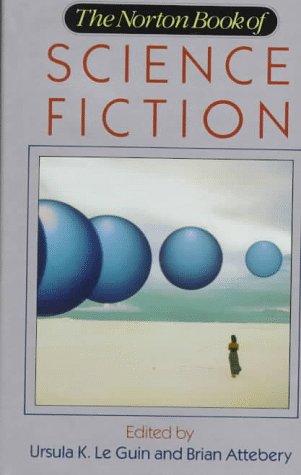
Review: “The Norton Book of Science Fiction”

norton

“The Norton Book of Science Fiction” cover art

A little while ago, I checked out The Norton Book of Science Fiction from the library because it contained the late Mike Resnick’s classic SciFi short story Kirinyaga. I reviewed that story, but went on to read some of the other tales the book contains.

First of all, it was edited by the legendary Ursula K Le Guin and Brian Attebery, who back in 1993, were both young. I got a kick out of Attebery being in Idaho, which isn’t where a lot of folks would think a SciFi guru and associate of Le Guin would be found.

The anthology features notable science fiction short stories published from 1960 to 1990, which is a nice cross section of the evolving genre.

Le Guin wrote what is no doubt an insightful but overly long introduction, which I skimmed through. I also didn’t read all of the stories, and skipped the ones I was already familiar with such as Harlan Ellison’s “Strange Wine” and Kim Stanley Robinson’s “The Lucky Strike.”

Continue reading

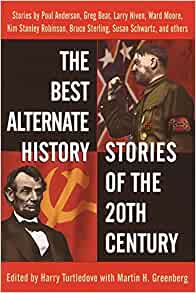
Book Review: “The Best Alternate History Stories of the 20th Century”

alt

Cover art for the anthology, “The Best Alternate History Stories of the 20th Century

Note that I’ve previously reviewed individual stories presented in this anthology, such as Brad Linaweaver’s novella Moon of Ice, Kim Stanley Robinson’s The Lucky Strike, and Susan Shwartz’s Suppose They Gave a Peace. This review applies to the entire book.

The Best Alternate History Stories of the 20th Century is a 2002 anthology edited by Harry Turtledove with Martin H. Greenberg. As the title suggests, it’s an eclectic collection of short stories and novellas crafted by various science fiction luminaries over a span of nearly fifty years.

As with all anthologies, it is pretty uneven.

Ward Moore’s “Bring the Jubilee” was the toughest to slog through. It’s depressing and seems to be overly long, including details that may not have been necessary to tell the core story. Also, it’s hard to believe that the Confederate Army could have won the Civil War based on a single engagement, one that our hero managed to change by sheer ineptitude.

Both “The Lucky Strike” by Kim Stanley Robinson and “Suppose They Gave a Peace” by Susan Shwartz were anti-war stories, the former being Robinson’s wish fulfillment of a world with no nuclear weapons, and the latter, an alternate history that bore little difference from the actual one, as told through the eyes of one family.

Continue reading

Short Story Review: “Suppose They Gave a Peace” (1992)

Cover art for the anthology, “The Best Alternate History Stories of the 20th Century

The latest tale I read in The Best Alternate History Stories of the 20th Century edited by Harry Turtledove and Martin H. Greenberg is Susan Swartz‘s 1992 short story Suppose They Gave a Peace.

It’s an anti-war Vietnam era tale as seen through the eyes of a family in Ohio in the early 1970s. Frankly, it reminded me of the old sitcom All in the Family, set in the same era and, at least in the beginning, with the same stereotypes.

Dad’s a World War Two and Korean War vet who is a total conservative. Mom’s a peace loving Quaker. Daughter is a radical college protestor, and son joined the Marines and is serving at the U.S. embassy in Saigon.

The alternate part of this history is that McCarthy won the election rather than Nixon. It didn’t seem to make much difference since the Fall of Saigon was just as ghastly.

Continue reading

Review of Brad Linaweaver’s Novella: “Moon of Ice”

Cover art for the anthology, “The Best Alternate History Stories of the 20th Century

Before it was a novel, Brad Linaweaver’s “Moon of Ice” was a novella that was a Nebula award finalist in 1983.

Almost four months ago, I wrote A Revelation on the Recent Passing of Brad Linaweaver. I had newly “discovered” Linaweaver’s works, thanks to the sometimes controversial File 770, and particularly in their article Brad Linaweaver (1952-2019). It’s a shame to find such a terrific author only after he’s passed.

I went through my local library system, but could only find his “Moon of Ice” novella in a collection called The Best Alternate History Stories of the 20th Century.

Moon of Ice utilizes a very familiar science fiction trope: “What if Nazi Germany had built the bomb first and won World War Two?”

Actually, they only won Europe in the novella. America came up with the Bomb second and still conquered Japan.

Continue reading

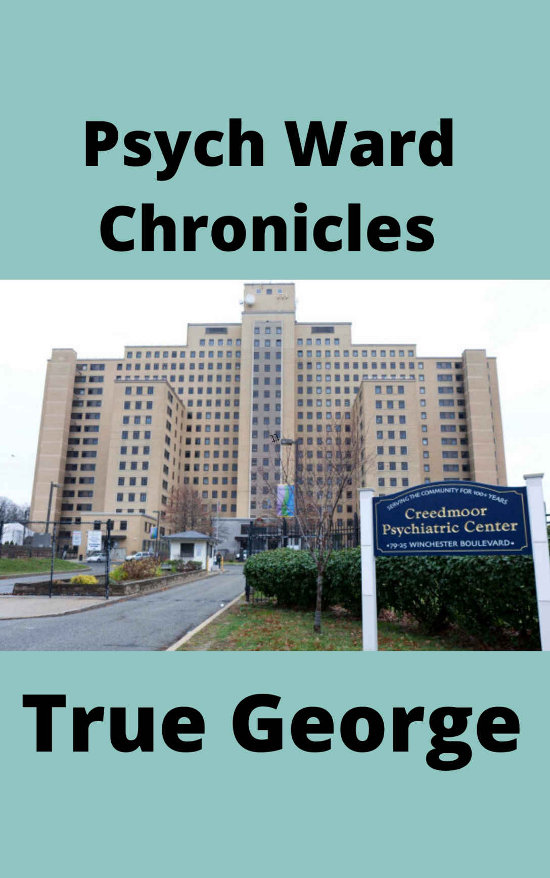
Book Review: “Psych Ward Chronicles”

psych

Cover image of “Psych Ward Chronicles” by True George

Disclaimer: Author True George periodically comments on my blog and asked me to review his book Psych Ward Chronicles.

It’s only about fifty pages long and I read a version in PDF format. The book was originally a series of observational notes George took during his time as an intern at a New York City inpatient mental institution. It’s state run, and George covers chapters on topics such as “Side Effects,” “Liaisons,” “Readmitted,” “Race Card,” and “Accusations.”

My first observation is that the book needed a lot of editing. This happens sometimes when you self publish and you’re going over your own stuff without a second pair of eyes.

The second observation is that it was rather dry. I did something I almost never do when I’m preparing to review a book. I asked George additional questions about it after I read it. I wanted to be clear about the intent.

Continue reading

Book Review of “Hyperion”

hyperion

Cover art for Dan Simmons’ 1989 novel “Hyperion”

I have to admit that I’d never heard of Dan Simmons or his award winning 1989 novel Hyperion until both were mentioned on Mike Glyer’s File 770. Actually, it was specifically the mention that he dared to insult the much vaunted teenage climate change icon Greta Thunberg. I agree that Simmons went kind of overboard on his twitter commentary, but attacking a teenager aside, criticizing Thunberg for any reason has become pretty much the worst thing you can do besides being a “denier.”

Anyway, I became interested in him and his novel, so I checked it out of my local public library and started reading. It wasn’t what I expected, but then again, I didn’t know what to expect.

Hyperion has been loosely compared to Chaucer’s The Canterbury Tales, a collection of stories about seemingly unrelated people. I can kind of see that. Simmons, a former teacher, spared no effort in shoving tons and tons of literary references, many of them aimed right at Keats, into his stories. I’m sure many of them sailed way over my head. I don’t think they added much to the novel.

Continue reading

Book Review: “The Collapsar Directive”

collapsar

Cover art for the anthology “The Collapsar Directive

Disclaimer: I received a free digital copy of this anthology on the condition that I would write and publish a review. I have also had a short story and a piece of flash fiction published by Zombie Pirate Publishing, but none of my stories appear in the anthology I am reviewing, The Collapsar Directive.

Actually, the anthology’s title is taken from a story written by Adam Bennett, co-founder of Zombie Pirates, called “The Sword and The Damocles,” a tale about two interconnected intergalactic spacecraft. Like many of the short stories in the anthology, I found it to be “okay,” but not particularly remarkable. Of course “Collapsar” was published a few years back, and I know that many of the authors have since honed their writing skills.

Mel Newmin’s “Looking at the Face of God” had a nice twist to it, but I objected to the idea of releasing zoo animals back to the wild, since animals kept in captivity often lose their ability to fend for themselves in an untamed environment. Once the big reveal occurs, the results become interesting, but then science fiction does sometimes have the created confront their creator.

Continue reading

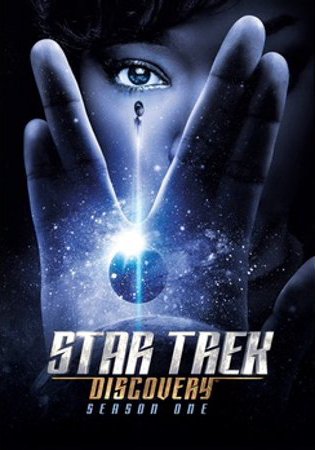
Review of Season One of “Star Trek Discovery” Part Two

Promotional image of the television series “Star Trek Discovery”

Finished watching season one of Star Trek Discovery and the whole thing seems to be based on just about everyone having shocking secrets including Ash Tyler/Voq (Shazad Latif), the relationship between Paul Stamets (Anthony Rapp) and Hugh Culber (Wilson Cruz), Gabriel Lorca (Jason Isaacs), and even Sarek (James Frain). Philippa Georgiou (Michelle Yeoh) has more lives than nine cats.

About the only person on Discovery who is exactly as she seems is Sylvia Tilly (Mary Wiseman), the endlessly optimistic and hopeful cadet who is finally promoted to an officer at the end of the season.

A significant portion of the show took place in the mirror universe, first introduced in the Star Trek original series episode Mirror, Mirror over 50 years ago. This is where we find out the secrets of Lorca and Georgiou, and ultimately, how the Federation wins the war against the Klingons.

Continue reading

Film Review of “Alita: Battle Angel” (2019)

When I reviewed Captain Marvel, I mentioned that one of the competing films released at the same time was Alita: Battle Angel. It’s not a movie I’d ordinarily watch, but because Brie Larson was such a pain in the butt about “Oh, look at me, I’m a powerful female warrior with a lot of victim issues,” I decided to view and compare the two works of art. In my view, Alita wins by a huge margin.

The really big issue is that Alita (voiced by Rosa Salazar) doesn’t have to rise to power by tearing men down the way “Captain Marvel” does. Her “father” Dr. Dyson Ido (voiced by the amazing Christoph Waltz), was a wonderful and flawed father figure. I would have loved a Dad like him, but he’s only a couple of years older than I am.

Everyone in the movie is complex and sometimes difficult to understand, especially Ido’s ex-wife Chiren (Jennifer Connelly) and Alita’s love interest Hugo (Keean Johnson), unlike in “Captain Marvel” where we’re playing to very specific progressive stereotypes (all women good, all men bad or at least silly, even Nick Fury).

Continue reading