Behind the Eternity Door

collage

Found at Mindlovemisery’s Menagerie

There was only one way for Adriene McKnight to follow Douglas Adams’s advice and that was to step out of the timestream. She’d never done it completely, of course, because then she’d lose all recognizable references and never get back, but she could exit the local stream far enough to let her see several others connected to her own.

Opa’s study. He had everything packed up to leave for England. It’s 1934 and the Nazis have made Hamburg an administrative Gau. He wasn’t her Opa then, only a young physician of 23, unmarried, and unwilling to become a pawn of the fascists.

The bust of Oma. She was so beautiful. Opa commissioned it as a wedding gift, only one of twelve female busts made by the famous Erik Van Aar. The sculptor died a year later making the bust worth a fortune. Opa wouldn’t sell it, even when he needed money to go to America in 1940.

Continue reading

Strange History’s Prelude

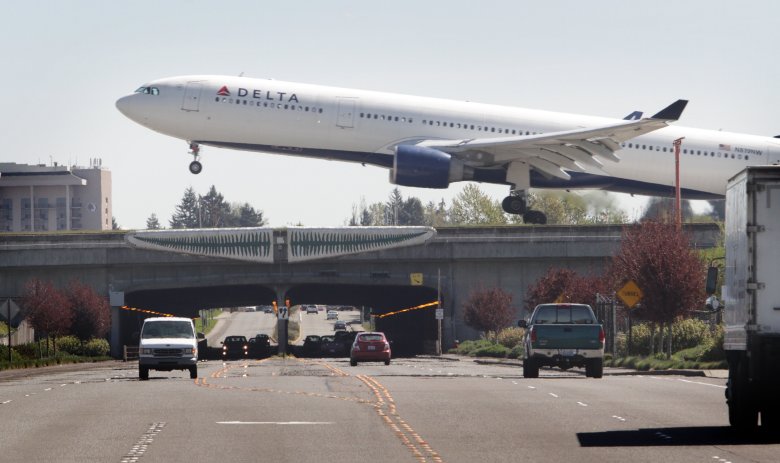
seatac

A Delta flight comes in for a landing at Sea-Tac Airport which had record passenger growth in June. (Ellen M Banner/The Seattle Times)

The day Leon Spencer made bail, he followed the instructions of the lawyer who posted it for him and stopped off at his post office box. Sure enough, there was a cashier’s check for more money than he made in a year as a Marine Gunnery Sergeant. Those days were long gone and so, he thought, was his career until he read the email from Carson Everett. There wasn’t much that fazed him anymore, not after Afghanistan, Iraq, and Syria, but he could still be impressed.

“Fuckin’ eh.” The six-foot tall, African-American Marine turned merc, turned “security consultant,” stared at the check in his hand and the note that came with it, which repeated Everett’s instructions to take the first flight to Seatac.

He visited his crappy apartment for the last time to pack a few things, noticing the bales of useless papers, magazines, and other junk he’d be happy to part with. Leon took everything that still had worth to him (which wasn’t much), and beat it out to O’Hare, happy to give Chicago the middle finger.

Continue reading

Almost Home

fog

© Mara Eastern

Charlie and Betsy Shaw and their eight-year-old son Andy made their way through the fog toward their flat, still in a daze after a special Sunday evening service at their church. The Japs had bombed Pearl Harbor in Hawaii. It was still so hard to believe. Betsy’s cousin Elwin was a Seaman First Class on the USS Arizona. Everybody was saying that Roosevelt and Congress weren’t going to keep us out of the war after this.

“I can hardly see where we’re going, Charlie.”

“We’re almost home, Hun. I know it’s been a hard day.”

Andy didn’t say anything, but he looked up at his parents searching for some kind of reassurance that his world hadn’t fallen apart. They both looked so lost.

“We’ve got to stop. I really can’t see though the fog. I think we’re lost.”

“How can we be lost?” Charlie didn’t want to admit he couldn’t see anything except fog and diffused light. “We’ve lived on this block for over ten years.”

Continue reading

Starving

broken fan

© Yarnspinnerr

“Raven, where am I?

“Jonathan, there’s a terrible famine here. You must save these people.”

“With what? All I have is an old-fashioned camera.”

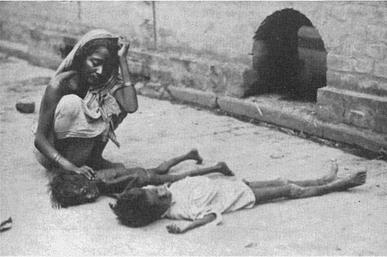
“The person who was supposed to photograph this tragedy is ill. By the time he recovers, the opportunity to show the world the horrors here in Bengal will be gone. You must take his place.”

Jonathan Cypher, a man out of time, turned away from the bent fan and stepped off the hotel porch. Seeing the three starving and dying children, he raised the camera to his face, focused, and pressed the shutter release.

bengal famine 1943

Victims of the Bengal famine of 1943. Copyright is or was held by The Statesman newspaper of Kolkata, India. According to that country’s Copyright Act of 1957, the image is now in the public domain (photographs are protected for 60 years from the date of publication), but it may still be under copyright in the United States.

I wrote this for the Rochelle Wisoff-Fields flash fiction writing challenge. The idea is to take the image above and use it as the inspiration for crafting a piece of flash fiction no more than 100 words long. My word count is 98.

To the best of my knowledge, the person who provided the photo is from India, so I wanted to start from there. The yellowish cast of the photo made me think of pollution or chemical warfare, so I decided to see about India’s history during World War Two, and if I could devise a fictional Nazi plot in 100 words. What I discovered was much worse.

You can read all about the Bengal Famine of 1943 by clicking the link, but the black and white pimage just above was part of a photo spread published in the Indian English-language newspaper “The Statesman” on 22 August 1943, and those photos, which made world headlines, spurred government action, saving many lives.

I decided to bring back Jonathan Cypher and Raven to illustrate that sometimes you just have to be in the right place, at the right time, with the right skills or tools in order to be a hero.

To read other stories based on the prompt, go to InLinkz.com.

The Too Close Encounter

alien ship

Found at Mindlovemisery’s Menagerie blog – No photo credit given

Captain Isaiah Morrison, for such had he once been called, late of the Confederate States Army, having found himself without a home or family, thanks to that damned Yankee Major General William Sherman and his “Scorched Earth policy,” had spent these past ten years in the Territories of the untamed West prospecting for gold (among other activities). His living was meager but sufficient, and now approaching middle-age, a time when men add distinction to the beginnings of waning vigor, he was riding his paint toward town in the hour before dawn to resupply and spend some few short hours in the bed of a hired woman.

The stars were brilliant above him and he stopped momentarily to appreciate the grandeur of God’s great masterpiece, spread before him in all its splendor, ancient, spinning fires contrast against the utter blackness of the infinite void.

Sentient indigenous experiment number 47 commencing. Approaching two mammalian life forms, sentient biped atop non-sentient, non-intelligent quadriped [query: could this be a mating practice].

Morrison was captivated by one star which did not match the pattern of the others. For one thing, it was moving against the flow of the constellations, for the second, it was growing larger, and finally, it was approaching his position.

Continue reading

The Next Treasure Dive

kites

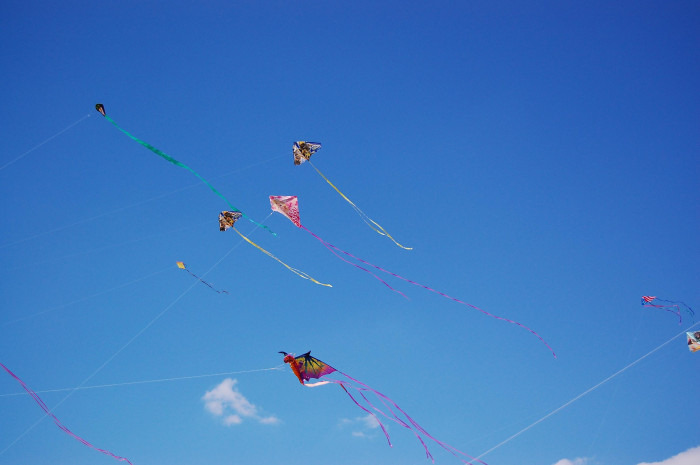
Photo credit: MorgueFile 2a4054c7afcb25f354a6cf9709d9b8a5

She was waiting for them when the two men pulled into the sports center’s parking lot in Pitt’s 1948 Model 135 Delahaye. It was a cool, cloudy Sunday in early April and Arvada’s annual kite festival was on the verge of being rained out.

“You sure know how to travel in style, Mr. Pitt.”

The rough-looking man with the salt-and-pepper hair stepped out of the antique car, his companion remaining inside. “You’ve got what we paid for?” He held out his right hand impatiently.

“Of course.” She proffered the aged, yellowed envelope.

The man took it, gently opened the flap, and briefly read the contents. “Yes, this is it. Just a few miles from here.” The adventurer looked up, but the lady in black was already walking away. They had both honored the agreement and now it was time to move on.

“Where to, Dirk?”

Pitt started the engine and backed out of his parking spot.

“You won’t believe it, Al. The Byzantium is hidden at the bottom of Standley Lake.”

“You’re kidding. Westminster is just a few miles from here. The lake’s less than 100 feet deep.”

“Easy retrieval job and America’s missile defense technology advances fifty years. Let’s go.”

I wrote this for the Flash Fiction for the Purposeful Practitioner writing challenge. The idea is to use the image above as the inspiration for crafting a piece of flash fiction no more than 200 words long. My word count is 199.

Given the image, I looked up “kite festivals” on Google and came up with the Arvada Kite Festival to be held in Arvada, a suburb of Denver, this coming Sunday, April 8th from 10 a.m. to 3 p.m. Unfortunately, the weather for Arvada this Sunday is predicted to have a 70% chance of rain, so not good flying weather.

I looked up Arvada and found out that among other things, it’s the home of the Cussler Museum of Antique Cars, created by author Clive Cussler.

I read a lot of Cussler’s books back in the day, including Raise the Titanic featuring his primary hero Dirk Pitt, who I assume is Cussler’s alter ego (they share a love of antique car collecting among other things).

Along with his partner Al Giordino, the NUMA Marine Engineer has had many adventures, usually involving sunken ships, lost treasure, high-tech and high adventure.

I thought the kite festival might be a good place for a clandestine meeting between Pitt and a courier, so I set it there. The “Lady in Black” is totally made up for convenience.

The nearest body of water of any size is Standley Lake which is in nearby Westminster and has a maximum depth of 96 feet. There is some Gold Rush history associated with Arvada, and loosely merged with the history behind the lake, I decided that sometime over a century ago, one of the men associated with creating the original reservoir buried what he thought was a fortune of illegally gotten gold there, but died before he could retrieve it (fortunately recording its location in his diary).

Turns out, it was really the element Byzantium (I pulled that from the plot of “Raise the Titanic”) which can be used to develop a defense system that shoots enemy missiles down using sound waves.

Yeah, that’s a lot of research for 200 words, but I had fun.

To read other stories (or to submit your own) based on the prompt, visit InLinkz.com (this writing challenge needs some love, so please consider writing a wee tale of your own and submitting it).

The Kaala Experiment

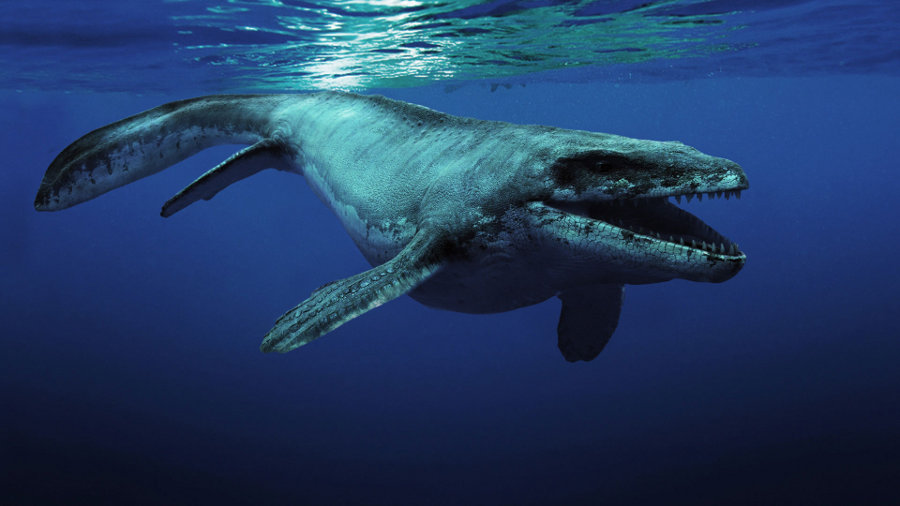
mosasaurus

A mosasaurus as seen in the 2015 film “Jurassic World”.

“Oh, crap.”

“What is it, Lynn?” At the helm of the Research Submarine Nereid, Marcus Clark scanned the immediate vicinity through the view port while everyone else in the cabin looked toward the navigator.

“It’s not the Megalodon we encountered yesterday. Not much bigger, but it reads differently.”

“Something even more minatory?”

“Cut with the erudite crap, Dr. Everett. That prehistoric shark was bad news enough.” Former Marine Gunnery Sergeant Leon Spencer hated being penned inside this tin can underneath hundreds of meters of ocean where his skills meant nothing.

“It’s unthinkable that your experiment should have gotten this far.”

Continue reading

The Praying Man

Gurara Waterfalls

Gurara Waterfalls © Samson Rohan Google Maps – 2017

“Daddy, who’s that man by the river? He looks strange.”

“Just some of the local color, Janet. Don’t pay attention to him. They all beg.”

“George, stop being racist. We’re here at Gurara Falls for a vacation. Nigeria is his country, not yours.”

George Dukes rolled his eyes. Thousands of miles from home and she was still nagging. He looked back and saw a couple walking toward the native. Probably felt sorry for him, the saps.

Buba the Hunter continued praying to his gods in this strange place as the two outsiders approached, a man and woman. The woman was speaking to him, but used the language so oddly.

“Please, you must come with us. You don’t belong here. We can take you home.”

He looked up. For two days, he had prayed to Gura and Rara for a way back to his village. Were these people their emissaries?

I wrote this for the What Pegman Saw writing challenge. The idea is to use a Google maps image and location as the prompt for creating a piece of flash fiction no more than 150 words long. My word count is 149.

Today, the Pegman takes us to Gurara Waterfalls in Nigeria. I looked it up on Wikipedia and discovered the falls were thought to have been discovered in 1745 by a Gwari hunter named Buba. The falls and river are believed to have been named after the two deities Gura and Rara.

In keeping with my recent science fiction stories The Devil from the Fire and Blood Libel, I decided to dislocate Buba in time, though not in space.

Today, the falls are a tourist attraction complete with a resort boasting a recreation center and seven-star hotel. I populated that hotel with modern “ugly American” tourists, but also with physicist Everett Carson and his companion, historian and linguist Aiyana Zheutlin (originally a character from my “Time Traders” books, written as a homage to the works of Andre Norton [the late Alice Norton]). They’ve come to take Buba to the phenomenon (out of public view in this wee tale) and back home.

To read other stories based on the prompt, go to InLinkz.com.

Blood Libel

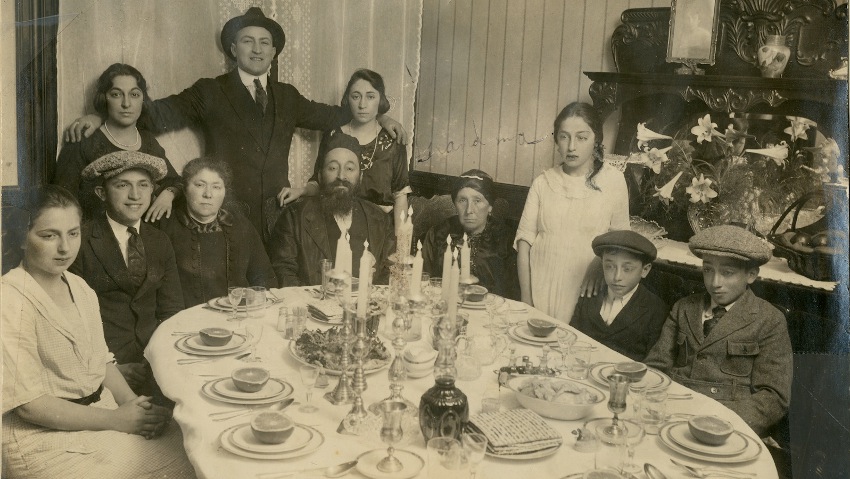
passover seder

Passover seder at the home of Rabbi Mayer Hirsch, San Francisco, circa 1920. (Courtesy of the Magnes Collection of Jewish Art and Life)

Klaus Buchner was running for his life. One minute, he was a guest at his friend Josef Steinbauer’s home expecting to experience his first Passover seder since he was a child. Now these insane fools were chasing him, screaming terrible insults in archaic German. Where did this damned desert come from? Why couldn’t he get a cell signal?

Martin Frederick had been hosting his family and close friends in his home for Good Friday, mourning the loss of their Lord Jesus Christ, his being betrayed by the damnable Jews some fifteen hundred and thirty-seven years prior, and now they were chasing one of them. He and his kind were no doubt responsible for the disappearances of six-year-old Hans Kruger and his sister Elsa, two years his junior. But this was nowhere near Magdeburg. There was no such terrain anywhere in Germany. How had they gotten here?

Both Klaus and Martin, men worlds and centuries apart, felt as if reality had abruptly changed from light to dark, from liquid to solid. How could they be here and who were the men Martin was following and who were pursuing Klaus?

Continue reading

The Devil from the Fire

desert

Found at the Orogold Store Locator website

The horse came back alone.

Every morning at dawn, Mr. Sebastian Cooke saddled and mounted his stallion and rode the perimeter of the ranch. His father and grandfather before him had owned and worked this unlikely land, an island over a thousand nautical miles east of New Guinea. In the year of our Lord 1879, he was the third generation of Cookes to farm and ranch here, hiring the indigenous peoples for labor, who by the way proved to be excellent equestrians.

Every morning her husband rode out for precisely one and one-half hours, and was always back home in time for breakfast. Every morning except for today.

“We found King by the corral, Mrs. Esther.” Haych, the foreman, held the horse by his reins, as if presenting him to Esther Cooke as a gift. “Me, Kaiki, and some of the other boys are riding out to go look for him. My wife Lehiwa and her sister Riria will stay with you, Mrs.

“Thank you, Haych. You are a good man. I’m sure my husband is alright.” She could feel hot tears behind her eyes but did not want to cry in front of the help, though having lived here for a decade now, she felt more like they were family. Sebastian had grown up on the island, but she was a Londoner originally. Her family had lost its fortune, and Father had become taken with the idea of building a new life in Australia. Their ship had sustained damage in a storm and they had to make berth at Cooke’s Island for repairs. Esther had been just 18  when she fell in love with Sebastian, who was 15 years her senior.

She watched Haych and his kinsmen ride out, leaving King in the hands of the capable stable boys, and said a prayer for the safety of all.

Continue reading