Another Troll Has Surfaced

hater

Screenshot taken from Fandango’s blog

Yeah, that’s a real comment from a troll on Fandango’s blog and it’s pretty shocking. I suppose stuff like this goes on all the time, but I don’t see a lot of this unless I deliberately go looking for it.

After a brief Google search, I discovered you can report such comments to WordPress. You can also blacklist people and, in an extreme case, make your WordPress blog private so people have to ask permission to view your content (sort of self-defeating for a notorious blabbermouth like me).

I sometimes suspect these trolls aren’t actual people and that they’re operating from fake accounts, but as it turns out this guy is real (I assume it’s a guy based on the comment plus some of the content on his blog). If you’re curious, here’s his About, though I’d recommend not knocking on his door (he’ll probably get a “pingback” since I posted the URL).

Remember, any body who can blog probably will, so opinions in the blogosphere widely vary.

Quoting: Soften Criticism

pliskin

Rabbi Zelig Pliskin – Found at the website promoting the book “The Light From Zion.”

If someone is critical of you in a harsh tone of voice, try telling them the following:

“I appreciate your strong feelings about the matter, but I would appreciate the comments more if they were expressed more pleasantly.”

From Rabbi Zelig Pliskin’s book Gateway to Self Knowledge, pp.184-6

Given all of those shrill voices in social media and occasionally in real life, this is a much needed reminder that we can ask folks to turn down the volume a bit.

Quoting: Love Criticism

pliskin

Rabbi Zelig Pliskin – Found at the website promoting the book “The Light From Zion.”

Work on developing a love for accepting criticism. When you have a sincere desire to grow and develop, you will appreciate the opportunities that arise for further growth and development.

Criticism expressed with profound love and concern is easier to handle than criticism expressed with anger or condescension. But if what is said to you is beneficial for you, accept it regardless of how it is said.

-from Rabbi Zelig Pliskin’s Gateway to Self Knowledge, pp.184-6

This one’s particularly difficult, because while some people criticize you in a sincere effort to help you improve, others do so as a method of tearing you down. That said, even the latter can sometimes be useful, but only if you can accept the criticism without blame or shame.

Here We Go Again: Comicsgate

superman

A public service announcement published in a DC comic book in the early 1960s

I’ve heard of this thing called Comicsgate, and after doing a bit of reading, discovered it’s pretty much the same sort of critter that launched the efforts of the Sad Puppies a few years back.

Allegation: The mainstream comic book industry (DC, Marvel) is overrun by Social Justice Warriors (SJWs) forcing their very narrow agenda down the throats of all comic book readers, no matter how totally unrealistic it is, so we independent comic book creators will fight back by creating more classic heroes of our own.

You can find out more about this perspective by following Jon Del Arroz’s twitter feed, particularly THIS and THAT.

Counter-allegation: Conservative, white, racist trolls want to destroy all participation of strong women heroes, people of color, LGBTQ+ writers, artists, and characters, and all other marginalized and vulnerable populations in comic books so comics are totally owned by white people, and we have to stop them.

You can read about Bill Sienkiewicz rebuttal at “The Mary Sue” (a fairly biased publication) as well as on his twitter feed HERE.

Continue reading

Quoting: Worry is Created by Self-Talk

pliskin

Rabbi Zelig Pliskin – Found at the website promoting the book “The Light From Zion.”

The more you engage in joyful and grateful self-talk, the more your mind will be free from worry.

Some people tell themselves, “It’s my nature to worry.” But the truth is that no one is born a worrier. A person might have started worrying at a young age and have many early memories of worrying. A person might find it very difficult not to worry. But this isn’t someone’s basic nature. Worry is essentially self-talk about something negative that you hope won’t happen. You feel anxious and distressed about the possibility.

One way out of the worry pattern is to think of potential solutions. Whenever you worry about something, imagine three or more alternate outcomes.

A happy and joyful person has mastered the art of thinking in patterns that create happiness and joy. Let this be your mind.

from Rabbi Zelig Pliskin’s book: Conversations With Yourself, pp.258-9

The Sad Puppies vs. the Hugo Awards OR Being in the Crossfire in the Fight for Significance

quote

It’s easy to be intimidated by mean people. See through their mask. Underneath is an insecure and unhappy person. They are alienated from others because they are alienated from themselves.

Have compassion for them. Not pity, not condemning, not fear, but compassion. Feel for their suffering. Identify with their core humanity. You might be able to influence them for the good. You might not. Either way your compassion frees you from their destructiveness. And if you would like to help them change, compassion gives you a chance to succeed.

-from Rabbi Zelig Pliskin’s book Happiness,p.179

I’ve already talked about Toxic Fear, the extreme Us vs. Them mentality in our nation that begun in during the Obama administration, and that has been greatly exacerbated during the Trump administration, all in relation to the WorldCon implosion and redemption, particularly given THIS and THAT point of view.

However, it was the quote from Rabbi Pliskin this morning that gave me a different perspective on Sad Puppies vs. the Hugo Awards thing.

Part of the inspiration for crafting this essay comes from fellow blogger Joy Pixley’s report of her attending WorldCon 76. She had a pretty good time, and in my discussions with her, she didn’t see any (or at least not much) evidence of bias at WorldCon. However, she did notice a number of Christians and religious Jews in attendance, and no one mobbed, beat, harassed, or otherwise attacked them for their faiths.

Now speaking of bias, it seems female authors swept the Hugo Awards for the second year in a row. Interesting, and statistically a little unlikely, but as I said before, the Hugo Awards are absolutely not designed to be fair and objective.

Continue reading

Quoting: Get Beyond the Mask

pliskin

Rabbi Zelig Pliskin – Found at the website promoting the book “The Light From Zion.”

It’s easy to be intimidated by mean people. See through their mask. Underneath is an insecure and unhappy person. They are alienated from others because they are alienated from themselves.

Have compassion for them. Not pity, not condemning, not fear, but compassion. Feel for their suffering. Identify with their core humanity. You might be able to influence them for the good. You might not. Either way your compassion frees you from their destructiveness. And if you would like to help them change, compassion gives you a chance to succeed.

-from Rabbi Zelig Pliskin’s book Happiness,p.179

Quoting You Are Not At Risk

pliskin

Rabbi Zelig Pliskin – Found at the website promoting the book “The Light From Zion.”

Fear of failure is a prime cause of anxiety. People think, “If I don’t succeed, I am a worthless failure.”

Someone who fears failure is not willing to take the risks that are an essential ingredient in every new undertaking. This prevents him from taking action in many situations in which he could accomplish a great deal.

If someone accepts that his intrinsic worth as a person is never at risk ― even if he does not succeed at a given task ― then he is likely to try much more to accomplish.

-from Rabbi Zelig Pliskin’s book “Gateway to Happiness,” p.131

Every morning, I get an email from the Jewish educational organization Aish.com containing, among other things, quotes like this one. Although I’m a Christian, I tend to “resonate” more with Jewish theological perspectives. Since lately, I’ve been discussing some rather negative trends in the world of SF/F relative to events at the recent WorldCon convention in San Jose, I thought I should provide a counterbalance. We should define ourselves by our best qualities, not by who or what we oppose.

So I thought I should start providing a quote from Rabbi Zelig Pliskin on this blog every morning that I’m able (next week, I’ll be taking a trip and may be offline for a few days). This is probably more in line with my religious blog My Morning Meditations, but I think it’s needed here.

Perhaps it will convince some people that the world of religion isn’t always evil or hateful, and that there may be a profound wisdom, kindness, and joy inside the hearts of many who have faith in a power greater than human beings.

It’s Not a Scarecrow

scarecrow

© Anurag Bakhshi

“You know, I don’t think the flower bed is in danger from crows, Lindsey.” Kurt stood with his six-year-old daughter admiring their handiwork.

“I know that, Daddy. I just thought the flowers could use some company when we’re not around.” She stood, hands on hips, pride written all over her face.

“Well, you sure made good use of those old clothes we were going to donate to the thrift store.”

When she didn’t answer, he looked down and saw tears in her eyes. Kneeling, he put his arms around her and Lindsey held onto him tightly. “I know you miss her.”

“Why did Grandma have to die?”

“That’s why you wanted to make this, didn’t you? So we wouldn’t give away her clothes.”

“I miss her.”

“It’s okay. I miss her, too. We’ll keep anything of hers you want. I promise.”

I wrote this for the August 19th edition of Sunday Photo Fiction. The idea is to use the image above as a prompt for crafting a piece of flash fiction no more than 200 words long. My word count is 141. I know. I usually push the word count to the limit, but I didn’t need so many this time around.

To read other stories based on the prompt, visit InLinkz.com.

Death Unmasked: A Book Review

death unmasked

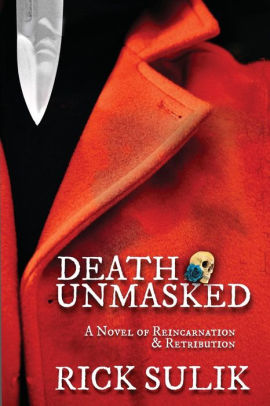
Cover image of the novel “Death Unmasked” by Rick Sulik

Disclosure: Almost three months ago, author Rick Sulik asked me to review his 2015 novel Death Unmasked. We had an email discussion and I agreed with the understanding that I would provide an honest review, no holds barred. I subsequently received a kindle edition of the book and finished reading it yesterday.

You should probably know two things about Rick before we get started. He’s a retired police officer, having served on both the Houston and Pasadena (Texas) police forces. He believes in reincarnation. Both of these figure prominently in this novel.

Imagine that you’re a homicide detective in Houston and nearing retirement. You’re a loner, both on the force and in your personal life, and yet there is this longing in you for connection.

Then, little by little, you begin to recall experiences from a past life, your previous name, your wife, how you died, and how she was raped and murdered.

Continue reading