Whose Voice Is It, Anyway?

men describe women chart

Found at Electric Lit online magazine (click on the image to see a larger version)

The chart posted above was acquired from the article If You’re Not Sure How a Male Author Would Describe You, Use Our Handy Chart over at the Electric Lit online magazine. As I understand it, the chart was created as a gag, and I found it pretty funny. In fact, I toyed with the idea of writing a story using the chart just as a joke.

Then it took on a life of its own on twitter, as reported at the same magazine, in an essay titled ‘Describe Yourself Like a Male Author Would’ Is the Most Savage Twitter Thread in Ages.

Apparently a male author claimed he could write authentic female characters, and was immediately challenged by Gwen C. Katz (@gwenckatz). A combination of hilarity, hostility, and moral angst ensued. I should say that after writing most of this missive, I noticed these articles were written last April, but they’ve showed up in my gmail inbox from Medium in the last couple of days. Wonder what the message is?

I decided to write about this because I’ve gotten a hold of a review copy of the To Be Men: Stories Celebrating Masculinity anthology edited by Sirius Métier and published by Superversive Press. It was published digitally about two weeks ago (as I write this) and seems to be doing pretty well, both relative to its Amazon reviews (five so far, and all five star ratings) and in terms of sales.
Continue reading

Encouragement, Discouragement, and the Impostor Syndrome

impostor syndrome

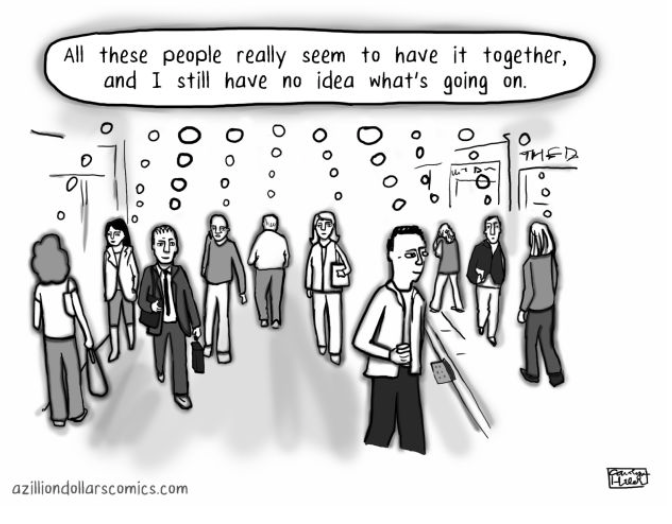
azilliondollarscomics.com

Every day the Medium Daily Digest appears in my Gmail inbox, giving me the opportunity to read articles from various progressive voices. If you’ve read other of my social commentaries on this blog (not the hottest of topics among my readers based on the statistics, “likes,” and comments), you know I sample a wide range of opinions in an effort to keep informed.

Much of the time, it isn’t easy reading the opinions of people who don’t like you, or at least, don’t like what they think you stand for, but I don’t want to spend all my time reading and listening to viewpoints with which I already agree.

That’s why the article We Need to Redefine Success for Writers by James Ardis came as a bit of a surprise.

He certainly isn’t widely published, and his advice seemed fairly generic, but I was compelled by the source. Usually, it is the more socially and politically conservative authors, typically who operate in the speculative fiction genre, who are the ones suggesting indie publishing.

The Ardis essay was the sort of “cross-pollination” I’ve always hoped was possible but feared was doomed from the outset.

Continue reading

Can There Be Intersectionality Between Masculinity and Feminism?

ban men

“Ban Men” image found at Campus Reform website

I find myself writing more frequently about social issues on this blog for whatever reason. I probably shouldn’t, especially since I’m white, male, straight, cisgender, old, conservative (relative to liberal states – in relation to Idaho, I’m probably a moderate), and religious.

In other words, based on that collection of labels, I’m a pretty terrible human being, at least among a certain set of demographics.

I’ll say at the outset that the closest article I’ve written to this one in terms of theme is Injured and Dangerous about a group of hostile, aggressive, and potentially lethal men called Incels. Click the link I provided if you haven’t heard of them and prepare to be terrified.

Earlier today, I read an article from Campus Reform called Feminist prof doubles-down on call to ‘hate men’ written by Toni Airaksinen. She was referencing an opinion piece written by Suzanna Danuta Walters for the Washington Post titled Why Can’t We Hate Men?.

Yikes.

Continue reading

Ghostbusters, Ocean’s 8, and “Gender Flipping”

Ocean's 8

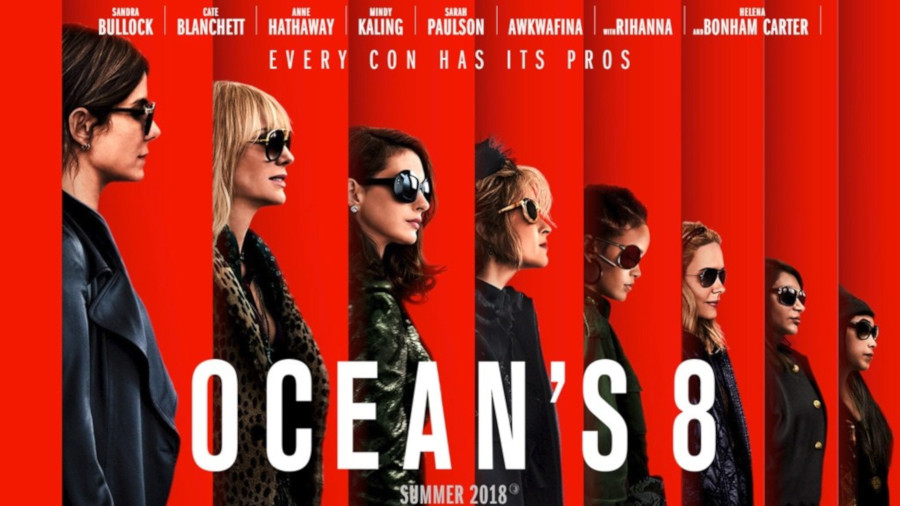
Promotional poster for the 2018 film, “Ocean’s 8”.

I think I may have seen the 1960 film Ocean’s 11 at some point decades past, or at least parts of it. It had an all-star cast which included Frank Sinatra, Dean Martin, Sammy Davis Jr. and Peter Lawford. The sole primary actress featured was Angie Dickinson, and the movie (as I understand it) set the bar for all big-time heist movies.

It’s been remade and “sequelized” (if that’s a word) numerous times in the early 21st century as you can read here. Those movies also had an all-star cast which included George Clooney, Brad Pitt, Matt Damon, and Don Cheadle. Catherine Zeta-Jones seems to be the primary female lead in these films.

I think I’ve seen parts of some of them years ago when one or the other of my kids were still at home and watching them, but I didn’t have an interest in viewing any of them.

But why am I telling you all this and why should you care?

Continue reading

Who is a Nazi and Why Should I Care?

hitler and staff

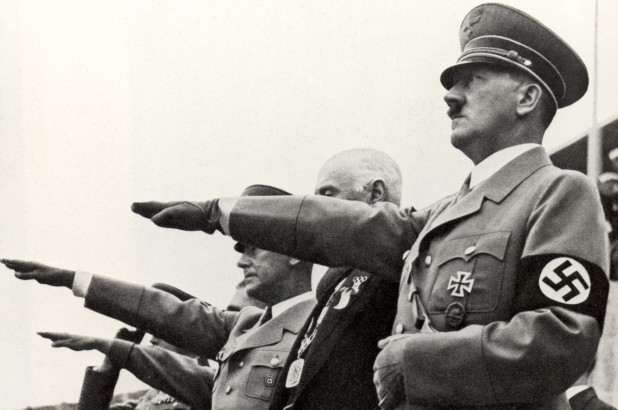
Adolf Hitler and his staff salute during the opening ceremonies of the XIth Olympic Games on Aug. 1, 1936, in Berlin, Germany. Getty Images

Nazi:
noun
1. historical
a member of the National Socialist German Workers’ Party.
adjective
1. of or concerning the Nazis or Nazism.

That’s the dictionary definition of “Nazi.” Of course, there’s a lot more to it, and to get the details, please visit the Wikipedia pages for Nazism and The Nazi Party.

Why am I bringing this up?

I read a blog post recently where apparently, speculative fiction author N.K. Jenisin called science fiction author Jon Del Arroz a Nazi on twitter. This isn’t the first time I’ve heard of a conservative being equated to a Nazi, but does this really mean Mr. Del Arroz belongs to the Nazi Party?

Not that I can tell. According to blog posts such as this one and his authoring articles like this one at the online magazine The Federalist, he is certainly a political conservative, but again, does that make him (or any other conservative) an actual Nazi?

Continue reading

Injured and Dangerous

Alek Minassian

Alek Minassian, the man accused of killing ten people with a van in Toronto April 2018.

I must be living in a cave because I’ve never heard of Incels before.

According to Wikipedia:

Incels (a portmanteau of “involuntary celibates”) are self-identifying members of an online subculture who define themselves as unable to find a romantic or sexual partner despite desiring one, a state they describe as inceldom. Self-identified incels are mostly white, male and heterosexual,.Discussions in incel forums are often characterized by resentment, misanthropy, self-pity, self-loathing, misogyny, racism, a sense of entitlement to sex, and the endorsement of violence against sexually active people. The Southern Poverty Law Center described the subculture as “part of the online male supremacist ecosystem” that is a member of their list of hate groups,and self-described incels have committed at least four mass murders in North America.

Holy crap. That’s terrifying.

I follow the blog of author Steven Barnes which is how I came to read his article #NOTALLHUMANS (No, I’m not shouting, he has the title in all caps). I think I’ve heard the term “incels” before, but this was the first time I found out what it meant.

So naturally I went to his source material at We Hunted the Mammoth, which describes itself as:

Specifically, this blog focuses on what I call the “New Misogyny,” an angry antifeminist backlash that has emerged like a boil on the ass of the internet over the last decade or so. These aren’t your traditional misogynists – the social conservatives and religious fundamentalists who make up much of the far right.

These are guys, mostly, who range in age from their teens to their fifties, who have embraced misogyny as an ideology, as a sort of symbolic solution to the frustrations in their lives – whether financial, social, or sexual.

Okey dokey.

Continue reading

Should We Burn Ray Bradbury’s Books?

f451

Book cover for Ray Bradbury’s novel “Fahrenheit 451.”

I just read an essay by Katie Naum at the Electric Lit website called The New ‘Fahrenheit 451’ Movie Fails to Reckon with Bradbury’s Racism.

First of all, I had no idea HBO had remade the film adaptation of Bradbury’s classic novel (I have seen the 1966 film version, and of course I’ve read the novel a number of times). Secondly, Ms. Naum and I seem to have read very different novels titled Fahrenheit 451 and authored by Ray Bradbury.

Here’s what I mean, quoting from Naum’s essay:

I still have that same copy of Fahrenheit 451 — a trade paperback edition printed circa 1993, whose creased cover and flammable pages are already yellowed and crumbling. I reread it prior to watching the new film version, starring Michael B. Jordan as protagonist Guy Montag, and Michael Shannon as his boss — and ultimately, the bad guy — Captain Beatty. The novel was largely as I remembered it, until I got to the end. At the back of the book, there are a few pages Bradbury wrote decades later, in 1979, where he gets into what he thinks the real threat to literature is. I’d forgotten that reading this coda as a child always left me feeling uncomfortable, in a way I couldn’t fully interpret yet.

He is angry at a “solemn young Vassar lady” who asked whether he might write more female characters. He is angry at other readers who disapprove of how he wrote “the blacks” in one of his stories. He is angry at “the Irish,” “the Chicano intellectuals,” at “every minority” that has some perspective on his stories at variance with his. In his own words, every last one of them “feels it has the will, the right, the duty to douse the kerosene, light the fuse…. Fire-Captain Beatty, in my novel Fahrenheit 451, described how the books were burned first by minorities, each ripping a page or a paragraph from this book, then that, until the day came when the books were empty and the minds shut and the libraries closed forever.”

Sorry for the lengthy quote, but I wanted to provide enough specific information to convey the issue at hand.

Continue reading

Comic Books Have Gone Crazy

FF3

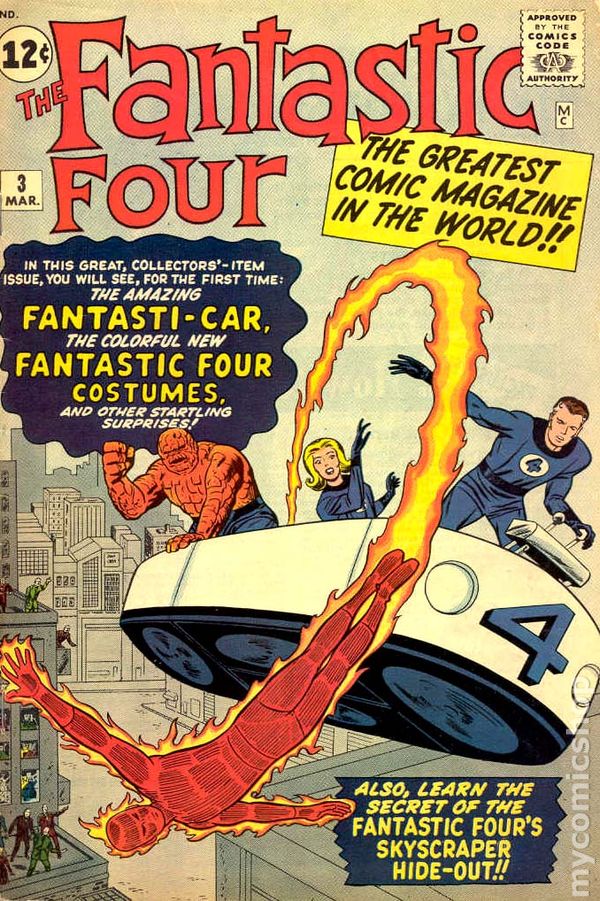
The cover of The Fantastic Four issue 3 from 1961

“I’ve kept a limited number of comic books from my youth, ranging from the 1960s to the 1980s, and occasionally take a few out and read them. I’m not really into comic books anymore, especially the current titles, and for a lot of reasons.

Originally, I started collecting them in the late 1960s when I was in Junior High, and I’d been reading them since I was old enough to read because they were so much fun. In the ’60s and ’70s, I was mainly into Marvel comics (Fantastic Four, Spider-Man, the X-Men and so on), but I rediscovered DC in the late 80s when they did the first reboot of their titles.

More recently, I used my local public library system and checked out Vertigo DC graphic novels such as V for Vendetta and The Watchmen as well as the Sandman (the Wesley Dodd costumed hero, not the other guy) because they were more edgy and I was an adult. In the case of the first two titles, I wanted to understand the basis for the films they became, and in the Sandman’s case, I just enjoy the character and the 1930s vibe.

I’ve kept in touch with how comic books have been morphing in more recent years, and generally give them a wide berth. The superheroes I once admired and who taught me about courage, innovation, and adventure, had become unrecognizable as well as unoriginal. Numerous reboots later, all of the old villains and storylines had been rehashed ad nauseam, just like what we see in both the film and television industries, and I don’t intend to pay for the privilege of being bored.

Continue reading

Be Careful What You Tweet

roseanne barr

BEVERLY HILLS, CA – MARCH 23: Roseanne Barr at the “Roseanne” Press Conference at the Four Seasons Hotel on March 23, 2018 in Beverly Hills, California. (Photo by Vera Anderson/WireImage)

Warning: This is a commentary, not a piece of fiction. If you came here for the fiction, this brief essay may not be for you.

I’ve been thinking a lot about the Roseanne Barr major twitter gaffe that got her show cancelled, the whole Colin Kaepernick “taking the knee” protests, and how ABC and the NFL have respectively responded to them, all in terms of Free Speech Rights.

First let’s get something out of the way. What’s the short definition of Free Speech Rights? According to Wikipedia, it is:

The First Amendment of the United States Constitution declares, “Congress shall make no law respecting an establishment of religion, or prohibiting the free exercise thereof; or abridging the freedom of speech, or of the press; or the right of the people peaceably to assemble, and to petition the Government for a redress of grievances.

It’s actually a lot more complicated and nuanced than that, but let’s roll with what I’ve just quoted.

Continue reading

Steampunk! An Anthology of Fantastically Rich and Strange Stories: A Book Review

steampunk

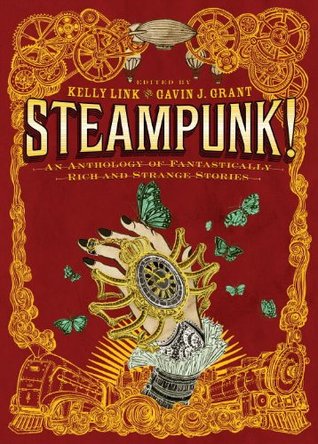
Since I’ve been toying with writing a few steampunk stories of my own, I decided I should get a better feel for the genre. To that end, I searched my local library system for what would be considered a definitive collection of such tales. At the top of the list was Steampunk! An Anthology of Fantastically Rich and Strange Stories, edited by Kelly Link and Gavin J. Grant.

I didn’t know what to expect, so I dived in. Well, that’s not true. I did look up several definitions of “steampunk” online, but then while reading, I started wondering if I hadn’t gotten my wires crossed.

While the stories did seem to either take place in the late 19th century or otherwise use steam and gear related technology, most of the missives didn’t seem to capture “steampunkness.”

Continue reading