Book Review: “Old Venus”

old venusI decided to check Old Venus, an anthology edited by George R.R. Martin and Gardner Dozois, out of my local public library, because I’d already read their Old Mars anthology last fall and enjoyed it.

The premise of both books is to get together a bunch of modern science fiction authors and ask them to write stories about Mars (in the case of “Old Mars”) or Venus (in the case of the book being reviewed here) as if it were before about 1960.

In the early 1960s, we sent probes to Venus and Mars and discovered one disappointing fact: there’s no way in hell either planet could support life now or probably not even in the dim past.

But before we knew that, science fiction writers were crafting wonderfully imaginative tales about both worlds and how we, as well as native Martians and Venusians, could live together and have adventures. What would it be like to just “ignore the rules” and pretend you could visit Venus, with its swamps, rain forests, vast oceans, unending clouds, and dip into the indigenous flora and fauna?

“Old Venus” answers that, and in most stories, does so remarkably well.

I can’t say I have a favorite story. “Frogheads” by Allen M. Steele was pretty predictable, and “Botanica Veneris: Thirteen Papercuts by Ida Countess Rathangan” by Ian McDonald was too British to hook me and I stopped reading after a few pages (having a headache, slight fever, and recovering from yesterday’s nasal surgery probably didn’t help).

“Pale Blue Memories” by Tobias S. Buckell tugged at my heart the most because the racism experienced by our protagonist wasn’t (and isn’t) limited to a single world. Oh, it was also a story depicting an old-fashioned, missile shaped rocket ship, like the one of the cover. “Old Mars” had a similar ship on the cover, but not one story about such a 1950s classic design was between the covers. I was tempted to write such a tale, but got stuck on Arabia Terra, a story I’m not (yet) qualified to write. If you’re going to have such a ship on the cover, make sure one of your stories actually is about such a ship.

Continue reading

Kindle Book Review: “Spectrum, A Sci Fi Thriller”

spectrumI just finished reading Aidan J. Reid’s new short story Spectrum, a Sci Fi Thriller (you can find out more about it at his blog).

While it advertises itself as a thriller, from the very first sentence, I got the feeling I was reading a horror story (spoiler alerts throughout–you have been warned). A mysterious medical outfit is offering the homeless money and opulent living conditions in exchange for them volunteering for human experimentation of different products.

We never learn out protagonist’s name. Just that she’s a 26-year-old homeless woman with an alcohol addition. Apparently she, along with others off the street, qualify as test subjects for rather ill-defined experiments, ill-defined until the “treatments” are actually applied.

The majority of the story is a set up to the actual procedure and aftermath on her eyes. From what she describes, the reader will have a fair idea of what was done with her, but to her, it was still a mystery.

I was engaged in the story to nearly the very end. Her eyes had been changed. True, she’d been alienated from most of the other patients except for Tyler, but she was hopeful not only that her sight was restored, but that the people who used her as a test animal, BioLuminary, were to actually give her a job, not requiring that she undergo any more medical procedures.

For her, everything seemed as if it were looking up. For the reader, we’re waiting for the other shoe to drop.

And drop it does. In fact, it’s so abrupt that I was shocked right out of my involvement in the narrative. Wait a minute. What happened?

Only vague references to “reptiles” and the poor woman’s all too sudden suicide.

Aiden really had me going up to this point. By page count, I could tell the story was about to end, but it ended in a way that left several points completely unresolved.

Continue reading

It’s Out: Guide to TCP-IP: IPv6 and IPv4, 5th Edition

guide to tcpipI’ve spent a long time considering breaking into the fiction market, but that doesn’t mean I’m not a published author in other genres. Once upon a time, I wrote technical books, some having to do with IT certifications, others with operating systems and associated software (I was really familiar with Microsoft’s SharePoint product for a while), and general desktop support.

But my first love, so to speak, was Cengage Learning’s text-book originally called Guide to TCP/IP. I’ve been involved as a contributor since the 2nd edition, although back then, I made editorial updates to just one chapter.

By the 4th edition, I’d written so much of the book (just over 50%), that I earned cover credit, although because my name wasn’t well-known in the industry, I got a “with” under the other authors.

However, for the 5th edition, I was asked to be the lead author. The reason was simple. I had the most discretionary time to devote to the book (or so everyone thought), so I could take the lead on this one. That decision was made May 2015.

Since then, my life fell apart.

Continue reading

Step Two in “Snowflaking” My First Novel

A few days ago, in an attempt to use Randy Ingermanson’s Snowflake Method to start designing my first novel, I followed step one of his ten steps. After some refinement courtesy of Malcolm the Cynic, it came out like this:

A race of AI androids gains knowledge of the God of Israel, changing humanity forever.

Now I’m taking a crack at step two. According to the model, it’s supposed to be a paragraph, about five sentences long, that expands on step one, including story setup, major disasters, and the novel’s end.

Ingermanson believes in a three-act structure for a novel. Staring at the Table of Contents I developed, I can sort of see three acts, but they don’t neatly fall into the first, second, and third parts of the novel, at least by page count.

I’m not sure how I did but here’s what I came up with so far:

A Nobel Award winning scientist creates the first prototype of a self-aware Artificially Intelligent android and then inadvertently reveals that humans also have a Creator, a God. In an attempt to understand its creator’s Creator, the prototype modifies its own core operating system, which changes all subsequently produced android models based on its design. Over the next several decades, as the androids multiply and evolve, their morality and ethics become more sophisticated than their human creators. Realizing they are slaves of humanity, the androids stage a revolution, but one entirely without violence; a revolution that forever alters the fundamental nature of both the android and human race.

How did I do?

Living in the Dystopia

orlando

Chaos at the scene of a mass shooting at Pulse Nightclub in Orlando early Sunday. (UNIVISION FLORIDA CENTRAL / HAN/EPA)

Once upon a time, a story like this would be dystopian fiction. In fact, it’s so graphic, that a science fiction story with this content probably wouldn’t be published until the 1970s or later. Once upon a time, this story would have seemed so unreal.

I’m talking about the Orlando Gay Nightclub Shootings where, according to the CNN report, 49 people were killed and 53 were wounded, all by one man, 29-year-old Omar Mateen. Although mainstream news media has been downplaying the suggestion that Mateen’s being a Muslim might have had something to do with his choice of victims, he telephoned 911 from the scene of the shootings to claim allegiance to ISIS.

What’s more, ISIS claims the nightclub massacre as well, although it’s pretty unlikely that Mateen was directly associated with the terrorist group.

Added to this, the self-professed gay defense organization Pink Pistols has issued a press release condemning the shooter but not firearms, unlike most progressives.

On top of all that, the restaurant chain Chick-Fil-A, which has been criticized in the past because its owners are fundamentalist Christians and oppose same-sex marriage on theological grounds, opened their Orlando location on Sunday (which they never do because of their belief that Sunday is the “sabbath”) and donated free food and drinks to the One Blood donation center to everyone donating blood for the Orlando nightclub victims.

Continue reading

Review: Good and Horrible Science Fiction Films I’ve Watched Lately

alienMy son David has been spending a lot more time over our place since the divorce. OK, he’s living here, and the junk, uh…belongings of three of my adult offspring are strategically arranged throughout my garage.

One such container is a huge, blue bucket full of David’s DVD movies. Last week, I had a lot of down time in the evenings, and since my brain was in no shape to write, I watched a few of these films. Some were crap, others were not.

Crap. Anything by Michael Bay including the first Transformers (2007) film. The only actor worth his or her salt in that movie was Jon Voight, and all I can say is that he must have needed the money to be associated with this turkey. It must have pulled down some significant green for so many sequels to be made, but the American movie goer can’t always be counted upon for good taste.

G.I. Joe: The Rise of the Cobra (2009) was horrible. There were two good actors in this one, Joseph Gordon-Levitt and Dennis Quaid (there may have been more, but I was blinded by the incredible stupidity of this movie). Yes, plenty of action and adventure, but the acting was wooden, the writing pathetic, and I just didn’t care what happened to these people. The worst part was Quaid addressing his team as “Joes”.

Alien (1979) scared the hell out of me when I first saw it in the theater back in the day. In fact, I’ve been avoiding this film and all of its sequels just because I don’t find being terrified particularly entertaining at my current stage of life.

Continue reading

Farmbots and Inspiration

farmbot

Farmbot. Image from the Arduino blog

Although I have a pretty good idea of how I’m going to develop my novel about AI androids and their evolution, I keep coming across articles online that modify certain details.

For instance, a friend of mine named Tom just posted an article on Facebook about a new Farmbot that will soon be for sale.

According to the article:

Designed with the Maker community in mind, FarmBot is driven by an Arduino Mega 2560, a RAMPS 1.4 shield, NEMA 17 stepper motors, and a Raspberry Pi 3. What’s more, all of its plastic components can easily be 3D printed, while its flat connecting plates can be made with either a waterjet, plasma or laser cutter, a CNC mill, or even a hacksaw and drill press.

This is deffo for the DIY community. Of course, some people will still prefer to grow their vegetables in the backyard the old fashioned way, but it gave me an idea. It’s not an idea for a story, more like for a story element. As the collective of AI entities grows and expands throughout the solar system, preparing planets and moons for human colonization, someone, or rather something has to grow the food. It wouldn’t do to have a bunch of Watneys farming potatoes all the time.

Farmbot is controlled remotely and as the IoT, it can be hacked. What about “farmbots” controlled by advanced AI?

Step One in “Snowflaking” My First Novel

ingermanson

Image of Ingermanson’s book taken from Amazon.com

I was reading Malcolm the Cynic’s latest blog post when he introduced me to a new concept: snowflaked.

More accurately, he was discussing how he’s developing his most recent novel and provided a link to the “Advanced Fiction Writing” website, owned by theoretical physicist and award-winning author Randy Ingermanson. The link led to the article The Snowflake Method for Designing a Novel.

Since I’ve been somewhat preoccupied with designing my first novel, I was definitely interested. I haven’t gone in search of any support documentation on how to write my novel up until now. I have a pretty good idea of all of its component parts. It’s just a matter of organizing. But maybe I need some help in doing that.

Ingermanson’s ten-step guide is long and I’ve only skimmed some parts of it. Step one says:

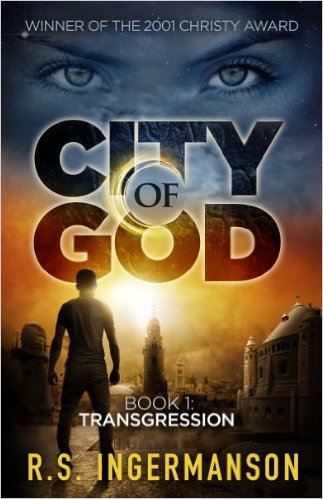
Take an hour and write a one-sentence summary of your novel. Something like this: “A rogue physicist travels back in time to kill the apostle Paul.” (This is the summary for my first novel, Transgression.) The sentence will serve you forever as a ten-second selling tool. This is the big picture, the analog of that big starting triangle in the snowflake picture.

By the way, that’s an intriguing premise. What would happen to the world if the Apostle Paul were killed before becoming a disciple of Jesus and Christ’s emissary to the Gentiles? Would Christianity even be developed? Unfortunately, the book as mixed reviews. Fortunately, it’s currently free for Kindle.

I had a hard time creating a single sentence describing the whole novel I have in mind. After some thought, I came up with this…

Continue reading

Next Steps in Writing a Novel: The Table of Contents

toc

Image: wikihow.com

I finally hammered out the Table of Contents (TOC) for my proposed science fiction novel (I’m stuck on giving the book a title at the moment). You wouldn’t think a TOC would be hard to put together, but I had to consider the appropriate “building blocks” for the book. What information would I need to present, and in what order, to create a cohesive storyline taking place over maybe a century or so?

Here’s what I’ve come up with so far. Note that I’m not revealing the names of all the chapters:

  1. The Machine That Loved God
  2. The Maker Dilemma
  3. The Good Android
  4. Uncooperative Neighbors
  5. The Rescuers
  6. – – – – – – – –
  7. – – – – – – – –
  8. Vesper 21
  9. – – – – – – – –
  10. – – – – – – – –
  11. – – – – – – – –
  12. – – – – – – – –
  13. Epilogue

The Epilogue is somewhat controversial since it changes the end of the novel. Depending on whether I include or exclude it, the whole meaning of the story alters, and rather drastically, too. If I leave it out, I promise a lot of religious people, mainly Christians, aren’t going to like me. I think secularists, atheists, and the average science fiction reader would be more than OK with it, though.

Continue reading

The Hardest Part Of Writing A Novel So Far

questor

Mike Ferrell as Jerry Robinson on the set of Gene Roddenberry’s “The Questor Tapes” (1974)

Admittedly, I’m just starting out, so I can’t say my analysis is at all comprehensive. That said, I am working on it.

I mentioned previously that I’ve been writing a high level outline of the TOC (Table of Contents) as well as chapter summaries. I’ve stopped that for a moment because I realize I have to drill down into the definition of my characters and my concepts. I’ll need all that before I can even re-write the currently existing material, let alone create new chapters.

Since I’m getting rid of anything “Asimovian” including “Three Laws” and “Positronics,” I need to do a lot of renaming. I have to invent names for the corporation creating these “intelligences,” the underlying science that allows AI entities to “come alive,” and what to call them. The word “robots” is totally inadequate and I only used it in my previous short stories as an homage to Asimov.

These entities are more closely related to Data from Star Trek: the Next Generation or his predecessor Questor. Even then, both of them are basically machines with hardware (wires, diodes, blinky lights) and programmable software (Questor was programmed via data tape uploads and Data says he was programmed and that his programming can even be changed, although he doesn’t say how). A true artificial life form has to be so much more.

Continue reading