Review: “The Lucky Strike” (1984) by Kim Stanley Robinson

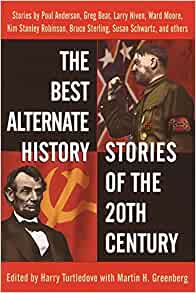
Cover art for the anthology, “The Best Alternate History Stories of the 20th Century

I’ve been reading the anthology The Best Alternate History Stories of the 20th Century edited by Harry Turtledove and Martin H. Greenberg. The edition I have was published in 2001. I checked it out of my local library, and besides a bit of water damage, it seems to be missing the table of contents.

The very first story presented is Kim Stanley Robinson’s The Lucky Strike (1984). The premise is what would have happened if Paul Tibbets and the Enola Gay crashed during a training flight and they weren’t able to drop the atomic bomb on Hiroshima?

In Robinson’s novella, fictional Captain Frank January is the bombardier who joins the replacement team on the B-29 “The Lucky Strike.” It explores the classic trope about how one man wrestles with his conscience over dropping a single bomb that could potentially kill hundreds of thousands of civilians. He thought that dropping “the bomb” on an uninhabited area as a demonstration of America’s nuclear power would have been enough to make the Japanese surrender.

Continue reading

The Hiroshima Legacy: From Tales of the Yūrei

Hiroshima

A mushroom cloud billows into the sky about one hour after an atomic bomb was detonated above Hiroshima, Japan – Atomic Heritage Foundation

“Five minutes out from target, Colonel. Altitude three two three three three feet. Local time zero eight one zero.”

“Acknowledged, Captain. Status of the package, Captain Parsons?”

“Parsons here, Colonel. Package armed in flight. Lt. Jeppson took the final safeties off 25 minutes ago. We’re set down here.”

“Acknowledged, Captain. We are a go for final approach and delivery. Descending to three one zero six zero feet.”

Colonel Paul W. Tibbets Jr. looked out the cockpit window, first to the left and then to his right. The Enola Gay was accompanied by two other B-29s, The Great Artiste was carrying instrumentation for measuring the heat and radiation of the blast, and no-name ship contained the latest photographic equipment to record what has about to happen.

Continue reading

A Last Look At Home

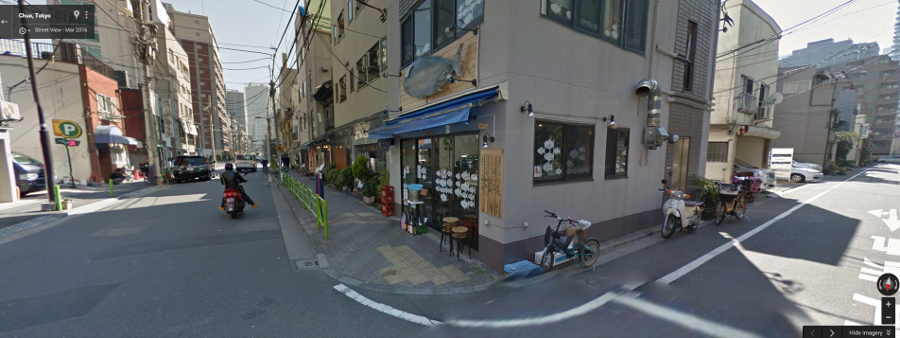
chuo tokyo

© Google 2016

“I never thought I’d see Chūō-ku again.”

“Does it look that different, Hiro?”

“I miss the waterways. It’s different, but it’s home.”

“I’m almost sorry I brought you here, given what’s about to happen to you.”

“You said what happens to me happened over seventy years ago.”

“You’ll still have to return.”

“And die, I know. But I’m curious why your Isis had you bring me here to the ward where I was born.”

“Look there.” The Time Traveler pointed to the fish market on the corner. A family, three generations of them, were just opening up.

“Your son, his children, and their children.”

Hiro’s eyes moistened. “They survived.”

“One last look at home, Hiro.”

“Thank you, Martin. Now I can die in peace, knowing my family lives on.”

“It’s time for me to take you back to Hiroshima.”

“Back to my present, Monday, August 6, 1945. I’m ready.”

I wrote this in response to the What Pegman Saw photo challenge. The goal is to use the photo at the top of the page as a prompt to write a piece of flash fiction no more than 150 words long. Mine came in at 147.

To read other stories based on the prompt, go to InLinkz.com.

The photo prompt is a 2016 street view of a ward of Tokyo called Chūō-ku, which literally means “Central Ward”. I looked it up on Wikipedia, and among other things, found out that after World War II, much of Chuo City was rebuilt and many of its numerous waterways filled in to make space for more buildings and roads.

I leveraged time traveler Martin Fields, who I featured in a seven-part series beginning with On Wednesday, The Time Traveler Got Wet, in order to give a Japanese man from 1945 a chance to see what had become of his family after seventy years. He gets a look at them in the 21st century before returning to his fate in Hiroshima the day the Atomic Bomb was dropped.

Why the other-worldly being known as Isis would have given this gift to a single individual is not revealed, but it’s enough that it was given.