Book Review: Neuromancer

neuromancer

Cover art for William Gibson’s novel “Neuromancer

I imagine that I’m supposed to feel guilty about reading “old” science fiction. After all, William Gibson’s inaugural SciFi novel Neuromancer is 35 years old and, according to one commentator at File 770 when criticizing award-winning science fiction writer and legend Robert Silverberg‘s criticism of award-winning science fiction author N.K. Jemisin, one of Silverberg’s many faults was that he hasn’t read any science fiction created within the past decade. Gee, I hope I’m not ruffling anyone’s feathers by going “old school.” On the other hand, the book did win a Nebula Award, the Philip K. Dick Award, and the Hugo, so there is that.

Gibson’s “Neuromancer” probably launched the cyberpunk genre, and although some of the references are older (television, pay phones), it’s held up very well. Today, science fiction publications are loaded with references to artificial intelligence (AI) but in the 1980s, it must have been a rarity, although I’ll never know why everyone assumes a programmed, non-human intelligence must presuppose a personality or even intent.

Continue reading

Haven’t Seen “Endgame” Yet and Other Updates

endgame

Promotional poster for “Avengers: Endgame” (2019)

No, I haven’t seen Avengers: Endgame yet, and unless I go with my sons and grandson, I probably won’t see it in the theater. Yes, I’ve heard it is THE film to see, blowing away all of the other Marvel superhero movies, so I’m certainly stoked. I know my ten-year-old grandson is stoked. Hopefully, if I see it while it’s in the theaters, I’ll find a way to sit through a three plus hour film without a potty break.

I’m not particularly interested in spoilers, but given various complaints about how last year’s Avengers: Infinity War ended, I did write a commentary with a few predictions, though of course, I wasn’t (very) seriously suggesting that my crystal ball was any better than all the others.

Continue reading

Flash Fiction Addiction is Here!

ffa

© James Pyles

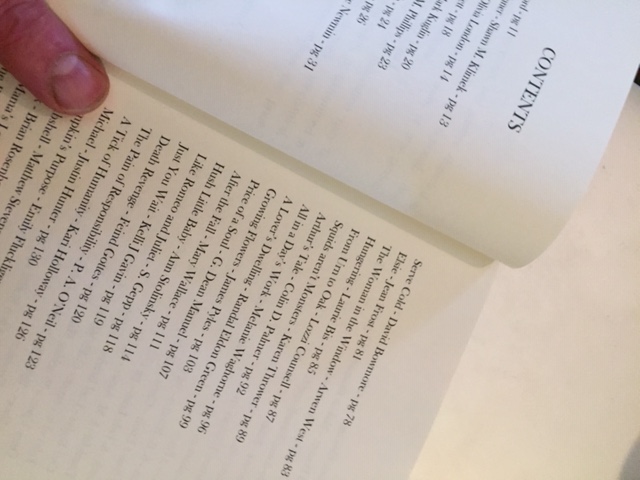
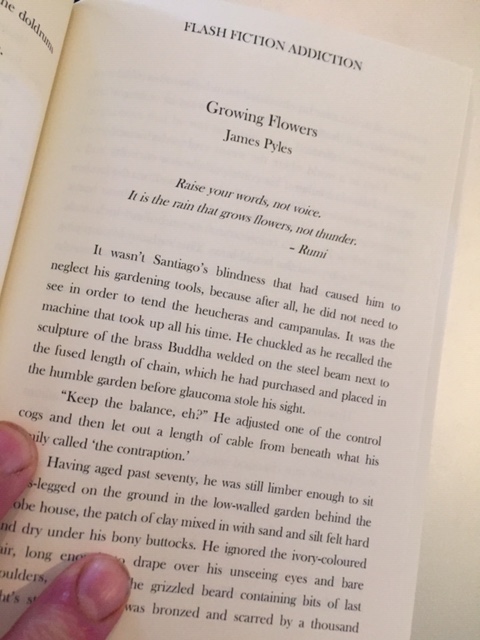
As you can see, my copy of Zombie Pirate Publishing‘s latest anthology “Flash Fiction Addiction” arrived, which features my short story “Growing Flowers,” a little steampunkish piece I originally crafted for an online writing challenge. I just found out today that for a limited time only. Amazon is offering US customers 20% discount on paperback copies of FFA, so get ’em while they last.

ffa

© James Pyles

ffa

© James Pyles

Author Update April 19, 2019

scifi

Cover art for the Cloaked Press anthology “Spring Into SciFi”

About a week ago (sorry, I’ve been away, I’ve been busy) I announced that my short story “The Recall” had been accepted for the 2019 edition of the Cloaked Press anthology “Spring Into SciFi.” No further news is yet available except that one of the contributors is a well-known name in science fiction (can’t wait to find out who).

However, as you can see above, on the Cloaked Press Facebook page, I did find a proposed cover image for the upcoming anthology. Pretty stoked.

Continue reading

Paperback Copy of “World War Four” Plus Another Story is Accepted for Publication.

world war 4

© James Pyles

First of all, I just got my copies of the Zombie Pirate Publishing SciFi Anthology World War Four in the mail today, which features my short story “Joey.” It’s terrific to be able to hold it in my hand, even though I’ve also been reading my digital copy.

The other exciting news for this morning, is that my short story “The Recall” has just been accepted for publication by Cloaked Press for their upcoming anthology “Spring Into SciFi 2019.” No details are available yet, but I’ll post them as they come in.

Good times.

cp

Screenshot of twitter

Cloister

cloister

© Roger Bultot

A terrified Sandoval Carson treaded across rough, ancient stones paralleled by pitted archways and shrouded by overgrown vegetation. The cloister was just ahead, and so, he hoped, his salvation.

Once he had stepped through the dark mirror that had once been a patio window, he was young again, though, he suspected, only here. He had to find the one who could help him correct all his life mistakes.

“Hello, Sandoval.” The voice was behind him.

“Can you help me?” Carson pivoted and then faced himself.

Dark Carson lunged at him screaming, “I’ve always hated you.”

“Me too,” he gurgled, dying.

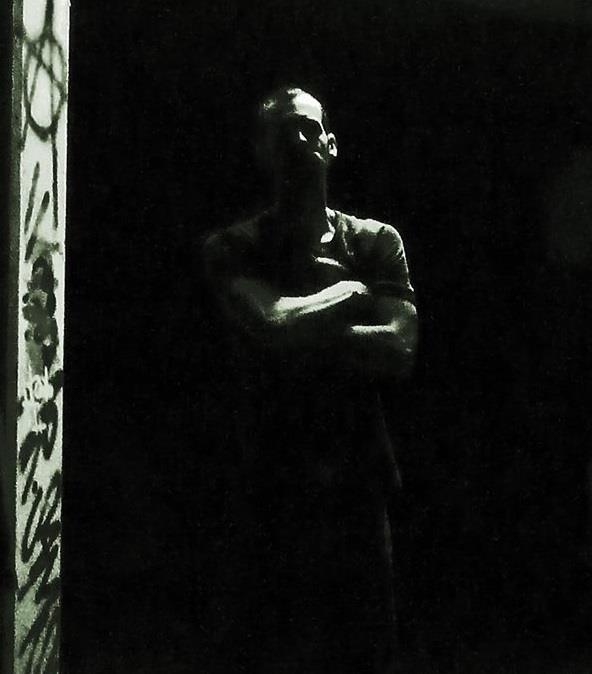
It’s been a while, but this morning, I decided to contribute to Rochelle Wisoff-Field‘s weekly photo writing challenge. The idea is to use the image above as the inspiration for crafting a piece of flash fiction no more than 100 words long. My word count is 100.

The color adjustment of the photo made me feel apprehensive, as if I were looking at a horror film, one where the hero was about to be pounced upon by the monster at any moment. In this case, the monster is himself.

To read other stories based on the prompt, visit InLinkz.com.

EDIT: Forgot to add a title and to mention that this is just one of many “Dark Mirror” tales I’ve written over the past few years. Usually, they take a person to their greatest desire or need. It obviously meant something grim in Sandoval’s case.

Review of Gregg Cunningham’s Short Story “War Pig”

terraform moon

Image found at NASA Spaceflight.com forums

“War Pig” was written by Gregg Cunningham, a fellow contributor to the Zombie Pirate Publishing anthology World War Four(2019). After reviewing Neal Asher’s Monitor Logan and Sam Phillips’ Cold Fusion, I thought I’d round things out with Cunningham’s story.

It does have to do with the fourth world war and an interplanetary battleship called a “war hog,” only this “hog” is also capable of time travel, which makes things kind of confusing.

We start out with our protagonist and a (more or less) sapient robot named a “Floyd” on the surface of a terraformed Moon thirty years into the war. The war hog has been destroyed and it looks like Commander Redux (although the highest rank he can ever remember is Sergeant) is just trying to survive. Then, through (apparently) a series of flashbacks, we see how Redux got into this mess in the first place, especially when a younger version of himself is put on trial by an older counterpart, and then the older Redux sacrifices his life so that the younger self can steal the war hog at an earlier point in history and try to fix whatever he got wrong.

Continue reading

Review of Sam M. Phillips’ Short Story “Cold Fusion”

sam

Sam M. Phillips – Photo taken from his website

“Cold Fusion” was written by Sam M. Phillips, co-owner of Zombie Pirate Publishing, for their anthology World War Four(2019). After reviewing Neal Asher’s Monitor Logan, featured in the same book, I received encouragement from a few of the other authors, including Phillips, to keep going.

So here I am.

The story is remarkably short. I went through it in just a few minutes, but that doesn’t mean comprehension is easy. The nameless protagonist is dying of radiation poisoning, but beyond that, the imagery is so hallucinatory, that it seems the poor fellow is already mad, stumbling across the multi-colored snow-covered countryside, body parts falling away like leaves, knowing his moments are numbered.

It’s also quite possible he’s become insane because he’s responsible for the cold fusion weapon that has destroyed, what? Everything?

Continue reading

Review of Neal Asher’s Novelette “Monitor Logan”

neal asher books

Cover images of several of Neal Asher’s novels as found on his website.

“Monitor Logan” is a novelette written by bestselling science fiction author Neal Asher for the Zombie Pirate Publishing anthology World War Four (2019). Since my short story “Joey” also appears in the anthology, I can’t review that book or any part of it on Amazon (goodreads may be another story), but I can review Asher’s tale on my blog.

This story takes place in Asher’s Polity Universe, though in terms of chronology, I don’t know where it would fall. I was first introduced to Asher’s work and the Polity via his novel Dark Intelligence which I previously reviewed.

The title “Monitor Logan” might as well be rendered “Marshall Logan,” and this wee missive could easily be an American western. Lawman rides into town after the previous lawman is gunned down. Town’s run by corrupt mining corporations that enslave an indigenous population to do their labor, while paying off a local gang of bandits. Lawman comes to punish the guilty and protect the innocent, but he’s got a secret agenda and a thirst for revenge.

As I was reading, I couldn’t help but recall the 1973 film High Plains Drifter, which is the first western Clint Eastwood starred in that he also directed. If you’ve ever seen that movie, you have a lot of the plot to “Monitor Logan.”

Asher again presents us with his affinity for sapient artificial intelligence, human/droid alliances, human/alien hybrids, high technology in low tech settings, devastating weapons of war, and what I refer to as “medical atrocities.”

Continue reading

Book Review: “The Berlin Project”

berlin project

Cover image for Gregory Benford’s novel “The Berlin Project.”

Just finished reading The Berlin Project, a novel by physicist and science fiction author Gregory Benford, and it was fabulous. Really top-notch alternate history, which was given enormous depth by the fact that Benford has met many of the people who were involved in the Manhattan Project during World War Two. His father-in-law is Karl Cohen, who is the book’s protagonist and in real life actually was a chemist on the project.

The novel’s premise is that at the Manhattan Project’s beginning, America’s secret effort to produce the Atomic Bomb, Cohen develops an alternate and faster method of producing weapons grade uranium for “the bomb,” allowing us to make a nuclear weapon in time for D-Day.

Not only are the technical details amazingly accurate, but the characterizations of the people involved, particularly Cohen and his family, are absolutely credible and “real.” Small wonder, since by marriage, they are Benford’s family, too.

As I imagine like most readers, I thought the climax of the book would be dropping the bomb on Berlin in 1944, killing Hitler and ending the war, but I was wrong. True, that was a pivotal moment about three-quarters of the way through, but it was the aftermath to that event that made all of the difference in changing the shape of alternate history going forward.

Continue reading